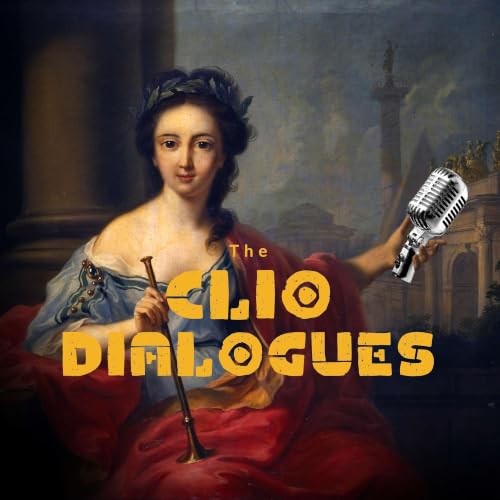
The Clio Dialogues copertina

The Clio Dialogues

The Clio Dialogues

Di: Jennifer Robin Terry
Ascolta gratuitamente

Hosted by historian Dr. Jennifer Robin Terry, 𝐓𝐡𝐞 𝐂𝐥𝐢𝐨 𝐃𝐢𝐚𝐥𝐨𝐠𝐮𝐞𝐬 is a history podcast dedicated to exploring how the past continues to shape the world we live in today. Through conversations with historians and other experts, the podcast highlights new historical research, fresh interpretations, and overlooked stories that deepen our understanding of contemporary life.

© 2026 The Clio Dialogues
Mondiale
  • SNAP Under Fire: The History Behind Today’s Food Stamp Debate | Christopher Bosso
    Jul 18 2026

    𝐄𝐩𝐢𝐬𝐨𝐝𝐞 𝐃𝐞𝐬𝐜𝐫𝐢𝐩𝐭𝐢𝐨𝐧

    Why is one of America's most successful anti-hunger programs suddenly at the center of legal and political controversy?

    Recent battles over restrictions on purchases through the Supplemental Nutrition Assistance Program (SNAP), the nation's largest government food assistance program, have reignited debates over nutrition, personal choice, and the proper role of government. But as Christopher Bosso explains, those debates are far older than they appear.

    Bosso takes listeners back to the Great Depression, when policymakers faced what journalist Walter Lippmann famously called the "paradox of want amidst plenty": farmers were producing more food than Americans could buy, even as millions struggled with hunger. The solution they ultimately devised would evolve into the Food Stamp Program, and later, SNAP.

    Along the way, Bosso explains why early food distribution programs proved unpopular, how food stamps restored dignity and consumer choice, why the program was revived during the War on Poverty, and how an unlikely political alliance between urban and rural lawmakers helped ensure its survival. The conversation also explores recurring debates over who deserves public assistance, why Americans often support food aid even while expressing skepticism about welfare, and why SNAP has remained remarkably resilient through changing political administrations.

    Whether you've followed the recent headlines or never given SNAP much thought, this episode reveals how a program created to address the economic challenges of the 1930s continues to shape American life nearly a century later.

    𝐈𝐧 𝐭𝐡𝐢𝐬 𝐞𝐩𝐢𝐬𝐨𝐝𝐞:

    • Why SNAP has returned to the headlines
    • The surprising origins of the Food Stamp Program during the Great Depression
    • The "paradox of want amidst plenty"
    • Why early government food boxes failed
    • How food stamps transformed food assistance through consumer choice
    • The role of the New Deal, the War on Poverty, and Richard Nixon in shaping SNAP
    • Why debates over nutrition restrictions are nothing new
    • How SNAP became one of America's most politically durable social programs
    • Why the history of SNAP continues to shape contemporary debates over hunger, poverty, and public policy

    𝐆𝐮𝐞𝐬𝐭

    Dr. Christopher Bosso is Professor Emeritus of Public Policy and Politics at Northeastern University.

    𝐁𝐮𝐲𝐭𝐡𝐞𝐁𝐨𝐨𝐤:

    Why SNAP Works: A Political History--and Defense--of the Food Stamp Program

    Also mentioned:

    Framing the Farm Bill: Interests, Ideology, and the Agricultural Act of 2014

    ***************

    𝐈𝐟 𝐲𝐨𝐮 𝐞𝐧𝐣𝐨𝐲𝐞𝐝 𝐭𝐡𝐢𝐬 𝐞𝐩𝐢𝐬𝐨𝐝𝐞...

    Follow The Clio Dialogues wherever you listen to podcasts, leave a review, and share this episode with someone interested in American history, constitutional law, immigration, or the history behind today's headlines.

    **𝐇𝐢𝐬𝐭𝐨𝐫𝐲 𝐫𝐮𝐧𝐬 𝐨𝐧 𝐜𝐮𝐫𝐢𝐨𝐬𝐢𝐭𝐲... 𝐚𝐧𝐝 𝐨𝐜𝐜𝐚𝐬𝐢𝐨𝐧𝐚𝐥𝐥𝐲 𝐜𝐚𝐟𝐟𝐞𝐢𝐧𝐞.**

    The Clio Dialogues is independently produced. If you'd like to help support future episodes, consider buying me a coffee. Every cup helps keep new conversations coming.

    ***************

    𝐀𝐟𝐟𝐢𝐥𝐢𝐚𝐭𝐞𝐃𝐢𝐬𝐜𝐥𝐨𝐬𝐮𝐫𝐞

    Some links in The Clio Dialogues show notes are affiliate links. As an Amazon Associate, I earn from qualifying purchases. In other words, if you purchase a book or other eligible item through one of these links, I may earn a small commission at no additional cost to you.

    Those commissions help offset the costs of producing The Clio Dialogues, allowing me to continue bringing historical scholarship to a wider audience. Thank you for your support.

    Mostra di più Mostra meno
    30 min
  • Don’t Mistake Plain for Neutral: How the Business Suit Became the Uniform of Authority | Chloe Chapin
    Jul 11 2026
    𝐏𝐥𝐚𝐢𝐧 𝐢𝐬𝐧'𝐭 𝐧𝐞𝐮𝐭𝐫𝐚𝐥. The modern business suit may seem timeless and practical, but its history reveals how clothing came to shape our ideas about power, respectability, and political authority. Historian Chloe Chapin uncovers the surprising history behind the business suit and why it still shapes our ideas about leadership today.𝐈𝐧 𝐓𝐡𝐢𝐬 𝐄𝐩𝐢𝐬𝐨𝐝𝐞Why does the suit signal authority?When Ukrainian President Volodymyr Zelensky appeared before world leaders without wearing one, his clothing became a story of its own. But why should a suit communicate respectability, professionalism, or even political legitimacy in the first place?In this episode of The Clio Dialogues, historian and former Broadway costume designer Dr. Chloe Chapin traces the surprising history of the plain dark suit from the American Revolution through the Civil War. Drawing on her unique perspective as both a designer and historian, she explains how a style embraced by the Founding Fathers evolved into the global uniform of presidents, executives, and diplomats.Along the way, we discuss George Washington's carefully chosen inaugural wardrobe, why John Trumbull’s famous painting of the Declaration of Independence gets the clothing wrong, how suits came to symbolize democracy and modern masculinity, and why "plain" is anything but neutral.Whether you've ever worn a suit or simply wondered why we associate one particular style of dress with authority, this conversation will change the way you see one of the most familiar garments in modern life.𝐖𝐞 𝐃𝐢𝐬𝐜𝐮𝐬𝐬:Why Volodymyr Zelensky's clothing became an international political issue How the Founding Fathers transformed men's fashion Why the business suit became a symbol of respectability and authority George Washington's inaugural wardrobe and what it represented The surprising inaccuracies in John Trumbull's famous painting of the Declaration of Independence The relationship between clothing, democracy, and masculinity How nineteenth-century Americans used clothing to judge character Why Emerson, Thoreau, and Whitman struggled with conformity What suits reveal about identity, power, and political authority today𝐅𝐞𝐚𝐭𝐮𝐫𝐞𝐝𝐆𝐮𝐞𝐬𝐭Dr. Chloe Chapin is a historian, artist, and former Broadway costume designer. She earned her PhD from Harvard University. She is the author of Suitable: The Sartorial Revolution and the Fashioning of Modern Men (Oxford University Press).***************𝐁𝐮𝐲 𝐭𝐡𝐞 𝐁𝐨𝐨𝐤:Chloe Chapin, 𝘚𝘶𝘪𝘵𝘢𝘣𝘭𝘦: 𝘛𝘩𝘦 𝘚𝘢𝘳𝘵𝘰𝘳𝘪𝘢𝘭 𝘙𝘦𝘷𝘰𝘭𝘶𝘵𝘪𝘰𝘯 𝘢𝘯𝘥 𝘵𝘩𝘦 𝘍𝘢𝘴𝘩𝘪𝘰𝘯𝘪𝘯𝘨 𝘰𝘧 𝘔𝘰𝘥𝘦𝘳𝘯 𝘔𝘦𝘯Also mentioned:Karen Halttunen, 𝘊𝘰𝘯𝘧𝘪𝘥𝘦𝘯𝘤𝘦 𝘔𝘦𝘯 𝘢𝘯𝘥 𝘗𝘢𝘪𝘯𝘵𝘦𝘥 𝘞𝘰𝘮𝘦𝘯: 𝘈 𝘚𝘵𝘶𝘥𝘺 𝘰𝘧 𝘔𝘪𝘥𝘥𝘭𝘦-𝘊𝘭𝘢𝘴𝘴 𝘊𝘶𝘭𝘵𝘶𝘳𝘦 𝘪𝘯 𝘈𝘮𝘦𝘳𝘪𝘤𝘢, 1830-1870***************𝐈𝐟 𝐲𝐨𝐮 𝐞𝐧𝐣𝐨𝐲𝐞𝐝 𝐭𝐡𝐢𝐬 𝐞𝐩𝐢𝐬𝐨𝐝𝐞...Follow The Clio Dialogues wherever you listen to podcasts, leave a review, and share this episode with someone interested in American history, gender, fashion, or the history behind today's headlines.**𝐇𝐢𝐬𝐭𝐨𝐫𝐲 𝐫𝐮𝐧𝐬 𝐨𝐧 𝐜𝐮𝐫𝐢𝐨𝐬𝐢𝐭𝐲... 𝐚𝐧𝐝 𝐨𝐜𝐜𝐚𝐬𝐢𝐨𝐧𝐚𝐥𝐥𝐲 𝐜𝐚𝐟𝐟𝐞𝐢𝐧𝐞.**The Clio Dialogues is independently produced. If you'd like to help support future episodes, consider buying me a coffee. Every cup helps keep new conversations coming.***************𝐀𝐟𝐟𝐢𝐥𝐢𝐚𝐭𝐞 𝐃𝐢𝐬𝐜𝐥𝐨𝐬𝐮𝐫𝐞Some links in The Clio Dialogues show notes are affiliate links. As an Amazon Associate, I earn from qualifying purchases. In other words, if you purchase a book or other eligible item through one of these links, I may earn a small commission at no additional cost to you. Those commissions help offset the costs of producing The Clio Dialogues, allowing me to continue bringing historical scholarship to a wider audience. Thank you for your support.𝐄𝐝𝐢𝐭𝐨𝐫𝐢𝐚𝐥 𝐈𝐧𝐝𝐞𝐩𝐞𝐧𝐝𝐞𝐧𝐜𝐞Books and products featured on this channel are selected because I believe they are relevant to the conversation. Any opinions I express are entirely my own and are never influenced by affiliate relationships. Any opinions expressed by my guests are entirely their own.
    Mostra di più Mostra meno
    35 min
  • Birthright Citizenship: Rethinking American Immigration History | Anna O. Law
    Jul 4 2026

    What if almost everything you've heard about the history of American immigration is missing half the story?

    Less than 24 hours after the Supreme Court upheld birthright citizenship with its decision in Trump v. Barbara, historian Anna O. Law joined The Clio Dialogues to explain why today's debates over birthright citizenship and immigration reach back centuries.

    To better understand the controversy over birthright citizenship, Law takes listeners into colonial America, the expansion of slavery, Native American dispossession, Reconstruction, and the struggle over who had the right not only to cross borders, but to remain. Along the way, she challenges familiar myths about "open borders," explains why immigration remained under state control for nearly a century after independence, and reveals how the history of slavery profoundly shaped American immigration law.

    The conversation also explores how the Fourteenth Amendment transformed citizenship, why the landmark case of United States v. Wong Kim Ark remains foundational today, and why understanding this history matters more than ever.

    In this episode

    • Why birthright citizenship became a flashpoint in contemporary politics

    • Why the phrase "nation of immigrants" leaves out essential parts of American history

    • How Native American removal, westward expansion, and slavery shaped immigration policy

    • Why America's borders were never actually "open"

    • What the "right to remain" meant before immigration became a federal responsibility

    • How the abolition of slavery transformed immigration politics

    • Why Chinese immigration became central to the creation of federal immigration law

    • How United States v. Wong Kim Ark established modern birthright citizenship

    • What historians can contribute to today's constitutional debates

    Featured Guest

    Anna O. Law is a political scientist whose work examines immigration, citizenship, constitutional development, and American political history. Her latest book, Migration and the Origins of American Citizenship: African-Americans, Native Americans, and Immigrants, traces the intertwined histories of migration, slavery, Native American removal, and citizenship from the colonial period through the federalization of immigration law.

    Buy the Book:

    Anna O. Law, Migration and the Origins of American Citizenship: African-Americans, Native Americans, and Immigrants

    Also mentioned:

    Samantha Seeley, Race, Removal, and the Right to Remain: Migration and the Making of the United States

    Moon-Ho Jung, Coolies and Cane: Race, Labor, and Sugar in the Age of Emancipation

    If you enjoyed this episode...

    Follow The Clio Dialogues wherever you listen to podcasts, leave a review, and share this episode with someone interested in American history, constitutional law, immigration, or the history behind today's headlines.

    ***************

    Affiliate Disclosure

    Some links in The Clio Dialogues show notes are affiliate links. As an Amazon Associate, I earn from qualifying purchases. In other words, if you purchase a book or other eligible item through one of these links, I may earn a small commission at no additional cost to you.

    Those commissions help offset the costs of producing The Clio Dialogues, allowing me to continue bringing historical scholarship to a wider audience. Thank you for your support.

    Editorial Independence

    Books and products featured on this channel are selected because I believe they are relevant to the conversation. Any opinions I express are entirely my own and are never influenced by affiliate relationships. Any opinions expressed by my guests are their own.

    Mostra di più Mostra meno
    32 min
adbl_web_anon_alc_button_suppression_t1
Ancora nessuna recensione