• 9: Finding Value in Secondary Markets & Grocery-Anchored Retail with Shenoor Jadavji of Lotus Capital
    Oct 27 2026
    EPISODE DESCRIPTIONIn this episode, we're joined by Shenoor Jadavji.Shenoor is the Founder & CEO of Lotus Capital from Vancouver, BC, with over 30 years of experience in real estate transactions totalling more than $3B across all real estate classes in both Canada and the US.Since founding Lotus Capital Corp. (Lotus) in 1995, Shenoor has grown the firm into a nationally recognized leader in real estate investment, development, and asset management. With a focus on delivering strong, risk-adjusted returns, Lotus has transacted over $2B CAD across diverse asset classes, including industrial, multi-residential, retail, office, and hotel properties in Canada and the U.S.Recognized for her forward-thinking strategies and commitment to inclusivity, Shenoor has set new industry standards while mentoring future leaders. After forming a strategic alliance and private placement investment with PROREIT, she continues to serve on its Board of Trustees, Investment Committee, and the Nominating and Compensation Committee. Other Board experience includes VGH, Multi-Generational Housing Advisory, and she leads an advisory committee for Aga Khan University, focusing on income-generating projects in Sub-Saharan Africa and Pakistan. Shenoor’s strategic vision, industry contributions, and commitment to lasting partnerships continue to drive growth and success for both Lotus and the commercial real estate industry.Shenoor is here to discuss:→ How she got to where she is today, her journey in real estate, and her advice for others.→ How her father instilled self-confidence by believing in her and letting her try things, including supporting her in starting a rug business at just 18 years old.→ Her experience as a female leader in the real estate industry and why she believes success is based on merit, not gender.→ The 3 factors that have contributed to Lotus' success, including building and nurturing relationships, always understanding the assets you are going after, and a willingness to get their hands dirty and really work on a deal.→ How global uncertainty is influencing this market cycle and makes this the toughest time to get a deal done, but every down cycle has the best opportunities, so the right deals are still out there if you are creative.→ How Lotus has been able to find success in the current market by staying conservative and thinking long-term, the factors that have contributed to industrial and retail being strong investments, and looking to secondary Canadian markets outside of BC and Ontario.→ Why it's been hard to invest in BC with the lack of affordability, land claims, and overall provincial government chaos including outrageous spending and snap elections.→ How the current federal government has improved since the last election, leading to more favourable economic policies including foreign-buyer ban restriction changes in early 2027 and $3T in foreign capital actively seeking deals.***🌎 Lotus Capital's Website: www.lotuscapitalcorp.com🔗 Lotus Capital's LinkedIn: @LotusCapitalCorp📸 Lotus Capital's Instagram: @lotuscapitalcorp🔗 Shenoor Jadavji's LinkedIn: @ShenoorJadavji***CHAPTERS00:00 Intro00:26 Today's Guest: Shenoor Jadavji03:49 The Experience as a Female Leader in the Industry07:12 How Her Dad Instilled Confidence in Her10:52 What's Contributed Most to Lotus' Success13:43 The Current Market Cycle16:18 What's Giving Lotus Confidence Right Now?17:54 Why the Interest in Industrial/Retail23:58 Investing Outside of BC28:33 How Shenoor Stays Optimistic30:59 Career Advice32:02 Wrap-Up***CONNECT WITH THE SHOW🎙️ The Canadian Private Real Estate Podcast: ⁠⁠⁠⁠www.canadianprivaterealestatepodcast.ca⁠⁠⁠⁠*** CONNECT WITH HAWKEYE WEALTH🌎 Hawkeye Wealth Website: ⁠⁠⁠⁠www.hawkeyewealth.com⁠⁠⁠⁠🔗 Hawkeye Wealth LinkedIn: ⁠⁠⁠⁠@HawkeyeWealth⁠⁠⁠⁠📬 Hawkeye Wealth Newsletter: ⁠⁠⁠⁠@Newsletter⁠⁠⁠⁠💰 Hawkeye Wealth Mortgage Fund Guide: ⁠⁠⁠⁠@MortgageFundGuide⁠⁠⁠⁠***
    Mostra di più Mostra meno
    33 min
  • 8: Rates, Distress, and Where the Opportunity Is with Peakhill Capital's Harley Gold
    Sep 22 2026
    EPISODE DESCRIPTIONIn this episode, we're joined by Harley Gold.Harley is the President & CEO of Peakhill Capital from the Greater Toronto Area of Ontario, who has closed in excess of $25B in loans in over 5,000 deals over the past 25 years in Canada and the U.S.Harley has extensive financing experience in all real estate asset types including multi-family, senior housing, retail, industrial, hospitality, and land development. Prior to founding Peakhill Capital, Harley was the Vice President of Business Development at CMLS Financial for 11 years, where he originated for institutional accounts, including RBC and PHN.  Harley also worked for 6 years at a US mortgage banking firm, and was successful bringing US lenders into the Canadian market.Harley holds a Master of Business Administration from Canisius College and a Bachelor of Arts in Economics from the University of Toronto. He is a founding director and the Chairman of the Board of Lighthouse Credit Union, a new credit union formed in 2022 focused on servicing the Jewish community.Peakhill Capital is an Ontario-based commercial real estate investment manager focused on credit and equity investments across North America. Now with nearly 200 employees, Peakhill has originated over $17.5 billion in mortgages since launching in 2019, while also holding a current pipeline exceeding $3 billion in rental construction loans. Their vision is to shape the future of commercial real estate through a comprehensive platform defined by value creation and innovation.Harley is here to discuss:→ Peakhill's business model, how they increased 15% year over year to fund $6-7B in 2026, and their current $3B rental construction pipeline.→ How Peakhill's Income Opportunity Limited Partnership has delivered 8-10% new returns over the past 6 years, which boasts a portfolio of over $800M, and equity from investors at $425M.→ Peakhills's current risk appetite, which asset classes they focus on, and the distressed areas that they've avoided which have allowed them to thrive.→ Where the opportunity is in the market right now, including retail, malls, and office buildings, and capitalizing on various government incentives, grants, and increased funding from program like Build Canada Homes.→ Why Peakhill lends in Canada but invests in the US, where interest rates are going, and how putting together a flexible team is driving success.***🌎 Peakhill Capital Website: www.peakhillcapital.com🔗 Peakhill Capital LinkedIn: @PeakhillCapital📸 Peakhill Capital Instagram: @peakhillcapital🔗 Harley Gold's LinkedIn: @HarleyGold***If you would like to learn more about investing with Peakill, you can email us at info@hawkeyewealth.com, or visit our website: www.hawkeyewealth.com***CHAPTERS00:00 Intro00:52 Today's Guest: Harley Gold & Peakhill Capital3:32 How Peakhill is Up 10-15% YOY5:00 Which Asset Classes Are the Focus5:57 Peakhill's Current Risk Appetite7:39 Current Distressed Areas 8:42 Where the Opportunity is Right Now13:30 Why Peakhill Lends in Canada But Invests in the US14:51 An Important Market Indicator - Rents16:32 Peakhill Income Opportunity Limited Partnership19:27 Where Interest Rates Are Going21:11 Advice for the Industry25:44 Wrap-Up***CONNECT WITH THE SHOW🎙️ The Canadian Private Real Estate Podcast: ⁠⁠⁠www.canadianprivaterealestatepodcast.ca⁠⁠⁠*** CONNECT WITH HAWKEYE WEALTH🌎 Hawkeye Wealth Website: ⁠⁠⁠www.hawkeyewealth.com⁠⁠⁠🔗 Hawkeye Wealth LinkedIn: ⁠⁠⁠@HawkeyeWealth⁠⁠⁠📬 Hawkeye Wealth Newsletter: ⁠⁠⁠@Newsletter⁠⁠⁠💰 Hawkeye Wealth Mortgage Fund Guide: ⁠⁠⁠@MortgageFundGuide⁠⁠⁠***
    Mostra di più Mostra meno
    27 min
  • 7: Investing in Self Storage, with U-Lock's Robert Madsen
    Aug 25 2026
    EPISODE DESCRIPTIONIn this episode, we're joined by Robert Madsen.Robert is the President of both U-Lock Mini Storage and the Canadian Self Storage Association from the Greater Vancouver Area of BC, who was born into the self-storage industry and has amassed over 40 years of experience.Regarded as pioneers of Canada's self-storage industry, the Madsen's founded their first facility of U-Lock Mini Storage in Vancouver's historic Yaletown district in 1978. Today, they own over 500,000 square feet of premium self-storage facilities serving the Lower Mainland and Vancouver Island, and continue to expand their portfolio through strategic acquisitions, development, and new product offerings.Robert is here to discuss:→ His journey in self-storage and why it is not a passive industry.→ The unique benefits & risks of the self-storage asset class, including being both a real estate investment and operating business combined, and the typical rent-up timeline of 3-5 years.→ The typical metrics for self-storage feasibility including supply and demand, renting rates, and unit mix, what factors impact customer demand, and why comps are so hard to find.→ The typical facility size in the Lower Mainland and staffing needs.→ Canada's current self-storage market and what makes it niche compared to the US.→ How self-storage boosts the economy, the impacts on entrepreneurs, and the opportunity for value adds.→ How AI has impacted the self-storage industry as a whole and Robert's business so far and where it could go in the future.→ The biggest over and under-blown risks in the self-storage space - the next generation of consumers and that it is an actual business.→ Two pieces of advice - never make assumptions and keep innovating.***🌎 U-Lock Mini Storage Website: ⁠⁠⁠⁠www.selfstorage.ca📸 U-Lock Mini Storage Instagram: @ulockministorage🔗 Robert Madsen's LinkedIn: ⁠@RobertMadsen***CHAPTERS00:00 Intro0:26 Today's Guest: Robert Madsen3:34 Unique Benefits to Investing in Self-Storage5:03 Unique Risks of Self-Storage7:07 Typical Metrics for Feasibility & the Difference of the US Market10:22 What Factors Impact Customer Demand12:12 The Current Canadian Self-Storage Market, Number of Facilities, & Finding Comps16:34 The Opportunity for Value Adds17:46 Municipalities Misguided View on Storage as an Economy Booster19:15 How AI Has Impacted Robert's Business & the Storage Industry So Far22:09 Typical Facility Size in the Lower Mainland & Staffing25:02 Over/Under-Blown Risks in the Storage Space28:27 Important Metrics - Supply/Demand, Rates, & Unit Mix31:20 The Rent-Up Timeline (3-5 Years)35.28 Two Pieces of Advice36:43 Wrap-Up*** CONNECT WITH THE SHOW🎙️ The Canadian Private Real Estate Podcast: ⁠⁠www.canadianprivaterealestatepodcast.ca⁠⁠*** CONNECT WITH HAWKEYE WEALTH🌎 Hawkeye Wealth Website: ⁠⁠www.hawkeyewealth.com⁠⁠🔗 Hawkeye Wealth LinkedIn: ⁠⁠@HawkeyeWealth⁠⁠📬 Hawkeye Wealth Newsletter: ⁠⁠@Newsletter⁠⁠💰 Hawkeye Wealth Mortgage Fund Guide: ⁠⁠@MortgageFundGuide⁠⁠***
    Mostra di più Mostra meno
    37 min
  • 6: Why Rentals Recover Before Condos Do with M3's Matthew Boukall
    Jul 28 2026

    EPISODE DESCRIPTION

    In this episode, we're joined by Matthew Boukall.


    Matthew is the Director of Market Advisory at M3 Development Management from Calgary, Alberta, who has over 20 years of experience in real estate research, advisory, and data analytics across Canada, the US, and international markets, and is currently focused on Western Canada's multi-family and industrial markets.


    A sought-after market expert and industry leader, Matthew has in-depth knowledge of real estate data, predictive analytics, and real estate strategies, providing insights that help clients identify opportunities, manage risk, and maximize value.


    M3 Development Management (M3) is a Calgary-based development team made up of seasoned professionals who have gained both broad-based and specialized, international experience, collectively spanning decades within the development and construction sectors. With more than a decade of delivering excellence, M3 guides clients through every stage of real estate development from vision to execution, with an approach built on trust, precision, and results.

    Matthew is here to discuss:


    → His journey in real estate, who M3 is, and what they do.


    → The current condo and rental markets in Calgary and Edmonton, including the unique factors that make Calgary the stronger condo market while Edmonton is the stronger rental market.


    → The specific factors lead to the challenges of Vancouver's condo and rental markets, their possible recovery timeline of 18 to 24 months, and if BC reducing DCCs by up to 50% will help with more housing starts.


    → An overview of Calgary, Edmonton, and Vancouver's industrial markets, why the Calgary area has had huge growth in industrial, and what makes industrial hard in Vancouver.


    → The potential impact of the newly announced Delta Port Expansion, with a capacity of up to 2,000,000 additional shipping containers arriving annually, and what that could mean for BC's lower mainland industrial.


    → What separates top developers from the rest and advice for new investors.

    ***

    🌎 M3 Development Management Website: ⁠www.m3dm.ca

    🔗 M3 Development Management LinkedIn: @M3DM

    📸 M3 Development Management Instagram: @m3developmentmanagement


    🔗 Matthew Boukall's LinkedIn: @MatthewBoukall

    ***


    CHAPTERS

    00:00 Intro

    0:26 Today's Guest: Matthew Boukall

    3:12 Calgary & Edmonton's Condo Market Shifts

    6:31 Vancouver's Condo Market Challenges

    9:14 The Vancouver Rental Market

    10:45 When Will the Vancouver Market Turn Around?

    13:26 Will BC Reducing DCCs by 50% Help with Housing Starts?

    17:38 Calgary, Edmonton, & Vancouver's Industrial Markets

    22:45 Vancouver's Industrial Condo Market

    24:34 The Potential Impact of the Delta Port Expansion on Lower Mainland Industrial

    28:12 What Separates the Top Developers from the Rest

    31:02 Advice for New Investors

    ***

    CONNECT WITH THE SHOW

    🎙️ The Canadian Private Real Estate Podcast: ⁠www.canadianprivaterealestatepodcast.ca⁠

    ***

    CONNECT WITH HAWKEYE WEALTH

    🌎 Hawkeye Wealth Website: ⁠www.hawkeyewealth.com⁠

    🔗 Hawkeye Wealth LinkedIn: ⁠@HawkeyeWealth⁠

    📬 Hawkeye Wealth Newsletter: ⁠@Newsletter⁠

    💰 Hawkeye Wealth Mortgage Fund Guide: ⁠@MortgageFundGuide⁠

    ***

    Mostra di più Mostra meno
    33 min
  • 5: Multifamily, Cap Rates, and the Setup for Post-2027 Rent Growth with Centurion Chief Economist Carl Gomez
    Jun 23 2026
    EPISODE DESCRIPTIONIn this episode, we're joined by Carl Gomez.Carl is the Chief Economist & Executive Vice President of Research at Centurion Asset Management from the Greater Toronto Area in Ontario, who has over 25 years of experience as a Canadian economist and investment professional, specializing in real estate and capital markets.Carl began his career at the Canada Mortgage and Housing Corporation (CMHC) before working as a Senior Economist at both RBC Financial Group and TD Bank Financial Group. His career includes senior positions at Bentall Capital, Bentall Kennedy, QuadReal Property Group, and the CoStar Group before joining Centurion in January of 2026.Centurion Asset Management Inc. is a Canadian asset management company specializing in real estate and other alternative investments. A recognized leader in the space since 2003, Centurion is Canada's largest private REIT, managing over $8 billion in assets. Carl is here to discuss:→ His career so far, who Centurion is and how he joined them, and what he does in his day-to-day including working with teams, deal vetting, & road shows.→ If Canada is in a recession, future expectations for the Canadian economy, including GDP and job growth, and the differences between structural and cyclical issues and their impacts.→ If we will have a deal with the US soon and AI's potential impact on real estate.→ What the data is saying about multifamily and the areas in which he's pessimistic, like how we've been building the wrong housing type, and the areas in which he's optimistic, like rent growth being strong in markets where there isn't over-supply.→ The data set real estate investors should actually be watching, long-term bond yields, because they are the true indicator of capital costs as policy rate decisions by central banks world wide have lagged behind for years, and how they impact interest rates.→ Why the Bank of Canada will be raising interest rates in the near future and how they have been mismanaged since the start of the Covid pandemic.→ What is happening with current cap rates for class A multifamily, why long-term institutional and private investors are currently benefitting the most, and what factors could lead to positive rent growth post-2027.→ Debunking the myth of Canada having a housing supply problem, when it is really an affordability problem.→ Canada's immigration rebalancing strategy, which is currently in a system correction, with the negative population growth due to exiting non-permanent residents in 2026, that will turn into 1.5% population growth with a rebalanced system post-2027.→ The most impactful advice he received early on - trust is the essence of investment. 🌎 Centurion Asset Management Website: www.centurion.ca🔗 Centurion Asset Management LinkedIn: @CenturionAssetMGMT🔗 Carl Gomez's LinkedIn: @CarlGomez***CHAPTERS00:00 Intro00:26 Today's Guest: Carl Gomez1:27 Who Are Centurion & How Carl Got There3:10 Carl's Day-to-Day4:30 Expectations for Canadian Economy (GDP & Jobs)6:53 Will We Have a US Deal Soon?8:08 AI's Potential Impact on Real Estate11:19 What the Data Says About Multifamily15:26 When Will the Headlines Change?17:53 Data Real Estate Investors Should Be Watching19:35 BoC Will Raise Interest Rates23:49 Caps Rates for Class A Multifamily30:25 Canada Has an Affordability, Not a Supply, Problem32:18 Canada's Immigration Rebalancing Strategy Explained37:39 One Piece of Advice - Trust is the Essence of Investment39:05 Wrap-Up*** CONNECT WITH THE SHOW🎙️ The Canadian Private Real Estate Podcast: www.canadianprivaterealestatepodcast.ca*** CONNECT WITH HAWKEYE WEALTH🌎 Hawkeye Wealth Website: www.hawkeyewealth.com🔗 Hawkeye Wealth LinkedIn: @HawkeyeWealth📬 Hawkeye Wealth Newsletter: @Newsletter💰 Hawkeye Wealth Mortgage Fund Guide: @MortgageFundGuide***
    Mostra di più Mostra meno
    40 min
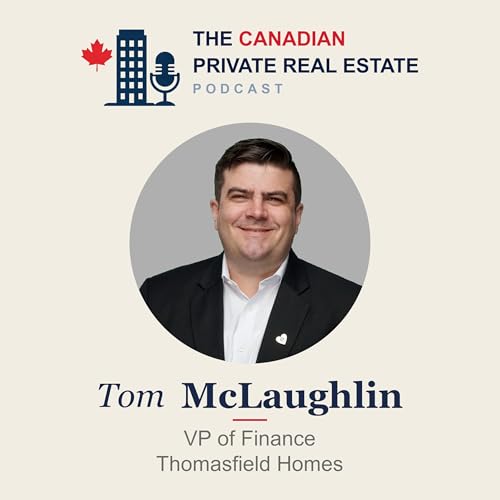
  • 4: The Coming AI Shockwave and What it Means for Real Estate with Thomasfield Homes' Tom McLaughlin
    May 26 2026

    EPISODE DESCRIPTION

    In this episode, we're joined by Tom McLaughlin. Tom is the VP of Finance of Thomasfield Homes from Guelph, Ontario, a family-owned home builder and land developer based in Southern Ontario since 1978.


    With over 15 years of experience in homebuilding, land development, and project management, Tom has led the financing and execution of complex real estate projects from planning to completion. He is the second vice-chair of the Ontario Home Builders’ Association (as of 2025) and a past-president of the Guelph & District Home Builders’ Association.


    In 2025, Tom authored a brilliant article in the Real Estate News Exchange titled, "Construction's Productivity Illusion, and the Robot-Filled Future That Just Might Fix It", which is the springboard for this conversation today.

    Tom is here to discuss:


    → His journey in real estate from urban planning to Thomasfield Homes


    → How AI has improved day-to-day operations at Thomasfield like expediting workflows, and areas where it hasn't worked like plan rendering.


    → What the real estate industry is getting wrong about AI - building up way too much short-term hype, while also being blind to the long-term vision.


    → AI's role in construction's productivity problem - How AI robots, like the Tesla Optimus, could change the construction industry, when these changes could be coming, and the common objections to AI robots in construction.


    → If real estate, in this new future, will still be an inflation hedge.


    → The historical impact transportation has always had on real estate, and how autonomous vehicles could reshape the future of urban planning.


    → The factors to prioritize when investing in real estate in the new world - jurisdictions with strong property rights, housing supply deficits, climate resilience, and reliable energy infrastructure.


    → The most impactful advice he received early on - cycles are temporary, but good assets endure.

    Thomasfield Homes Website: www.thomasfield.com

    Tom McLaughlin's LinkedIn: @TomMcLaughlin

    ***


    CHAPTERS

    00:00 Intro

    00:26 Today's Guest: Tom McLaughlin

    05:01 How AI Has Changed Day-to-Day Operations at Thomasfield

    07:01 Areas at Thomasfield Where AI Hasn't Worked

    09:53 What the Industry is Getting Wrong About AI

    10:35 How AI Robots Will Change the Construction Industry & When It's Coming

    15:51 Common Objections to AI Robots in Construction

    17:50 Will Real Estate Still Be an Inflation Hedge?

    22:29 The Impact of Autonomous Cars & Transportation on Real Estate

    28:04 Where & What Real Estate to Own in the New World

    34:41 Most Impactful Advice

    35:40 Wrap-Up

    ***

    CONNECT WITH THE SHOW

    🎙️ The Canadian Private Real Estate Podcast: www.canadianprivaterealestatepodcast.ca

    ***

    CONNECT WITH HAWKEYE WEALTH

    🔗 Hawkeye Wealth Website: www.hawkeyewealth.com

    📋 Hawkeye Wealth LinkedIn: @HawkeyeWealth

    📬 Hawkeye Wealth Newsletter: @Newsletter

    💰 Hawkeye Wealth Mortgage Fund Guide: @MortgageFundGuide

    ***

    Mostra di più Mostra meno
    36 min
  • 3: Beyond the Boom, A New Era for Real Estate with Wendy Waters
    Apr 28 2026

    EPISODE DESCRIPTION

    In this episode, we're joined by Wendy Waters. Wendy is a real estate research specialist from Vancouver, BC, who has over 20 years of experience in real estate research. Wendy regularly publishes research on LinkedIn, and takes part on podcasts and panels across Canada.


    From 2006 to 2025, Wendy led the Research Services & Strategy Team at GWL Realty Advisors, where they provided strategic analysis on office, industrial, retail, and multi-residential portfolio strategy across Canada, focusing on the economic, demographic, and social drivers of real estate performance as well as capital flow and market trends that shape returns.

    Wendy currently volunteers on the steering committee of the Urban Land Institute (ULI) of BC. Until September, 2025, she was also the Co-Chair of the RealPac Research Committee, and a member of the Board of Directors of the Urban Development Institute of BC (UDI).

    Wendy is here to discuss:


    → Her experience in the real estate industry and how AI will change real estate in the future.


    → How real estate historically is used as an inflation hedge and the disconnect between how there is a demand for housing, but the current price-points it sits at is not attainable for buyers.


    → The old mantra of "growth pays for growth" - how high development charges in BC is leading to younger buyers subsidizing the older, wealthier population of current home-owners when it comes to infrastructure, leading young people hundreds of thousands of dollars behind.


    → If Ontario cutting development fees & HST for home buyers have led to greater affordability.


    → The impact of less immigration and population decline on housing including the how less non-permanent residents are affecting the rental market, Vancouver's vacancy rates, and renters finally having options.


    → The 2 key demographic shifts investors should be aware of, 25-35 year old new permanent residents and the aging Boomers, and where opportunities could be to cater to those populations.


    → The 2 risks investors are either over or underestimating, including that there's "too much housing", and the new realities of an interest rate environment where it's stable or increasing as opposed to falling.


    Wendy Waters's LinkedIn: @WendyWaters

    ***


    CHAPTERS

    0:00 Intro

    0:26 Today's Guest: Wendy Waters

    4:25 Real Estate as an Inflation Hedge

    8:32 There is Housing Demand, but the Price is Wrong

    10:37 Vancouver Vacancy Rate - Renters Finally Have Options

    15:18 Impacts of Ontario Cutting Development Fees & HST

    16:38 "Growth Pays for Growth" Mindset Hurting Young Buyers

    18:40 Impact of Population Decline on Rentals

    20:04 Impact of AI on Real Estate in the Near Future

    26:21 Demographic Shifts Investors Should Be Aware Of

    33:42 Risks Investors are Over/Under Estimating

    37:11 Wrap-Up

    ***

    CONNECT WITH THE SHOW

    🎙️ The Canadian Private Real Estate Podcast: www.canadianprivaterealestatepodcast.ca

    ***

    CONNECT WITH HAWKEYE WEALTH

    🔗 Hawkeye Wealth Website: www.hawkeyewealth.com

    📋 Hawkeye Wealth LinkedIn: @HawkeyeWealth

    📬 Hawkeye Wealth Newsletter: @Newsletter

    💰 Hawkeye Wealth Mortgage Fund Guide: @MortgageFundGuide

    ***

    Mostra di più Mostra meno
    38 min
  • 2: The Biggest Investment Risk in Vancouver's Real Estate Market with The Loonie Hour's Steve Saretsky
    Mar 24 2026
    In this episode, we're joined by Steve Saretsky. Steve is the Owner of the Saretsky Group from Vancouver, BC, who is also a Vancouver Realtor, real estate investor, YouTuber, and co-host of The Loonie Hour podcast.Steve is widely considered a thought leader in the industry with regular appearances on Bloomberg, CBC, The Vancouver Sun, and various other media outlets. Steve’s dedication to analyzing the stats, financial landscape, and policies affecting Vancouver Real Estate have allowed him to build a successful business among the top 1% of Greater Vancouver Realtors while working with and providing advisory services to investment advisors, financial institutions, policy makers and real estate developers.The Saretsky Group is a team of trusted real estate advisors working with buyers and sellers of residential property in the city of Vancouver. Steve is here to discuss:→ His journey in real estate so far and becoming a successful, no BS market commentator.→ Current trends in the Vancouver real estate market, where in 2025 annual home sales in the city dropped to their lowest level in 25 years, and why condo sales have plummeted.→ How the market could be stimulated today, the overblown mortgage renewal panic, and market reality vs Realtor bias on social media.→ The biggest investment risk today, Vancouver's current rental overbuilding, and the subsequent rental market collapse.→ Where Vancouver will be in 5-10 years - 0 new condo development completions, stagnant home values, and the recovery outlook into the 2030s.→ Why now could be the best time to buy real estate since 2012, and his predictions for interest rates.→ The biggest myth in real estate, it will always go up, and the most impactful investment advice he received.Saretsky Group Website: www.saretskygroup.comSteve Saretsky's LinkedIn: @SteveSaretskySteve Saretsky's Instagram: @stevesaretskySteve Saretsky's X: @SteveSaretskySteve Saretsky's YouTube: @saretskySteve Saretky's LinkTree: @stevesaretskyThe Loonie Hour Podcast Website: www.thelooniehour.caThe Loonie Hour Podcast LinkTree: @looniehour***CHAPTERS0:00 Intro0:26 Today's Guest: Steve Saretsky3:22 Current Market Trends in Vancouver5:53 How Long Until the Market Sentiment Turns Positive?7:57 The Best Time to Buy Real Estate Since 201211:02 Are Realtors Being Truthful About the Market on Their Social Media?12:55 The Biggest Investment Risk - Vancouver's Overbuilding Crisis and Rental Market Collapse15:02 Vancouver in 5-10 Years - 0 Condo Completions & Stagnant Home Values19:17 How the Market Could be Stimulated Today23:42 Overblown Mortgage Renewal Panic25:16 Interest Rate Predictions28:56 The Biggest Myth in Real Estate - It Always Goes Up32:50 Most Impactful Investment Advice - Focus on Today's Asset, Not Future Speculation33:30 Wrap-Up*** CONNECT WITH THE SHOW🎙️ The Canadian Private Real Estate Podcast: www.canadianprivaterealestatepodcast.ca*** CONNECT WITH HAWKEYE WEALTH🔗 Hawkeye Wealth Website: ⁠www.hawkeyewealth.com⁠📋 Hawkeye Wealth LinkedIn: ⁠@HawkeyeWealth⁠📬 Hawkeye Wealth Newsletter: ⁠@Newsletter⁠💰 Hawkeye Wealth Mortgage Fund Guide: ⁠@MortgageFundGuide⁠***
    Mostra di più Mostra meno
    34 min