Episodi

  • Slaveholders, Sheriffs, and Saviors on the Indiana-Kentucky border
    Aug 16 2026
    It’s been a few months since I gave you an update on this project. Bottom line: I’ve been writing the book that this newsletter has helped me research. I spent much of July drafting chapters for Along The Ohio: Stories the River Still Carries, and then a week at the Appalachian Writers Workshop studying with Charles Dodd White.From there, I spent nearly a week in Indiana and Illinois. Boy, did I learn a lot.When Madison was platted in 1809-1810 it filled the gap between two already-mature ports: Cincinnati upstream about 70 miles, and Louisville about 46 downstream. It became Indiana’s third-largest city and a major hog-processing/steamboat hub within a few decades.Indiana is, of course a Midwestern state, and as part of the Northwest Territory, slavery was not permitted there. However, an old Ordinance signed and stored back east was secondary to the labor needs settlers faced on the frontier. Not only that, people were too busy scratching out a living than to fund territory-wide enforcement. These two factors combined to give Indiana’s southern counties a unique culture born of cross-river proximity to Kentucky, a slave state until 1865.Today’s visitors see Madison’s charms through Victorian architecture, a vibrant riverfront, and a range of cute shops and upscale eateries, but the town embraces its divided Antebellum heritage too.While our Hollywood-induced cultural memory is that planters lived on their plantations, that wasn’t the case here. Many of them lived in Madison — a proper river port with services and society — while holding the people they enslaved across the water in Kentucky. So “free Indiana” butting up against “slave Kentucky” wasn’t a clean line; slaveholders were commuting from Indiana to their own enslaved workforce every day, sometimes bringing workers along to help in the house and gardens in Madison, but sending them back across the river to prove that they weren’t practicing slavery in a free state.White family lines crossed that same slave-free boundary just as messily. Take Robert Right Rea, a slave catcher who was also, simultaneously, the sitting Jefferson County sheriff. He was the “major obstacle” faced by Underground Railroad conductor Robert Elliott, a teamster living about ten miles north of Madison. The twist: Rea and Elliott were cousins by marriage — Rea was a cousin of Elliott’s own wife. So the two Jefferson County men working on opposite sides of the slavery laws that permitted enslavers to capture “fugitive slaves” even in free states were literally family. I can only imagine the frosty interactions around the extended family’s holiday dinner tables.Reminds me of those Looney Tunes characters Sam Sheepdog and Ralph Wolf.Sheriff Rea's double-identity as a slave catcher brought him into contact with a prominent abolitionist in Jefferson County, John H. Tibbets, who wrote in his own memoir that Rae (which he spelled Ray) "was known all over Kentucky and was always applied to when a slave got away." Later in Tibbets’ account he tells of an enslaved man in Kentucky who was trusted by his owner to conduct business on the Ohio side of the river. He never tried to escape. Unbeknownst to the enslaver, the worker was also helping fugitives make river crossings at night.One evening, the sheriff caught the worker in the act and induced him to try running away with the group of fugitives so that Rae could “catch” all of them and collect a reward. This backfired when the old man’s enslaver said Rae had tricked his worker and therefore refused to pay the bounty.A few years later, Rae turned up drowned in the Ohio River below Madison. The river that carried so many people to freedom on his watch, in the end, carried him too.Information about abolitionists’ activities before the Civil War is particularly difficult to substantiate unless something they did involved legal procedures. UGRR conductors weren’t prone to keeping statistics and diaries of their work.One reason people moved through this stretch of the Ohio traces back to the Revolutionary War. In 1781, Virginia (before Kentucky was a state)rewarded George Rogers Clark and the soldiers of his Illinois campaign with 150,000 acres directly across the river from Louisville — land that became Clark’s Grant, the first American settlement northwest of the Ohio. Privates got 108 acres each; officers, more. It put hundreds of Virginia veterans, and often the people they enslaved, within an easy ride of Indiana soil that Virginia’s own Northwest Ordinance had declared free.By 1820, Madison had a large free Black community in its Georgetown neighborhood. Some were brought to free soil from slave states — often by Quakers, sometimes by their enslaver-veterans — and manumitted.The story that interests me from among the many UGRR conductors in Madison is of Chapman Harris. Enslaved status passed through the mother under the law of the time, so being born to a free ...
    Mostra di più Mostra meno
    14 min
  • Trivia Time: How Did Pittsburgh Turn Flood Relief into a Blueprint for Feeding America?
    Nov 21 2025
    Read Part One of Flood to Food Banks here.By the spring of 1937, the Ohio River had retreated to its banks, but the questions it left behind were harder to contain. Across the valley, local officials and federal administrators began asking what might happen if the same machinery that fed the stranded could be used to feed the poor.That question found its first real test in Pittsburgh, a city still defined by its mills and smoke. In the months after the flood, the Red Cross and the Works Progress Administration (WPA) turned their emergency kitchens into an experiment. Instead of closing when the waters receded, they stayed open—serving families displaced not by water, but by chronic unemployment. The effort became known informally as the Pittsburgh “trial project.”The idea spread quickly. Relief experiments cropped up in other cities—St. Louis, Cincinnati, Louisville—each adapting WPA labor and surplus commodities in its own way. None were as formally structured as Pittsburgh’s, but all were feeling their way toward a similar question: how do you feed people once the emergency ends?But Pittsburgh stood out for its scale and precision. Backed by federal administrators who had cut their teeth on flood relief, the city developed a system for inventorying, storing, and distributing food that could function even when emergency funds dried up.At its core, the project asked whether public welfare could operate with the efficiency of disaster relief. WPA clerks cataloged household needs; local grocers became distribution partners; surplus commodities from the U.S. Department of Agriculture—flour, beans, lard, canned fruit—were tracked, stored, and rationed according to family size. The Red Cross supplied social workers, and city officials provided warehouses and trucks. Together they built a prototype for what would later be called food security logistics.The trial wasn’t perfect. Federal funding ebbed with each budget cycle, and the social stigma of “relief food” remained. But the administrative bones of the system—the inventories, supply chains, and coordination among civic and charitable agencies—became a model. The project didn’t design the Surplus Commodities Program, but it mirrored the same principles—standardized inventories, warehouse distribution, and coordinated logistics—that federal policymakers would embrace by 1939.The Great Flood’s legacy, it turned out, wasn’t only the levees that kept rivers in check—it was the blueprint for a nation learning to feed itself in good times and bad.And here’s a picture of Secretary of Labor, Frances Perkins, with Pittsburgh steelworkers in 1933.Now that you’ve read about the Pittsburgh “trial project” and its sister cities, test what you know about how these experiments evolved into the modern food-bank system in this month’s quiz.Note to my fantastic new subscribers:It’s the rare person who can answer all ten trivia questions without any prep. I couldn’t answer them without a significant amount of research, either! Do your best and enjoy learning something new. QUESTIONS:Each question has one correct answer, found in the footnotes.1. What made Pittsburgh the ideal testing ground for the “trial project?”A. It had strong labor unions and civic coordinationB. It had an existing network of flood-relief warehouses and staffC. It was home to one of the nation’s largest steelworker populationsD. It was the operational capital of the New Deal’s relief agencies in the East2. Which New Deal administrator was known for saying, “People don’t eat in the long run—they eat every day?”A. Harold IckesB. Eleanor RooseveltC. Harry HopkinsD. Henry Wallace3. Which prominent women helped shape Pittsburgh’s approach to relief work?A. Frances PerkinsB. Eleanor RooseveltC. Mary McLeod BethuneD. All of the above4. What immediate challenge did Pittsburgh face once the floodwaters receded?A. Contaminated food suppliesB. Unemployment in the millsC. Housing shortages in the suburbsD. Labor strikes in city services5. Which local partner helped the WPA convert emergency kitchens into year-round distribution centers?A. The Heinz CompanyB. The City Department of Public WelfareC. Carnegie SteelD. The Allegheny Conference on Community Development6. What role did the Red Cross play in Pittsburgh’s trial project?A. Operated soup kitchens independentlyB. Supplied social workers and coordinated volunteersC. Focused solely on medical careD. Distributed industrial food waste to the poor7. What was unique about Pittsburgh’s data collection?A. It used punch-card tabulators from local millsB. WPA clerks tracked every meal and household servedC. It relied on volunteer recordkeepers from churchesD. All records were destroyed after the project ended8. What type of food filled Pittsburgh’s relief warehouses?A. Locally grown produce and dairyB. Imported European goodsC. USDA surplus commoditiesD. Restaurant leftovers donated by civic ...
    Mostra di più Mostra meno
    19 min
  • How did a 1937 Flood Became the Blueprint for Food Banks?
    Nov 13 2025
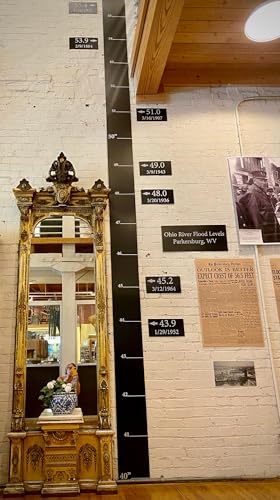
    This is Part One of “Flood to Food Banks,” a three-part exploration of how the Ohio River became America’s testing ground for social uplift.With American hunger back in the national headlines, I’ve been thinking about how this story of hunger relief began. I was surprised to learn it wasn’t with pantries and food drives, but with the Ohio River’s most devastating flood at the start of Franklin Delano Roosevelt’s second term. My own research on the topic started several years ago, when I visited the Blennerhassett Museum of Regional History in Parkersburg, West Virginia, during the summer of 2021. However, at the time, I wasn’t looking for the origins of the modern food bank system—I hadn’t even thought about it. It was just part of my general reconnaissance of the region and its many historical facets.I bought an admission ticket and stepped into the first-floor gallery, where a black gauge climbs the white brick wall, ending past the landing of the second story balcony. It was like a ruler of reckoning showing flood levels from 1884, through 1964. If you look at the picture below, the scale begins at forty feet, because that’s the elevation of the museum floor above the river’s normal height. I tilted my head up, then back a little farther, squinting to see the highest line of its record crest: 55.4 feet, January 26, 1937. The number is tidy, and the mark is exact, but the mind resists it without context, so here’s mine. At five-foot-one, I calculated it would take nearly eleven of me stacked head to toe to reach 55.4 feet. And yes, if you look closely in the mirror beside the gauge, you can see me in the reflection—small against a wall that once marked catastrophe.Now, imagine the whole town underwater to understand what fifty-five feet really means in human terms. What began here as an act of rescue in 1937—feeding, housing, and clothing the displaced—would teach government and charity alike how to manage hunger, and other human needs, long after the waters receded. It didn’t invent the modern food bank, but it changed how the nation understood feeding as logistics — a mindset federal agencies would soon build into national food programs.Even before the river crested, the Red Cross was on the ground, issuing rations and setting up shelters in churches and schools. When the flood reached its peak, President Roosevelt declared a national emergency—one of the first in response to a natural disaster—and released ten million dollars for relief. In today’s dollars, we’re talking $220 – $250 million. His order unlocked every corner of the New Deal: Works Progress Administration crews (WPA), Civilian Conservation Corps (CCC), the Army Corps of Engineers, and the Red Cross all moving in a single rhythm. Harry Hopkins, Roosevelt’s trusted advisor and briefly his Secretary of Commerce, oversaw the WPA’s seven divisions, from heavy construction to public service, education, and the women’s sewing and nursing projects that reached into every county. The WPA had begun as a jobs program employing more than 8.5 million people for an average monthly salary of about $41. Under Hopkins, the seven divisions moved as one—not only repairing infrastructure, but also delivering food, sewing blankets, and keeping disease at bay. Within a week of the crest, field kitchens were serving thousands of meals a day—a wartime scale of feeding in a peacetime disaster. The flood proved that compassion, when well organized, could act on a scale it had never attempted in peacetime.Back at my tour of the Blennerhassat Museum, I walked into another exhibit hall featuring a wooden skiff resting beneath a photograph of a long-ago packet boat. It’s small, flat-bottomed, and open to the air—the kind of boat that Parkersburg’s police and firemen rowed to deliver food and evacuate families, scraping across flooded porches and telephone wires along the way. For weeks, the city was an archipelago of rooftops and rescue routes, as were sister cities for all 981 miles of the river. But police and fire crews weren’t the only ones rowing skiffs. Younger men from the Civilian Conservation Corps were pulled from their usual duties—planting trees, building bridges, and breaking the ground—literally—on the Blue Ridge Parkway. My grandfather was a “CC man,” as they called themselves, but wasn’t serving at the time of the flood. Had he been, he would have rowed a skiff through flooded streets, delivering food and medicine, and disinfecting the mud with lime and kerosene to prevent disease—plus anything else the relief effort required of him.So yes, before America could build a system to feed its hungry, it had to learn how to feed its stranded. The Ohio River flood didn’t just reshape levees and zoning maps—it rewired the nation’s sense of how care could be organized.By the spring of 1937, the Ohio was back in its banks, but the idea it unleashed kept flowing east. Relief ...
    Mostra di più Mostra meno
    9 min
  • Kentucky Trivia: The Birth of a State
    Oct 21 2025
    I don’t mind embracing my age, so I’ll confess to watching The Daniel Boone TV show (1964–1970). I can even sing the theme song. If you’re a youngster, you may have seen it on cable reruns: Boone as the all-around good guy and frontier hero, conducting surveys and expeditions around Boonesborough, running into both friendly and hostile Indians, before, during, and even after the Revolutionary War. Of course, there’s the TV Boone and the historical one—the Boone who symbolized Virginia’s land policies more than he shaped them himself.Multiple states claim Daniel Boone because of his travels across the frontier — Pennsylvania, where he was born; North Carolina, where he came of age; Kentucky, where he blazed the Wilderness Road and helped open the interior to settlers; and Missouri, where he lived out his final years.Today, our focus is Kentucky: how Boone’s surveying and trail-blazing symbolized Virginia’s land policies, and how those policies paved the way for statehood in 1792.The explanation begins in1609 when King James I granted the Virginia colony a charter that stretched “from sea to sea,” sweeping aside the French, the Spanish, and of course the Indigenous nations already here. During the Revolution, Virginia organized Kentucky County (VA), and by the 1780s it was further divided into Fayette, Jefferson, and Lincoln Counties. Together these counties formed a distinct bloc that petitioned Congress for separation from Virginia again and again. With over 70,000 settlers by 1790, Kentucky had the numbers and leverage to become a state in 1792 and added the counties of Nelson, Bourbon, Madison, Mercer, Mason, and Woodford. For comparison, Ohio didn’t qualify for statehood until 1802, and that was through an exception called The Enabling Act.“Wasted Land”The Virginians of 1790 often described Kentucky as “wasted land,” which is not a legal term. “Waste” in property law usually referred to land not in active agricultural use (unfenced, uncleared, unplowed). Colonists and early legislators often borrowed this language to justify dispossession.Today, we can appreciate that just because the land wasn’t managed with European methods doesn’t mean it was not being managed at all. For centuries, Shawnee, Cherokee, Mingo, and other nations had hunted, farmed, and burned the forest here. They moved seasonally between river bottoms and uplands, and their claims overlapped, making Kentucky one of the most contested landscapes in eastern North America.Virginia dismissed this history and parceled Kentucky out as if it were empty. This language laid the groundwork for legislation like Virginia’s Land Law of 1779, which opened “unpatented lands” in the Kentucky district to Revolutionary War veterans of the Virginia Line, through bounty warrants. This swath of land is the Military District of Kentucky, shown in gray on the map below. Many veterans never came — selling their warrants to speculators — but the district shaped settlement patterns all the same.The Land Law also legalized settlers’ preemption claims—squatters’ rights that gave anyone who had already built a cabin or cleared fields the first chance to buy land.Encouraged by these policies, thousands funneled through the Cumberland Gap along Daniel Boone’s Wilderness Road, transforming the region within a generation.The Dodgy Deal Behind Boone’s RoadBoone became the symbolic scout, but in reality he was on the payroll of the Transylvania Company, a massive speculative land venture of dubious legality. In 1775 its founder, Richard Henderson, tried to buy twenty million acres directly from the Cherokee at Sycamore Shoals, paying with trade goods. Boone, then living in North Carolina, was hired to blaze the Wilderness Road and help build Fort Boonesborough to anchor the claim.But the Royal Proclamation of 1763 forbade private purchases of Indian land, and both Virginia and North Carolina dismissed Henderson’s colony as a usurpation of their authority (the treaty at Sycamore Shoals took place on land that was then part of North Carolina). Congress also refused to recognize it. Virginia eventually voided the purchase, though it granted Henderson and his partners 200,000 acres in Kentucky as a consolation prize, while North Carolina compensated them with land in present-day Tennessee.It was an audacious bit of what people used to call “frontier lawyering”—an illegal land grab dressed up as a colony whose backers walked away with hundreds of thousands of acres. Henderson wasn’t just any dreamer and schemer—he was a North Carolina judge, with the connections and confidence to push further than most men would dare. And if the playbook looks familiar, that’s because versions of it are still making headlines today.Transylvania collapsed as a colony, but Boone wasn’t a shareholder or speculator — he was the hired scout. When Virginia voided the Transylvania Company’s deal, Boone lost ...
    Mostra di più Mostra meno
    27 min
  • A Week Along the Ohio
    Oct 7 2025
    I rode my motorcycle to Athens, Ohio, for a BMW Riders Association rally over the Labor Day weekend. Some of my non-riding friends assume rallies are always boozy events with wet T-shirt contests, but rallies are as diverse as the people who sponsor and attend them. The quieter variety just doesn’t make the headlines. The BMW rallies I attend feel more like family reunions—the chance to connect with like-minded friends and swap stories about destinations, roads, motorcycle mishaps, and everything except politics and religion. Honestly, I can’t tell you what most of my riding friends do (or did) for their livelihoods. We’re too busy enjoying the one thing we have in common: a deep love of motorcycles and the road. Many rallygoers camp on the grounds, which adds to the sense of community—and sometimes the humor. Case in point: this sign I spotted. If you don’t see the unintended humor, give it a minute.I extended my time in Southeastern Ohio for another week so I could do deep research for the book I’m writing for the University of Illinois Press, tentatively titled, Along the Ohio: Stories the River Still Holds. While in Marietta—a river city that was the first settlement in the Northwest Territory—I learned that one of the most respected makers of historical markers is headquartered there. This is the kind of serendipity that makes my pulse race. Please treat yourself to this video about Sewah Studios, which includes scenes from each phase of the manufacturing process. I’ve watched it a couple of times now.Evolution of a Late-Blooming History BuffI didn’t study history in college, mostly because I wasn’t cut out for teaching (which is what I thought the field would necessarily lead to). Besides, my parents weren’t about to bankroll a degree without a solid career plan, so I majored in business. What’s funny is that the part of business that has always fascinated me is its role in cultural history. But that’s a story for another day.Motorcycle travel became my history professor. Out on the road, I’ve picked up lessons in geology and paleontology (Wyoming is top-notch in that department), along with human and cultural history, and plenty of “what-happened-right-here” lessons. Despite my history education being scattershot—it’s more like postcards than a sequenced curriculum—those fragments taught me to look harder at what’s missing, as well as what’s been preserved in public memorials and commemorations.Side note: my kids will someday have the joy of sorting through the 1,000+ postcards I’ve collected on my travels. I’m not doing Swedish Death Cleaning on that collection.I spent the better part of a day in Special Collections at Marietta College poring over brittle papers and pamphlets from 100+ years ago, and it occurred to me that the wording on some of the historical markers didn’t line up with what I was reading. So which version should we believe—the plaques or the papers? You’d think the archives would settle it, but there’s a counterargument to sticking with what’s held in any one collection. After all, history is collected in many different places, and hauled across rivers and seas by descendants of those who lived it.Think about it: history isn’t set in stone. New stories—and new information about old ones—surface all the time: in journals used as insulation for an old home, in the margins of a family Bible, in overlooked archives. Women’s lives are often missing from “the record,” as are the histories of marginalized and ostracized people. I’m enamored with discovering new angles on old stories I thought I knew—the narratives erased or ignored because they didn’t matter to those entrusted with recording the news at the time. When I asked the Special Collections librarian what it takes to get a marker approved, she gave me a wry smile. “Anyone can put up a sign on their property and call it a historical marker”—distinguishing between informal commemorations and the formal program. She continued, “But if you want the official emblem, or to be included in recognized history trails, you have to apply to the sponsoring organization.” She went on to explain that Ohio’s formal system—with the Ohio History Connection’s emblem and inclusion on official trails or registries—is distinct from whatever individuals might erect on their own property. In other words, there is an “official” class of markers in Ohio, and acceptance into the state program is what makes the difference. Still, this doesn’t ensure an error-free or fulsome accounting of the historical place or event being marked.Sometimes local history projects—whether a roadside plaque, a county museum, or a “heritage tourism” trail—are there to reassure the hometown crowd of their historical importance, or to entice visitors to come and spend a little money. They elevate local heroes, polish away contradictions, and speak in absolutes—”...
    Mostra di più Mostra meno
    15 min
  • Trivia Time. The Great Migration in the Ohio Valley
    Sep 25 2025
    Between 1915 and 1970, the Ohio River was more than a border between North and South—it was a corridor of change. As millions of African Americans left the rural South in what came to be called the Great Migration, cities like Pittsburgh, Cincinnati, Louisville, and Cairo became places of arrival where new communities took root.Why did so many leave? Some were pulled northward by wartime jobs that could no longer be filled by low-wage immigrant workers. Others were pushed by violence, poverty, and political exclusion in the South. Trains heading to Pittsburgh or Chicago were often full of passengers carrying not much more than a suitcase and a lead from a cousin or neighbor who had gone before.Isabel Wilkerson documents this on a national scale in The Warmth of Other Suns (2010), a deeply researched narrative history of the Great Migration that uses personal stories to illuminate what moved people, where they went, and what they left behind. The book won major awards, including the National Book Critics Circle Award for Nonfiction and the Anisfield-Wolf Award. She also shared these insights in a widely viewed TED talk.The reception in the Ohio Valley was complicated. Industries needed hands, but employers often confined newcomers to the dirtiest and most dangerous jobs. Middlemen cropped up, sometimes helping, sometimes exploiting. Housing was another battle: in Cincinnati, the West End became a crowded hub later targeted for “urban renewal”; in Pittsburgh, the Hill District thrived culturally even as city planners bulldozed blocks for highways and stadiums; in Louisville, Black families were steered into neighborhoods like Smoketown and the West End.Migration also shifted the balance of political power. Where voting rights were less restricted, Black communities could organize, cast ballots, and even tip elections. That influence sparked new opportunities as well as new forms of resistance. We still see echoes of this today in debates over redistricting, representation, and voting rights — reminders that the Great Migration continues to shape American life.From steel towns to stockyards, from church basements to union halls, the Great Migration reshaped the Ohio River valley in ways still visible today. The questions that follow will help you trace how work, politics, housing, and community life along the river were transformed by this movement of people.Note to my fantastic new subscribers:Monthly trivia is for sport. It’s not a test of intelligence or character. Do your best and enjoy learning something new. Oh, and if you do, would you share the quiz with someone else?QUESTIONSAnswers in the footnotes.1. Why did the Great Migration accelerate in states like Pennsylvania, Ohio, Indiana, and Illinois during WWI?A. Northern industries recruited Black workers to replace European immigrants whose migration slowedB. Southern states began subsidizing train fare northC. Black newspapers advertised opportunities in Northern citiesD. Federal New Deal programs required quotas of Black workers2. Who were “labor brokers” (also called “labor agents”) during the Great Migration, and why were they controversial?A. Recruiters hired by Northern industries to bring Southern Black workers northB. Middlemen who sometimes exploited migrants by taking a cut of their wages or charging feesC. Community leaders who voluntarily helped migrants find housing and jobs without payD. Organizers who tried to unionize Black workers as soon as they arrived3. When Black Southerners arrived in Northern states, many employers assumed they would be best suited for which kinds of jobs?A. Domestic service and janitorial workB. Stockyards and meatpacking plantsC. Foundries and steel millsD. Agricultural and food-processing labor (e.g., canneries, sugar beet fields)4.How did Black migration reshape politics in Ohio River states (PA, WV, KY, OH, IN, IL)?A. African Americans gained the right to vote without poll taxes and literacy testsB. The Black vote began to swing elections in cities like Chicago and ClevelandC. Both major political parties ignored Black voters until after WWIID. Migration triggered white backlash and restrictive housing covenants5.What role did the Pennsylvania Railroad (PRR) play in the Great Migration?A. It provided free rides north for Southern migrantsB. It hired thousands of Black workers as porters, track laborers, and dining car staffC. It ran ads in Black newspapers promoting Pittsburgh and Philadelphia jobsD. It lobbied Congress to restrict Black migration to control wages6.By 1970, how had the Great Migration reshaped cities along the Ohio River?A. Louisville’s Black population grew as rural Kentuckians moved into the city for industrial and wartime jobsB. Cincinnati’s West End became a major Black community before being decimated by urban renewalC. Pittsburgh’s Hill District flourished culturally but faced job losses as steel began to declineD. Cairo, Illinois, became a safe haven for ...
    Mostra di più Mostra meno
    29 min
  • The Parrot, the Pierogies, and August Wilson
    Sep 16 2025
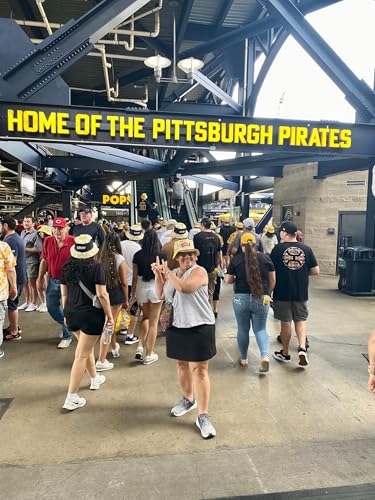
    I felt like I was twenty again, introducing my boyfriend Matt to my parents in a rush of hope they would like him. But this time, Matt was my spouse of 40 years and I was introducing him to Pittsburgh. From our Airbnb on Mt. Washington, the whole city lay at our feet—426 bridges, mostly yellow, strung across rivers like necklaces, glass towers glinting where smokestacks once stood, and of course Point Park, headwaters of the Ohio River. We boarded the Duquesne Incline, its wooden car polished by a century of hands and dungaree work pants. The pressed-tin ceiling gleamed like a copper penny, and an old lantern swung overhead as if it remembered gaslight. Even the lettering on the sign—Duquesne Incline Car #2 seemed to whisper history. We rattled down the hillside toward the city, then hoofed it to PNC Park to watch the Pirates play the Reds in a river rivalry. The closer we got to the Clemente Bridge, the more fans we saw in yellow gear. Matt struck up a conversation with a couple wearing shirts that looked Hawaiian at first glance, but instead of hibiscus and palm fronds, the fabric was scattered with Pittsburgh’s own icons—bridges, skyline, maybe even a pierogi or two. It was the perfect welcome: playful, civic-proud, and just a little kitschy. The woman tipped us off that it was Bucket Hat Night at the stadium, and I felt a silly rush of adrenaline at the thought of scoring fanwear just for walking through the gate.This was my first night at a professional baseball game, and I suspect someone alerted the whole stadium staff because our section usher even finagled a photo opp for me with the Pirate Parrot. I don’t know much about baseball, but I do know about people watching, and I got more than I bargained for that night. Little kids with their scorecards and ball mitts, camera kisses, and of course the “Great Pittsburgh Pierogy Race” sponsored by Mrs. T’s Pierogies.Matt had to ask what a pierogi really is, since they were human-sized on the track surrounding the field. If you’re also in need of the information, it’s an Eastern European dumpling, usually stuffed with potatoes, cheese, or sauerkraut—comfort food carried here by the waves of Polish, Slovak, and Ukrainian immigrants who once poured into the mills and mines. In Pittsburgh, it’s been elevated from kitchen staple to cultural mascot, and nowhere is that clearer than in the delirious spectacle of grown adults racing around the diamond in dumpling suits.But not every story in Pittsburgh that week brought pep to my step. On August 7, ICE agents raided Emiliano’s, a Mexican restaurant chain, detaining 16 workers, leaving broken doors, trashed kitchens, and fear in their wake. Here’s an update on that story.The ICE raid at Emiliano’s echoed an old Pittsburgh story. A century ago, the “new” immigrants bringing their dumplings from Poland, Slovakia, and Italy were branded as dangerous or unfit, their strikes met with state militias and Pinkertons, their very presence resented by nativists and the Ku Klux Klan. Roughly a hundred years ago, nativist tensions boiled over in Carnegie, just a few miles from where Matt and I were staying. On August 25, 1923, thirty thousand Klansmen gathered in nearby Scott Township to initiate new members, then—against the warnings of local officials—marched into Carnegie, a borough known for its proud Irish Catholic community. As they crossed the Glendale Bridge, residents met them with rocks and clubs. Shots followed, leaving more than a hundred people injured and one Klansman dead.In the aftermath Carnegie residents were charged, Klansmen were not, and the national Klan leader, Hiram Wesley Evans, used the death as propaganda to lure even more recruits. Yesterday’s “foreign” Catholics and Slavs, today’s Mexican restaurant workers—the names and cuisines change, but the scapegoating machinery looks hauntingly familiar.Yet even in those dark chapters, people found ways to knit themselves together—through churches, clubs, and often through sport. Pittsburgh has long used games as a kind of glue, binding neighborhoods that outsiders tried to divide (as you learned in August Trivia). I saw it again when Matt and I visited the Western Pennsylvania Sports Museum inside the Heinz History Center, where the displays trace everything from mill league softball to the Steelers’ dynasty years. If the Sports Museum showed how games helped Pittsburghers find belonging, the city’s native son and playwright August Wilson revealed the same search playing out in living rooms and backyards.Not yet a subscriber? Let’s fix that!I’m not a theatah person, but everyone I know from Pittsburgh insisted I visit the August Wilson African American Cultural Center, which honors the city’s most famous playwright. Their pride was unmistakable: to Pittsburghers, Wilson is both neighbor and national treasure, their own Shakespeare whose words have traveled far beyond the Hill District ...
    Mostra di più Mostra meno
    11 min
  • August Trivia: The Manly Sports of Corporate Paternalism
    Aug 26 2025
    After the Civil War, industrial giants along the Ohio River—think Carnegie Steel, the railroads, and early electrical firms—began sponsoring baseball and football teams as part of a larger push to shape worker behavior, boost morale, and anchor company loyalty. Before jumping into the quiz, here’s some background. Industrial Culture Loved “Manly” SportsIn the late 19th and early 20th centuries, steel mills, coal mines, and railroad yards weren't just workplaces—they were gritty proving grounds for “real men.” * Baseball emphasized discipline, timing, and team cohesion—ideal traits for industrial workers.* Football, especially in its early brutal form, was framed as a crucible of toughness and hierarchy. Company executives loved it for “character building.”The captains of industry (cough-cough) started “works teams” not simply as morale boosters, but also as tools of corporate paternalism, offered up alongside housing, clinics, and “recreation grounds” to reduce turnover and, conveniently, undermine union organizing. I wrote about this in the Kentucky coal fields on my website because my maternal family experienced Henry Ford’s “largesse”.Some players held nominal jobs—night watchman, messenger, or other make-work titles—but were effectively paid to win, not to work. By the early 1900s, companies like Carnegie Steel were recruiting ringers and paying salaries that rivaled the minor leagues, all while claiming amateur status. Teams like the Youngstown Ohio Works and Homestead Library & Athletic Club dominated regional leagues and occasionally squared off against professional clubs in exhibition games. The line between amateur sport and industrial propaganda? Let’s just say it was easy to blur when the scoreboard looked good.I was in Pittsburgh a couple of weeks ago at the Western Pennsylvania Sports Museum and will give you a longer story in a future newsletter. When Works Teams Became ControversialFirst get to know The Ohio–Pennsylvania League (O–P League)* Founded: 1905 and featured franchises based in Ohio, Pennsylvania, and West Virginia. The league was founded by Charlie Morton and operated for eight seasons, with the Akron Champs winning four league championships.* Level: The teams would be considered a Class C minor league by later standards, though such classifications weren’t fully formalized at the time.* Region: Mostly small-to-mid-sized industrial cities along the Ohio River and its tributaries—including Youngstown, Niles, Canton, Akron, and New Castle, PA.In the 1905 Ohio–Pennsylvania League season, the Youngstown Ohio Works—sponsored by Carnegie Steel—drew sharp criticism for paying its players nearly double the league average, despite claiming to be “amateur.” Local newspapers fretted that the team’s salaries threatened the entire league's viability by forcing smaller-town clubs to overspend or fold.To make matters wilder, a riot broke out during a game in Niles, Ohio, triggered by a fight among fans that escalated into dozens flooding the field and interfering with play, revealing how tightly corporate ambition, sport, and public spectacle intertwined. Works teams weren’t just mascots of industrial generosity—they were flashpoints for debates about fair play, regional pride, and the limits of corporate influence in civic space. And when fans stormed the field, they showed that sport still belonged to the community—not just the company.From Works Teams to the Big LeaguesAs the 20th century unfolded, the scrappy industrial teams of the Ohio River Valley gave way to the polished machinery of professional leagues. No longer rooted in a specific mill or factory, teams began to represent entire cities—and their fans. With that shift came new forces: advertising, syndication, star players, and spectacle. Sports were no longer just tools of corporate morale or community cohesion. They became business.The relationship between fans and teams evolved too. Where once the pitcher might’ve been your neighbor or coworker, now he lived in a nicer part of town—or maybe another city altogether. But the ties didn’t break—they morphed. Media coverage, mascots, and radio broadcasts helped forge a new kind of loyalty, more symbolic than social. The rise of mass media didn’t just change the game; it changed who the game was for.Note to my fantastic new subscribers:Monthly trivia is for sport. It’s not a test of intelligence or character. I had to do a significant amount of research before writing this. Do your best and enjoy learning something new.Would you share this quiz with someone else? Please?QUESTIONSAnswers in the footnotes. Good luck.* Which of the following are true about the Homestead Library & Athletic Club football team near Pittsburgh in the early 1900s? Select all that apply.* Its roster included multiple Ivy League All-Americans recruited by William Chase Temple with unusually high salaries.* The team emerged after...
    Mostra di più Mostra meno
    42 min