Episodi

  • What Is the Universe? The Truth May Be Stranger Than You Think... Answers in Cosmology
    Jul 5 2026

    NOW ON SPOTIFY!! https://open.spotify.com/show/033COQf6xMfifFGv7ZivRH Step into the mind-expanding journey that challenges everything we think we know about the universe. This episode explores not what the universe is, but how we have imagined it—across cultures, centuries, and civilizations. From Aboriginal dreamings to the Copernican and Darwinian revolutions, from medieval theological models to the high-energy frontiers of modern astrophysics, we peel back layer after layer of cosmic masks humanity has crafted. Each universe we’ve believed in—from the geocentric to the godless—is a story we’ve told ourselves to make sense of existence.We’ll dive into the origins of cosmology as a blend of science, philosophy, theology, and art. Why do humans invent universes? How do cultural myths shape societies—and vice versa? Why did the Age of Magic give way to Theism, and how did the rise of science save Europe from the dark cosmos of witch trials? You’ll hear how ideas like the “Great Chain of Being” and the “Principle of Plenitude” still echo today in our environmental crises, and why our future cosmologies may need new moral frameworks—not just new tech.Whether it’s the soul-searching wisdom of Erwin Schrödinger or the cold despair of Bertrand Russell, this podcast embraces the mystery and madness of the cosmos. And in the end, one truth remains: every universe we’ve ever known is a reflection of the human mind—the cosmos dreaming of itself.🔭✨ An unforgettable voyage through time, thought, and space. Because the question isn’t just “What is the universe?”—it’s “What does the universe mean?”#WhatIsTheUniverse #CosmicMystery #HistoryOfTheUniverse #HumanCosmos #PhilosophyOfScience #AncientMyths #ModernCosmology #BigQuestions #UniverseExplained #ScienceVsMyth #CosmicPerspective #SpiritualUniverse #MythologyAndScience #OriginOfTheUniverse #DeepThoughts #AstronomyHistory #CosmosAndCulture #MagicToScience #HumanityAndTheStars #MindAndUniverse

    Mostra di più Mostra meno
    48 min
  • Cosmology's Strange Origins | Crystal Spheres: Inside Aristotle’s Ancient Universe #space #cosmos
    Jul 4 2026

    NOW ON SPOTIFY!! https://open.spotify.com/show/033COQf6xMfifFGv7ZivRH Step into a cosmos where Earth is the unshakable center, the stars are divine, and the heavens move in perfect circles. In this episode, we explore the Aristotelian Universe — a model that shaped ancient and medieval thought for nearly two millennia. Discover how Aristotle’s vision of nested crystalline spheres and elemental harmony gave structure to the cosmos long before telescopes or quantum theories.


    Was it science, philosophy, or something in between? We unravel the elegance and limitations of this ancient worldview, tracing its influence from Greek philosophers to Renaissance astronomers who dared to break the spheres.


    #Aristotle #AncientCosmos #PhilosophyOfScience #AristotelianUniverse #HistoryOfAstronomy #CrystalSpheres #Geocentrism #MedievalScience #AncientPhilosophy #PodcastAstronomy #StarryIdeas

    Mostra di più Mostra meno
    45 min
  • The Moment Pulsars Made Sense — Neutron Stars, Gold, Pacini, and the First Cosmic Glitches
    Jul 3 2026

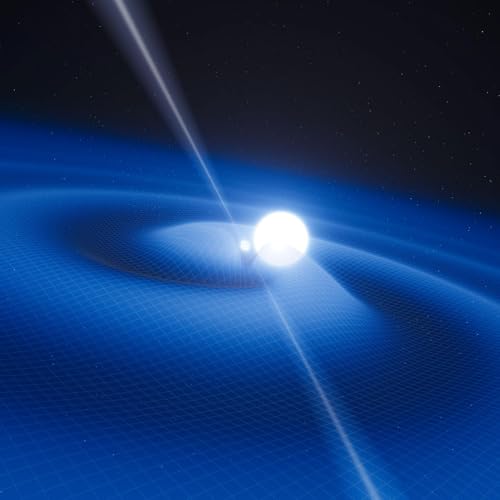
    NOW ON SPOTIFY!! https://open.spotify.com/show/033COQf6xMfifFGv7ZivRH The mystery of pulsars was finally unlocked when Franco Pacini and Thomas Gold independently proposed one of the most elegant ideas in modern astrophysics: pulsars are rapidly rotating neutron stars. Pacini argued that the immense magnetic and rotational energy of neutron stars—formed in supernova explosions—could power surrounding remnants like the Crab Nebula. Gold refined this vision, predicting two testable consequences: pulsars must slow down over time, and younger pulsars should rotate faster. Both predictions were confirmed with astonishing speed.Australian radio astronomers played a decisive role in proving the theory. Using the Molonglo telescope, Michael Large and Alan Vaughan discovered the Vela pulsar—far faster than any previously known—and located it near the center of a supernova remnant, just as Baade and Zwicky had predicted decades earlier. Ingenious low-tech methods allowed them to measure pulse rates exceeding chart recorders’ limits, revealing pulsars flashing more than ten times per second. Soon after, even faster pulsars were found near the Crab Nebula.Further confirmation came from polarization studies at the Parkes radio telescope. Observations showed the pulsar’s radio beam flipping polarization with each pulse—exactly what Gold and Pacini’s rotating, magnetized neutron star model predicted. Charged particles accelerated along intense magnetic field lines produced lighthouse-like beams sweeping across space. When those beams crossed Earth, radio telescopes detected a pulse.Then came the shock: the Vela pulsar suddenly sped up. This “glitch,” independently confirmed at Parkes and NASA’s Goldstone station, revealed that neutron stars are not rigid objects but dynamic, exotic worlds with superfluid interiors. With that discovery, pulsars became not just cosmic clocks, but laboratories for extreme physics—confirming neutron stars as one of the most extraordinary objects in the universe.Like, Share, and Follow for deep dives into the discoveries that reshaped astronomy and our understanding of the cosmos.#Pulsars #NeutronStars #Astrophysics #RadioAstronomy #ThomasGold #FrancoPacini #VelaPulsar #Supernovae #ExtremePhysics #ScienceHistory #SpaceScience

    Mostra di più Mostra meno
    20 min
  • Europa’s Deadly Radiation, Neptune’s Summer Mystery & The Sun’s Coming Storm
    Jun 30 2026

    NOW ON SPOTIFY!! https://open.spotify.com/show/033COQf6xMfifFGv7ZivRH What if one moon could glow in the dark… while another planet is cooling during summer… and our own star is preparing to unleash chaos?On Europa, Jupiter’s icy moon, radiation levels are so extreme that a human would perish in a single day. Yet beneath its frozen crust lies an ocean that may contain twice as much water as all of Earth’s seas combined. NASA research suggests Europa may even emit a faint glow at night as Jupiter’s radiation energizes its icy surface. Could plumes of water vapor reveal the secrets of a hidden ocean — and perhaps life?Meanwhile, 4.5 billion kilometers away, Neptune’s southern hemisphere is behaving strangely. During a 40-year summer, temperatures unexpectedly dropped… then suddenly surged. What is driving this dramatic atmospheric shift? Extreme winds? Photochemical reactions? Or something we do not yet understand?And closer to home, the Sun is entering its most intense phase. Solar storms, coronal mass ejections, and magnetic reversals threaten power grids, satellites, and global internet infrastructure. A storm like the 1859 Carrington Event today could cause trillions in damage. Are we prepared for Solar Cycle 25’s peak?From Europa’s hidden ocean… to Neptune’s climate anomaly… to the Sun’s rising fury — this episode explores the most dangerous and mysterious forces shaping our solar system right now.🌠 Watch until the end to understand what could impact Earth in the coming decade.🔔 Like, Share, and Subscribe for deep space documentaries and cosmic mysteries.#Europa #Neptune #SolarStorm #Jupiter #SpaceMysteries #EuropaClipper #JamesWebb #NASA #Juno #Voyager2 #SolarCycle25 #CarringtonEvent #Astrobiology #Exoplanets #SpaceDocumentary #CosmicWeather #OuterPlanets #ScienceNews #JupiterMoons #Astronomy

    Mostra di più Mostra meno
    20 min
  • The Pluto Enigma: New Horizons, Triton’s Secrets & The Frozen Frontier Beyond Neptune
    Jun 29 2026

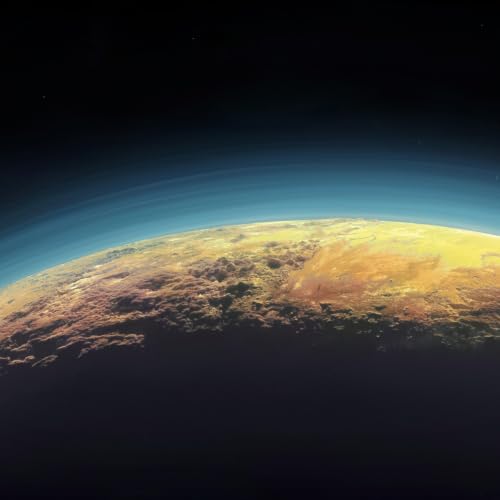
    NOW ON SPOTIFY!! https://open.spotify.com/show/033COQf6xMfifFGv7ZivRH For decades, Pluto was nothing more than a distant blur — a faint speck at the edge of the Solar System. Then in 2015, everything changed.After a nine-year journey across billions of kilometers, NASA’s New Horizons spacecraft revealed a world no one expected. Towering mountains of water ice. Flowing nitrogen glaciers. A vast heart-shaped plain known as Sputnik Planitia. A thin, hazy atmosphere layered with mysterious blue fog.Pluto was no longer a frozen relic — it was geologically alive.But the mysteries didn’t end there.Pluto and its massive moon Charon form a rare binary system, locked in an eternal gravitational dance. Beneath Sputnik Planitia, scientists detected signs of a subsurface ocean. Cryovolcanoes may reshape the surface. Nitrogen behaves like glacial ice. And Pluto’s atmosphere can dramatically thicken and collapse over time.Beyond Pluto lies another enigma — Triton, Neptune’s strange retrograde moon. Captured from the Kuiper Belt, Triton may once have been a wandering dwarf planet like Pluto itself. It orbits backward, erupts with geysers, and may hide an ocean beneath its frozen crust. Could it harbor the ingredients for life?At the frozen frontier of our Solar System, worlds once dismissed as insignificant are proving to be among the most dynamic and mysterious objects ever explored.The edge of the Solar System is not silent.It is active.It is evolving.And it is full of unanswered questions.🔭 Watch until the end to uncover what New Horizons truly revealed — and why Pluto, Triton, and the Kuiper Belt may redefine our understanding of planetary science.Like, Share, and Subscribe for more deep-space mysteries and cosmic discoveries.#Pluto #NewHorizons #KuiperBelt #Triton #Neptune #NASA #SpaceExploration #DwarfPlanet #SputnikPlanitia #Cryovolcano #OuterSolarSystem #JamesWebb #PlanetaryScience #SpaceDocumentary #Astronomy #CosmicMystery #Voyager #SolarSystem #FrozenWorlds

    Mostra di più Mostra meno
    19 min
  • Andromeda’s Hidden Giant, The Most Powerful Gamma Ray Burst Ever & Callisto’s Secret Ocean
    Jun 28 2026

    In this episode, we explore three astonishing space mysteries that challenge everything we thought we knew about the universe.First, amateur astronomers using backyard telescopes discovered an enormous oxygen-emitting structure near the Andromeda Galaxy — something no major observatory had ever reported. Known as STDS01, this massive cloud was only visible through a special doubly ionized oxygen filter. How could something nearly the size of Andromeda itself remain invisible to Hubble and multi-wavelength sky surveys? Is it part of Andromeda’s halo… a relic of galactic interaction… or something entirely unexpected?Then we dive into the record-shattering gamma ray burst GRB 221009A, detected on October 9, 2022. Observed by Fermi Gamma-ray Space Telescope** and Swift Observatory, this explosion originated 2 billion light-years away — yet it was powerful enough to disturb Earth’s upper atmosphere. Was this the death of a massive star forming a black hole? Could such events forge heavy elements like gold? And why was this burst so extraordinarily bright?Finally, we journey to Callisto, one of Jupiter’s Galilean moons discovered by Galileo Galilei in 1610. Its heavily cratered surface hides a surprising secret: a suspected subsurface ocean buried beneath 150 kilometers of ice. Could this ancient world harbor the ingredients for life? Why is it geologically frozen in time compared to Europa and Io?From hidden galactic structures to cosmic explosions and frozen ocean worlds — the universe still holds mysteries we are only beginning to uncover.

    Mostra di più Mostra meno
    20 min
  • The Night the Crab Pulsar Spoke in Light — How Astronomers First Detected an Optical Pulsar
    Jun 27 2026

    This episode tells the dramatic, error-filled, and ultimately historic story of how astronomers first detected visible light pulses from the Crab Pulsar—proving that a neutron star could flash not only in radio waves, but in optical light. In the late 1960s, the challenge was immense: the pulses were faint, erratic, and buried in background noise, requiring innovative timing electronics, frequency synthesizers, custom photometers, and a novel method of synchronizing telescope sampling with the pulsar’s rotation. By stacking thousands of individual pulses into a single averaged light curve, the team attempted to reveal a signal no one had ever seen before.Early attempts failed. Cold nights, clouded skies, equipment limitations, and a critical miscalculation of the pulsar’s period—caused by Earth’s orbital motion—nearly doomed the project. Only after correcting for Doppler shifts and recalibrating the timing system did the breakthrough occur. In a dark, freezing dome on Kitt Peak, green spikes suddenly appeared on a monitor: optical flashes perfectly synchronized with the Crab’s radio pulses. What followed was careful skepticism—tests, reboots, frequency changes, telescope offsets—until the conclusion became unavoidable. The Crab Pulsar was flashing in visible light.The discovery triggered an immediate race to identify which of two closely spaced stars at the nebula’s core was responsible. With diaphragms too large to isolate each star, the team improvised—eventually crafting a microscopic aperture from aluminum foil under a microscope. Listening directly to the photometer, they heard the pulsar’s rapid clicking like a card in bicycle spokes. Almost simultaneously, a rival team using a larger telescope confirmed the source: the south-preceding star, now known as the Crab Pulsar.This moment reshaped astronomy. It revealed that pulsars emit enormous energy at optical wavelengths, continuously powering the Crab Nebula nearly a millennium after the supernova explosion. It confirmed neutron stars as multi-wavelength engines and helped launch pulsar astronomy as a new scientific discipline—one that would later enable tests of general relativity and even the discovery of the first exoplanets. The story is also a reminder of how close history can come to changing: archived data later showed that another astronomer had unknowingly recorded the optical pulses months earlier, missing discovery by a matter of analysis timing.

    Mostra di più Mostra meno
    23 min
  • Callisto, Ceres & Europa: The Hidden Oceans and Giant Craters of Our Solar System
    Jun 25 2026

    From the most heavily cratered moon in the Solar System to a dwarf planet that may be venting water into space… today we explore the frozen worlds that challenge everything we think we know about planetary evolution.Orbiting Jupiter, Callisto is a scarred relic of the early Solar System. With colossal impact basins like Valhalla stretching nearly 3,800 km across, and massive ring structures such as Asgard, this ancient moon preserves billions of years of cosmic history. Data from the Voyager and Galileo missions reveal a mysterious interior—possibly not in full hydrostatic equilibrium—hinting at a complex mix of rock, ice, and maybe even a hidden subsurface ocean.Then we travel inward to Ceres, the largest object in the asteroid belt. Once classified as a planet, now officially a dwarf planet, Ceres shocked scientists when NASA’s Dawn spacecraft discovered bright sodium carbonate deposits, cryovolcanic features like Ahuna Mons, and evidence of water vapor plumes. Could this icy world still be geologically active today?Finally, we examine Europa, Jupiter’s enigmatic ice-covered moon. With vast linear fractures, chaos terrain, and a subsurface ocean potentially twice the volume of Earth’s oceans, Europa remains one of the most promising locations in the search for extraterrestrial life.Giant impact scars. Hidden oceans. Cryovolcanoes. Subsurface seas.These worlds may hold the key to understanding the violent and water-rich history of our Solar System.🔔 Like, Share, and Subscribe for more deep-space mysteries.#SolarSystem #Callisto #Ceres #Europa #JupiterMoons #DawnMission #GalileoMission #Voyager #ValhallaCrater #AsgardCrater #Cryovolcanism #SubsurfaceOcean #AsteroidBelt #PlanetaryScience #SpaceDocumentary #NASA #Astronomy #DeepSpace #HiddenOceans

    Mostra di più Mostra meno
    20 min