

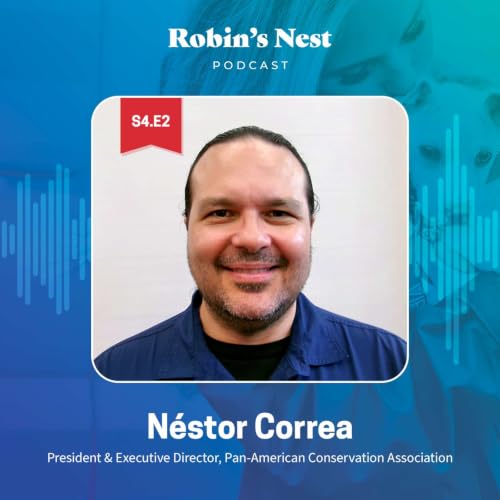
Slow Down, Sloths Are Being Tracked: Néstor Correa on Life After Rescue
Impossibile aggiungere al carrello
Rimozione dalla Lista desideri non riuscita.
Non è stato possibile aggiungere il titolo alla Libreria
Non è stato possibile seguire il Podcast
Esecuzione del comando Non seguire più non riuscita

Slow Down, Sloths Are Being Tracked: Néstor Correa on Life After Rescue
-
Letto da:
-
Di:
What happens to a rescued animal after you let it go? Néstor Correa wasn't satisfied with not knowing. On this episode of Robin's Nest, Dr. Robin Ganzert sits down with the environmental lawyer turned conservation scientist who founded Panama's first wildlife rescue organization. During the Panama Canal Expansion, he led one of the largest wildlife relocations ever attempted in a tropical forest, moving nearly 2,500 animals across more than 100 species. Then he asked the question the field had been avoiding: not how many animals were released, but how many survived.
To find out, his team put radio trackers on rehabilitated sloths and followed them into the rainforest. The results are some of the first hard evidence of what happens to them after release. Néstor and Robin talk about the rescue, what sloths have taught him, and the Panama Nature Center, a new home for rescue, neonatal care, research and education. He's also a finalist for the Kiessling Prize, which could help him expand that work and build a conservation education center for Panamanian children.
Listen now on Robin's Nest, the podcast where the science of animal welfare meets the heart of humane advocacy.