Research for Real copertina

Research for Real

Research for Real

Di: Mohsin Malik
Ascolta gratuitamente

3 mesi a soli 0,99 €/mese

Dopo 3 mesi, 9,99 €/mese. Si applicano termini e condizioni.

A proposito di questo titolo

Welcome to Research for Real: Translating Research into Actionable Impact for Sustainable Development where we bridge the gap between cutting-edge academic research and everyday life. Join us as we unpack insights on the organizational dynamics to create innovative outcomes in the digital age, sustainable supply chains and circular economy. Our discussions explore how these ideas align with global challenges, driving impact toward the United Nations Sustainable Development Goals: SDG-12 (Responsible Consumption & Production), SDG-9 (Industry, Innovation & Infrastructure), and SDG-3 (Good Health & Well-Being). Tune in to discover actionable takeaways that empower individuals and businesses to create a more sustainable and innovative future.

Please cite the original source https://doi.org/10.1108/IJPDLM-05-2023-0185
Economia Gestione e leadership Management
  • User Experience Dictates Global Supply Chains
    Jan 21 2026

    This podcast synthesizes findings from a study on the relationship between organizations' perceptions of Artificial Intelligence (AI) and the nature of Supply Chain Learning (SCL). Based on an online survey of 206 top and middle managers from various industry sectors in Brazil, the research reveals that perceptions of AI's usefulness and its ease of use are critical determinants of how knowledge is created, shared, and driven across a supply chain.

    The central conclusion is that different combinations of Perceived Usefulness (PU) and Perceived Ease of Use (PEOU) of AI correlate directly with four distinct types of SCL.

    • When both PU and PEOU are low, a Captive SCL emerges, where a dominant focal company controls learning within a closed network.

    • When PU is high but PEOU is low, a Selective SCL occurs, with a focal company leading learning across an open network of chosen partners.

    • When PU is low but PEOU is high, a Consortium SCL prevails, driven by non-focal companies within a closed network.

    • When both PU and PEOU are high, a Distributed SCL is fostered, characterized by democratized learning efforts led by diverse players across multiple supply chains.

    These findings provide a strategic framework for managers, demonstrating that by prioritizing digitalization efforts and shaping perceptions of AI, they can actively influence the learning dynamics within their supply chains to enhance decision-making, problem-solving, and overall competitive advantage.

    Source: Tortorella, G. L., Powell, D., Malik, M., Alfalla-Luque, R., Portioli-Staudacher, A., & Nascimento, D. (2025). Perceptions of AI adoption and their impact on supply chain learning. https://www.tandfonline.com/doi/full/10.1080/13675567.2025.2547202

    Mostra di più Mostra meno
    14 min
  • Temporary Organizing Theory: A Spectrum for Cross-Fertilization
    Dec 3 2025

    This podcast synthesizes the core arguments from the essay "Theorizing Temporary Organizing to Foster True Cross Fertilization," authored by Maude Brunet, Catriona Burke, Mohsin Malik, and Jörg Sydow. The central thesis is a call for stronger, more creative theorizing within project studies to achieve a "true cross-fertilization" with related disciplines, particularly organization studies. Currently, the exchange is predominantly a one-way flow, with organization theory enriching project studies.

    The authors propose that advancing theory occurs on a spectrum, ranging from top-down approaches that leverage established reference theories to bottom-up approaches that develop "home-grown" theories from empirical phenomena. To illustrate this spectrum, the essay presents two distinct examples:

    1. Top-Down Approach: The application of Practice-Driven Institutionalism (PDI) from organization theory to understand how macro-level institutional pressures are enacted through micro-level, everyday practices within temporary organizing contexts.

    2. Bottom-Up Approach: A phenomenon-driven examination of crisis response, specifically how temporary organizations emerged, evolved, and stabilized during the COVID-19 pandemic, generating novel insights into emergent organizing.

    By focusing on "temporary organizing" as a processual and practice-based phenomenon, rather than just a structural form, a common ground is established for a more robust, two-way dialogue between disciplines. This approach not only strengthens project studies as an academic field but also promises to generate insights with theoretical and practical implications for broader management and organization scholarship.

    Source: Brunet, Maude, et al. "Theorizing temporary organizing to foster true cross fertilization: Focus on projects, processes and practices." International Journal of Project Management (2025): 102753. Complimentary copy on

    https://www.sciencedirect.com/science/article/pii/S026378632500078X

    Mostra di più Mostra meno
    16 min
  • How do digital capabilities lead to sustainable performance?
    Nov 30 2025

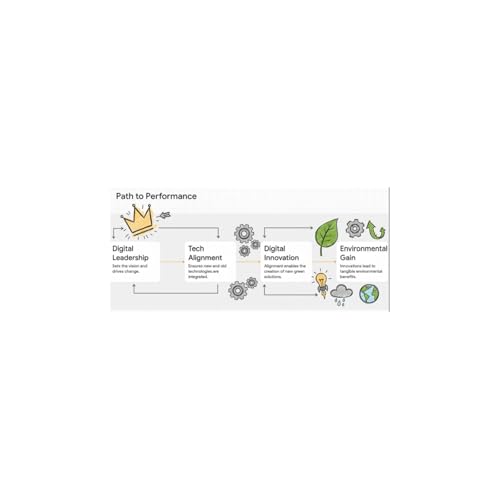
    This podcast synthesizes findings from a research study on the impact of Digital Leadership Capability (DLC) on the environmental performance of organizations. Drawing on Resource Orchestration Theory (ROT), the study investigates the mediating roles of Digital Technology Alignment (DTA) and Digital Innovation. Based on survey data from 183 Australian healthcare organizations, the research empirically demonstrates that DLC positively influences environmental performance through both direct and indirect pathways.

    The core findings indicate that DTA and digital innovation are critical enhancing mechanisms. DTA, the fit between new and existing technologies, and digital innovation, the creation of new digital solutions, both independently and serially mediate the relationship between DLC and environmental performance. This establishes a clear sequence: effective digital leadership fosters technological alignment, which in turn enables digital innovation, ultimately leading to improved environmental outcomes. The study challenges the view that technology alone drives sustainability, highlighting instead that orchestrated leadership, alignment, and innovation are essential for translating digital potential into tangible environmental benefits.

    Source: Chavez, Roberto, Mohsin Malik, and Amir Andargoli. "Digital Leadership Capability and Environmental Performance: The Role of Digital Technology Alignment and Digital Innovation." Business Strategy and the Environment (2025). Complementary download avauilable at https://onlinelibrary.wiley.com/share/author/9AUMSW5APBSDSQF9NZDB?target=10.1002/bse.70353

    Mostra di più Mostra meno
    15 min
Ancora nessuna recensione