• Policy Perspective On Gig Work: नौकरी के नए मौके या श्रमिकों की मजबूरी?
    Jan 22 2026

    Quick Commerce के इस दौर में प्लेटफॉर्म और वर्कर का रिश्ता कैसा होना चाहिए? क्या वर्कर के पास वाकई अपनी मर्ज़ी चलाने की ताकत है? क्या इस सेक्टर में ‘Protectionist’ नीतियां लाने से कामदारों की मदद होगी या उनका नुक्सान? तो चलिए, चाय की प्याली उठाइए और शुरू करते हैं आज की पुलियाबाज़ी।

    We discuss:

    * How to think about Gig Work?

    * Defining Gig Work

    * Our limited imagination of Gig Work

    * When Gig Work Becomes Full-time Work

    * Gig Work Is Contract Work

    * The Libertarian Utopia of Gig Work

    * Competition is the Key

    * Quick Commerce

    * What should be the relationship between Gig Worker and Platforms

    * Agency of the Gig Worker

    * Consequences of Protectionist Policies

    Subscribe to Puliyabaazi Print Magazine Here:

    Related Links:

    India Policy Watch #1: Compassion vs Empathy, the Gig Work Edition by Pranay Kotasthane

    Game | Be an Uber Driver

    Related Episodes:

    नौकरी का भविष्य। What Could a Jobless World Look Like?

    EP250 समस्या रोज़गार या वेतन की? Reducing Regulatory Cholesterol ft. Manish Sabharwal

    Puliyabaazi Playlist:

    Thanks for reading पुलियाबाज़ी Puliyabaazi! Subscribe for free to receive new posts and support my work.

    If you have any questions for the guest or feedback for us, please comment here or write to us at puliyabaazi@gmail.com. If you like our work, please subscribe and share this Puliyabaazi with your friends, family and colleagues.

    Website: https://puliyabaazi.in

    Hosts: @saurabhchandra @pranaykotas @thescribblebee

    Twitter: @puliyabaazi

    Instagram: https://www.instagram.com/puliyabaazi/

    Subscribe & listen to the podcast on iTunes, Google Podcasts, Castbox, AudioBoom, YouTube, Spotify or any other podcast app.


    This is a public episode. If you would like to discuss this with other subscribers or get access to bonus episodes, visit www.puliyabaazi.in
    Mostra di più Mostra meno
    50 min
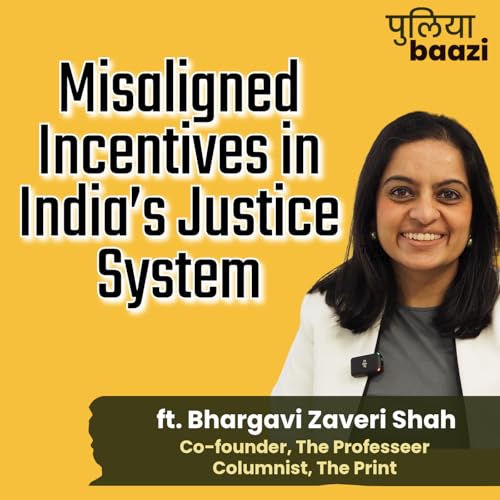
  • डेटा के सहारे भारतीय अदालतों की भूल-भुलैया कैसे पार करें? The Misaligned Incentives in India’s Justice System ft. Bhargavi Zaveri Shah
    Jan 15 2026
    भारतीय न्याय व्यवस्था की बात आते ही सब को सनी देओल का मशहूर “तारीख़ पर तारीख़” डायलॉग तो याद आता ही है, पर असली सवाल ये है कि ऐसा क्यों है? ऐसा क्यों है कि हमारी न्याय व्यवस्था आम इंसान को समय पर न्याय दिलाने में नाकाम दिखाई पड़ती है? इसी बात की तह तक जाएँगी आज की हमारी मेहमान भार्गवी ज़वेरी शाह के साथ। इस चर्चा में हमारे लिए तो कई TIL मोमेंट्स आये, आप की भी जानकारी बढ़ेगी ये वादा है। तो सुनिए और अपने दोस्तों के साथ शेयर कीजिये। We discuss:* Start-up in Legal Analytics* How can litigants make better decisions for themselves?* Information Asymmetry in Justice System* Why are lawyers not allowed to advertise in India?* The side-effect of lawyers not able to charge a success fee* Tareekh pe Tareekh! Aisa Kyon?* What are the incentives for Judges?* How are Court Cases counted in Indian Courts?* Will it help to have more judges?* Assessing the impact of court vacation* What happens once you win a court case?Please note that Puliyabaazi is now available on Youtube with video.Related Links:Beyond Pendency: Counting Cases Correctly | Link Do court vacations matter: evidence from the Bombay High Court | Link10 years of the Commercial Courts Act—has the law delivered on its promise? | LinkThe Professeer More on this topic:न्यायिक सुधार कोई रॉकेट साइंस नहीं है | Lessons for Judiciary from Space Sector by Surya Prakash BSRelated Episodes:न्याय पाने का निजी रास्ता। All About Arbitration. ft. Prashant Narangन्यायपालिका बनाम विधायिका? Basic Structure DoctrinePuliyabaazi Playlist:If you have any questions for the guest or feedback for us, please comment here or write to us at puliyabaazi@gmail.com. If you like our work, please subscribe and share this Puliyabaazi with your friends, family and colleagues.Website: https://puliyabaazi.inGuest: @bhargavizaveriHosts: @saurabhchandra @pranaykotas @thescribblebeeTwitter: @puliyabaaziInstagram: https://www.instagram.com/puliyabaazi/Subscribe & listen to the podcast on iTunes, Google Podcasts, Castbox, AudioBoom, YouTube, Spotify or any other podcast app.Thanks for reading पुलियाबाज़ी Puliyabaazi! Subscribe for free to receive new posts and support my work. This is a public episode. If you would like to discuss this with other subscribers or get access to bonus episodes, visit www.puliyabaazi.in
    Mostra di più Mostra meno
    55 min
  • वेनेज़ुएला, अमेरिका और अंतरराष्ट्रीय दोगलापन। US Attack on Venezuela, and Hypocrisy in International Relations
    Jan 8 2026

    This week on Puliyabaazi, we discuss the Venezuela crisis. While this is still an ongoing issue, we take this opportunity to discuss the power dynamics and importance of hypocrisy in international relations. Do listen in.

    We discuss:

    * Did the U.S. attack Venezuela for its Oil?

    * Monroe Doctrine and America’s Sphere of Influence

    * Does America want Greenland’s rare earth minerals?

    * Hypocrisy in International Relations

    * The usefulness of hypocrisy

    * The downside of pure powerplay

    * Authority = Power + Legitimacy

    * Why did China not intervene?

    * Trump’s desire for Nobel Prize

    Subscribe to Puliyabaazi Print Magazine Here:

    Related Links:

    Anticipating the Unintended | Matsyanyaaya: Hypocrisy in International Relations by Pranay Kotasthane

    https://publicpolicy.substack.com/i/732804/matsyanyaaya-hypocrisy-in-international-relations

    Related Episodes:

    कैसे हुआ अर्जेंटीना का बेड़ा ग़र्क़? Lessons from Argentina’s Economic Decline

    चीन की विश्वगुरु हसरतें। How China plans to change the world order? Ft. Manoj Kewalramani

    Puliyabaazi Playlist:

    If you have any questions for the guest or feedback for us, please comment here or write to us at puliyabaazi@gmail.com. If you like our work, please subscribe and share this Puliyabaazi with your friends, family and colleagues.

    Website: https://puliyabaazi.in

    Hosts: @saurabhchandra @pranaykotas @thescribblebee

    Twitter: @puliyabaazi

    Instagram: https://www.instagram.com/puliyabaazi/

    Subscribe & listen to the podcast on iTunes, Google Podcasts, Castbox, AudioBoom, YouTube, Spotify or any other podcast app.


    This is a public episode. If you would like to discuss this with other subscribers or get access to bonus episodes, visit www.puliyabaazi.in
    Mostra di più Mostra meno
    43 min
  • भारतीय एयरलाइन्स की हालत इतनी ख़स्ता क्यों? India’s Weak Regulatory Capacity in Aviation Sector
    Jan 1 2026
    2026 की हार्दिक शुभकामनाएँ। पिछले साल भारतीय एविएशन सेक्टर में काफ़ी उथल-पुथल मची रही। पहले AI171 का एक्सीडेंट और साल के अंत में इंडिगो की हज़ारों फ़्लइटो का कैंसिल होना। आखिर क्या वजह है कि दुनिया के सबसे तेज़ी से बढ़ते इस मार्केट में आज उँगलियों पर गिनने लायक खिलाड़ी ही बचे हैं? इस कहानी में नियामक संस्थाओं की क्या भूमिका रही? क्या यह मार्केट पावर का खेल ग्राहकों की जेब पर भारी पड़ रहा है? इसी पर आज की चर्चा।We discuss:* Trouble in the Aviation sector* Why are there so few players in Commercial Aviation?* Is Market Power the issue?* Impact of FDTL guidelines* How are the regulators in the Aviation sector structured?* How do Aviation regulators function in other countries?Subscribe to Puliyabaazi Print Magazine Here:Related Links:Anticipating the Unintended | India Policy Watch #2: Getting Things Right by Pranay KotasthaneIndian Express | IndiGo collapsed — and we’ll still have to fly it, because we hardly have alternatives by Anupam ManurBusiness Standard | For the sake of air safety, DGCA’s institutional design needs an overhaul by K P KrishnanRelated Episodes:भारत में एविएशन का इतिहास। The History of Aviation in India ft. Aashique Iqbalख़राब सरकारी नियमों से चंगुलतोड़ का मैनिफेस्टो। A Framework for Deregulation in India.Puliyabaazi Playlist:Thanks for reading पुलियाबाज़ी Puliyabaazi! Subscribe for free to receive new posts and support my work.If you have any questions for the guest or feedback for us, please comment here or write to us at puliyabaazi@gmail.com. If you like our work, please subscribe and share this Puliyabaazi with your friends, family and colleagues.Website: https://puliyabaazi.inHosts: @saurabhchandra @pranaykotas @thescribblebeeTwitter: @puliyabaaziInstagram: https://www.instagram.com/puliyabaazi/Subscribe & listen to the podcast on iTunes, Google Podcasts, Castbox, AudioBoom, YouTube, Spotify or any other podcast app. This is a public episode. If you would like to discuss this with other subscribers or get access to bonus episodes, visit www.puliyabaazi.in
    Mostra di più Mostra meno
    43 min
  • पुलियाबाज़ी वाली हिंदी का मतलब क्या? How Do We Discuss New Ideas in Hindi?
    Dec 11 2025
    इस हफ़्ते पुलियाबाज़ी पर चर्चा पुलियाबाज़ी के बारे में ही। साल का आख़िरी एपिसोड है और अभी अभी पुलियाबाज़ी पत्रिका भी प्रकाशित हुई है, तो इस मौके पर इस पत्रिका की भाषा पर भी थोड़ी चर्चा हो जाये। हिंदी में अक्सर टेक्निकल शब्दों की कमी महसूस होती है, तो अर्थशास्त्र या लोकनीति से जुड़े अटपटे शब्दों के लिए हिंदी में शब्द कैसे खोजे? इसी बात पर आज की पुलियाबाज़ी सुनिए, हमारी नयी पत्रिका पढ़िए, और अगर पसंद तो अपने दोस्तों के साथ भी साझा कीजिये।Order the Magazine Here:We discuss:* Why is it important to discuss new ideas in Hindi?Writing in Hindi* इस संवाद में आप भी जुड़िये* How to translate in Hindi?* Catching the essence* Write it the way you speak it* How will YOU translate these words?* Writing is learning* Taking liberal ideas to Hindi* Invitation to send your essays and photos for Puliyabaazi Magazine* RecommendationsPlease note that Puliyabaazi is now available on Youtube with video.Related Links:We, The Citizens: Strengthening the Indian Republic by Khyati Pathak, Anupam Manur and Pranay Kotasthanehttps://amzn.in/d/91lvJJGRecommendations:Speech | Balraj Sahni’s Convocation Address at Jawaharlal Nehru University, 1972Speech | 1947 - Pt. Jawaharlal Nehru’s Constituent Assembly Speech | Kismat se Baazi | Tryst with Destiny in HindiShort Story | नमक का दारोग़ा | प्रेमचंदBook | Sixth of Humanity by Devesh Kapur and Arvind SubramanianPodcast | The Pakistan Experience by Shehzad Ghias ShaikhPodcast | Pakistonomy by Uzair YounusYoutube | Howtown by Joss Fong and Adam ColeRelated Episodes:भारत, एक भाषा संगम। How have Indian languages evolved? ft. Karthik Venkateshभारतीय भाषाओँ में हमारे अतीत के सुराग़. Clues to our past in Indian languages ft. Peggy Mohanहिंदी-उर्दू : इतिहास और राजनीतिकरण. Hindi Urdu Unity ft. Abhishek AvtansPuliyabaazi Playlist:Thanks for reading पुलियाबाज़ी Puliyabaazi! Subscribe for free to receive new posts and support my work.If you have any questions for the guest or feedback for us, please comment here or write to us at puliyabaazi@gmail.com. If you like our work, please subscribe and share this Puliyabaazi with your friends, family and colleagues.Website: https://puliyabaazi.inHosts: @saurabhchandra @pranaykotas @thescribblebeeTwitter: @puliyabaaziInstagram: https://www.instagram.com/puliyabaazi/Subscribe & listen to the podcast on iTunes, Google Podcasts, Castbox, AudioBoom, YouTube, Spotify or any other podcast app. This is a public episode. If you would like to discuss this with other subscribers or get access to bonus episodes, visit www.puliyabaazi.in
    Mostra di più Mostra meno
    44 min
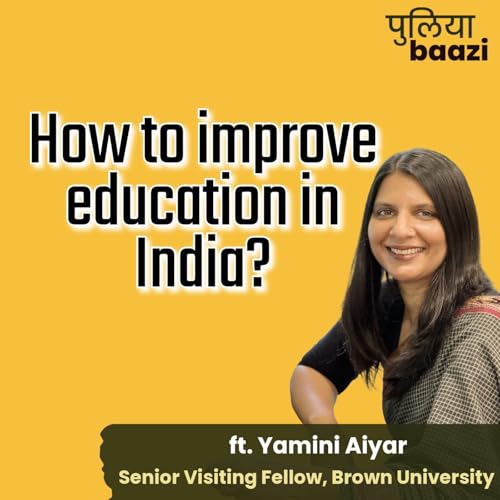
  • सरकारी शिक्षा व्यवस्था क्यों चरमराई हुई है? How to improve education in India? ft. Yamini Aiyar
    Dec 4 2025
    हमारी सरकारी स्कूलों में शिक्षा का हाल ये है की पाँचवी कक्षा में पढ़ रहे बच्चों में से केवल 34% बच्चे ही दूसरी कक्षा की किताब पढ़ पाते हैं। ऐसे में ये सवाल जायज़ है कि क्या हमारे स्कूल बच्चों को वास्तव में सीखा रहे हैं, या सिर्फ सिलेबस पूरा कर रहे हैं? आखिर हमारी सरकारी शिक्षा व्यवस्था इतनी चरमराई हुई क्यों है? आज की पुलियाबाज़ी में हम इस मुद्दे की तह तक जाएँगे यामिनी अय्यर के साथ।We discuss:* Why is education not an election issue* Shift in education policy focus over time* The education reforms in Delhi* Helping the kids who have been left behind in the class* Fixing our curriculum* Teacher accountability* Is our curriculum too ambitious?* Focus on foundational literacy* Government or Aided or Private?* Lessons for State Capacity* Supremacy of CircularsPlease note that Puliyabaazi is now available on Youtube with video.Related Links:Book | Lessons in State Capacity from Delhi’s Schools by Yamini Aiyarhttps://amzn.in/d/bifBLi4Related Episodes:भारत के विकास की चाबी। Accelerating India’s Development with Karthik Muralidharanसिर्फ राजनेताओं ने नहीं, भारतीय जनमानस ने हमारा संविधान पिरोया है। How Public Movements Shaped Indian Constitutionalism? ft. Rohit De and Ornit ShaniPuliyabaazi Playlist:If you have any questions for the guest or feedback for us, please comment here or write to us at puliyabaazi@gmail.com. If you like our work, please subscribe and share this Puliyabaazi with your friends, family and colleagues.Website: https://puliyabaazi.inGuest: @AiyarYaminiHosts: @saurabhchandra @pranaykotas @thescribblebeeTwitter: @puliyabaaziInstagram: https://www.instagram.com/puliyabaazi/Subscribe & listen to the podcast on iTunes, Google Podcasts, Castbox, AudioBoom, YouTube, Spotify or any other podcast app. This is a public episode. If you would like to discuss this with other subscribers or get access to bonus episodes, visit www.puliyabaazi.in
    Mostra di più Mostra meno
    1 ora e 22 min
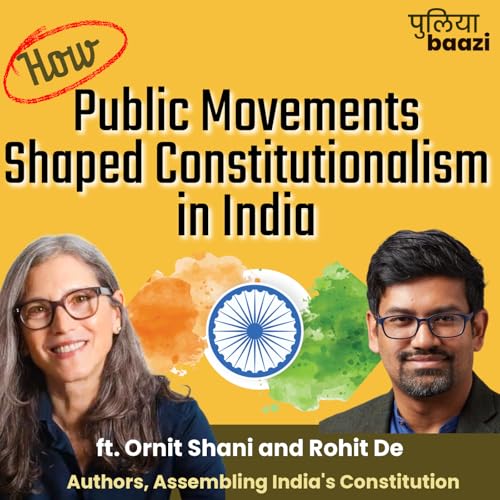
  • सिर्फ राजनेताओं ने नहीं, भारतीय जनमानस ने हमारा संविधान पिरोया है। How Public Movements Shaped Indian Constitutionalism? ft. Rohit De and Ornit Shani
    Nov 27 2025
    26 नवम्बर 1949 को भारत ने अपना संविधान अपनाया था। इस अहम् घड़ी को याद करने और उस समय हो रहे बदलाव को समझने का ये अच्छा मौका है। इसमें आम धारणा ये है कि संविधान को कुछ गिने-चुने अभिजात वर्ग के लोगों ने बनाया और भारत की आम जनता पर थोप दिया। लेकिन इस धारणा में कितनी सच्चाई है?इतिहासकार रोहित डे और ऑर्नित शनी अपने शोध के आधार पर इस बात का खंडन करते हैं। अपनी किताब Assembling India’s Constitution में वो बताते हैं कि कैसे अलग अलग लोग संविधान बनाने की प्रक्रिया में जुड़ रहे थे और अपनी बात संविधान सभा तक पहुँचा रहे थे। जनमानस में उत्साह इतना था कि ड्राफ्ट संविधान उस समय की बेस्टसेलर किताब बन चुकी थी। तो आईये इस पुलियाबाज़ी पर सुनते हैं संविधान की अनकही दास्ताँ। ये एपिसोड खास इसलिए भी है क्योंकि ये हमारा पहला द्विभाषी एपिसोड है। सुनियेगा ज़रूर।We discuss:* Why do people think that India’s Constitution was an elitist project?* How were the lay people engaged in this process of constitution-making?* Princely states and their engagement with the Constituent Assembly* Popularity of Draft Constitution* Why were the princely states making their own constitutions?* What were the people demanding in their letters?* How were the legislative assemblies engaging with the Constituent Assembly?* The curious case of Manipur* Critique from Madras* The challenge with Delhi’s governance* Some noteworthy contributionsPlease note that Puliyabaazi is now available on Youtube with video.Related Links:Book | Assembling India’s Constitution: A New Democratic History by Rohit De and Ornit ShaniSubstack | India Policy Watch #3: Is the Indian Constitution Elitist? No by Pranay KotasthaneRelated Episodes:क्या भारतीय संविधान विशिष्ट वर्ग के लिए है? Is the Indian Constitution elitist?एक जन संविधान. A People’s Constitution.Puliyabaazi Playlist:Thanks for reading पुलियाबाज़ी Puliyabaazi! Subscribe for free to receive new posts and support my work.If you have any questions for the guest or feedback for us, please comment here or write to us at puliyabaazi@gmail.com. If you like our work, please subscribe and share this Puliyabaazi with your friends, family and colleagues.Website: https://puliyabaazi.inGuest: @itihaasnaama @OrnitShaniHosts: @saurabhchandra @pranaykotas @thescribblebeeTwitter: @puliyabaaziInstagram: https://www.instagram.com/puliyabaazi/Subscribe & listen to the podcast on iTunes, Google Podcasts, Castbox, AudioBoom, YouTube, Spotify or any other podcast app. This is a public episode. If you would like to discuss this with other subscribers or get access to bonus episodes, visit www.puliyabaazi.in
    Mostra di più Mostra meno
    1 ora e 20 min
  • भारत की भावनात्मक एकता की खोज। The Unfinished Business of India’s Emotional Integration
    Nov 20 2025
    भारत एक ऐसा देश है जहाँ हर थोड़ी दूर पर भाषा बदल जाती है, खाना बदल जाता है और पहनावा बदल जाता है। हम नक़्शे पर तो एक हैं, लेकिन क्या हम दिलों से भी एक हैं? आज हम बात करेंगे एक ऐसे सवाल की जो आज़ादी के वक़्त भी था और आज भी हमारे सामने खड़ा है: भारत का भावनात्मक एकीकरण कैसे हो?इस मुद्दे को पहली बार 1961 में गठित एक कमिटी ने समझने की कोशिश की थी और अपने संशोधन और सुझाव उन्होंने Report of the Committee on Emotional Integration में पेश किये थे। आज की पुलियाबाज़ी में इसी रिपोर्ट पर एक चर्चा।We discuss:* Committee on Emotional Integration* Unity is not Uniformity* Hindrance to Integrity* Education as an instrument for unity* Languages and scripts* Language hegemony* A note of dissentFact Check: 01:42 Churchill did not specifically predict a 15 year expiration date on India. However, he did predict that united India would not survive without the British Empire.Related Links:Report of the Committee on Emotional Integrationhttps://archive.org/details/dli.csl.2029/mode/2upSubstack | Anticipating the Unintended: The Emotional Integration of India by Pranay Kotasthanehttps://publicpolicy.substack.com/i/178977404/india-policy-watch-the-emotional-integration-of-indiaPlease note that Puliyabaazi is now available on Youtube with video.Related Episodes:भारत की विकास यात्रा उल्टी-पुल्टी क्यों? India’s Precocious Development Odyssey ft. Devesh Kapur and Arvind Subramanianएक देश, कईं भाषाएँ, एक लिपि। Many Languages, One Script.Puliyabaazi Playlist:Thanks for reading पुलियाबाज़ी Puliyabaazi! Subscribe for free to receive new posts and support my work.If you have any questions for the guest or feedback for us, please comment here or write to us at puliyabaazi@gmail.com. If you like our work, please subscribe and share this Puliyabaazi with your friends, family and colleagues.Website: https://puliyabaazi.inHosts: @saurabhchandra @pranaykotas @thescribblebeeTwitter: @puliyabaaziInstagram: https://www.instagram.com/puliyabaazi/Subscribe & listen to the podcast on iTunes, Google Podcasts, Castbox, AudioBoom, YouTube, Spotify or any other podcast app. This is a public episode. If you would like to discuss this with other subscribers or get access to bonus episodes, visit www.puliyabaazi.in
    Mostra di più Mostra meno
    54 min