Episodi

  • Twin Peaks - Season Two, Part One (1991)
    Jan 20 2026

    Send us a text

    A bellhop with a thumbs‑up. A giant with riddles. A detective bleeding on the floor and still taking notes. That’s how our return to Twin Peaks season two begins, and it only gets stranger from there. We unpack the first nine episodes with equal parts awe and exasperation, tracing how a small‑town murder spirals into a showdown with something older, colder, and terrifyingly intimate.

    Cooper’s recovery opens a door to messages that feel more like omens than clues. The ring vanishes, the owls loom, and Major Briggs quietly drops a bombshell from deep space. At the same time, the show drills into the human core: Leland’s unmasking lands with a force that goes beyond plot twist. We wrestle with the two readings the series invites—Bob as literal inhabiting spirit vs Bob as the language a community uses to face unthinkable abuse—and why the story refuses to let either interpretation win outright. Expect debate, strong feelings, and a few uncomfortable laughs as sprinklers soak a confession and the camera slips back into the trees.

    Around the case, Twin Peaks flexes its full genre range. Audrey’s ordeal at One Eyed Jack’s plays like neon‑lit noir; Catherine’s return in disguise skewers identity with a wink; Nadine’s super strength reframes trauma as a comic‑book glitch; Bobby’s armor breaks in a diner when Major Briggs shares a dream that feels like grace. We shout out Hawk’s quiet wisdom, follow Donna’s disastrous pursuit of Laura’s diary, and examine how the show uses masks, doubles, and misdirection to talk about complicity, memory, and the cost of curiosity. Whether you’re here for the mythology or the messy humanity, there’s plenty to chew on.

    Hit play to journey from donuts to dread, to hear how these episodes balance camp with cosmic menace, and to decide where you land on the central question: possession or psychology? If this breakdown hit your brain just right, follow, share with a Peaks‑obsessed friend, and leave a five‑star review to keep the coffee hot and the pie fresh. What do you think the owls are hiding?


    Twitter handles:
    Project Geekology: https://twitter.com/pgeekology
    Anthony's Twitter: https://twitter.com/odysseyswow
    Dakota's Twitter: https://twitter.com/geekritique_dak

    Instagram:
    https://instagram.com/projectgeekology?igshid=1v0sits7ipq9y

    YouTube:
    https://www.youtube.com/@projectgeekology

    Geekritique (Dakota):
    https://www.youtube.com/channel/UCBwciIqOoHwIx_uXtYTSEbA

    Bacon is My Podcast

    Passions, escapes, life goals and the things in life that make it tasty.


    Listen on: Apple Podcasts Spotify

    Support the show

    Mostra di più Mostra meno
    1 ora e 28 min
  • Twin Peaks - Season One (1990)
    Jan 13 2026

    Send us a text

    A dead homecoming queen, a town full of smiles, and something watching from the trees. That’s the uneasy spell Twin Peaks casts, and we lean into it with Jen returning to help unravel the first eight episodes. From the shock of Laura Palmer’s discovery to the season one cliffhanger, we track how a small-town mystery opens into a study of grief, desire, and the stories people tell to survive.

    Cooper becomes our compass. We dig into his mix of childlike delight and razor intuition, the odd poetry of those Diane tapes, and the quiet moral line he draws with Audrey that still feels modern. The donuts, coffee, and diner banter aren’t just cozy touches; they’re rituals that keep chaos at bay while the investigation pokes at older currents in the woods. We map the messy relationship webs—Ed and Nadine, Norma and Hank, Bobby and Shelly, Ben and Josie—and why the show resists glamorizing betrayal. “Invitation to Love,” the soap within the show, mirrors that melodrama and winks at how TV teaches us to crave neatly tied bows.

    And then there’s the red room. The Black Lodge dream is the moment you either bounce or buy in. We talk about how its backwards cadence, saturated color, and uncanny silence act like cinematic grammar, giving Cooper a mood-map of truths he can’t yet articulate. The Log Lady and the Bookhouse Boys hint at a local mythology everyone accepts but no one explains, a reminder that mystery can be communal. As Laura’s double life surfaces—charity angel, chaos instigator—we hold space for nuance without absolution, sensing how the town made her a symbol it never understood.

    Pour a black coffee, cue the Badalamenti, and come wonder with us. If this breakdown sparked a new theory or helped you spot a clue you missed, tap follow, share with a friend who loves weird television, and drop a quick five-star review to keep the conversation going.

    Support the show

    Mostra di più Mostra meno
    1 ora e 21 min
  • Avatar: Fire and Ash (2025)
    Jan 8 2026

    Send us a text

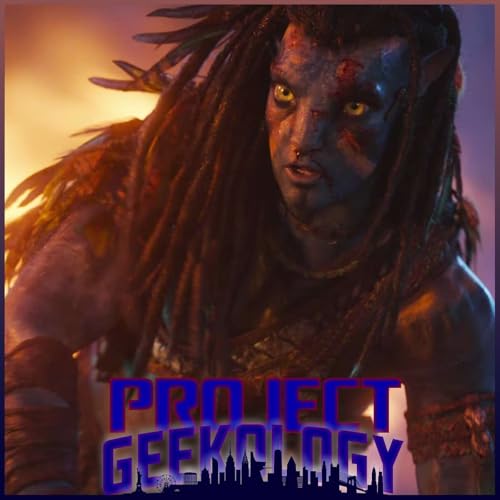
    A planet that might be a god. A villain slowly becoming the land he conquered. A family pushed to the edge until love looks like a knife. Fire and Ash gives us the biggest canvas yet for Pandora, and we dig into why the scale only works because the feelings keep pace.

    We compare notes on the craft that makes this one a true event: underwater performance capture, variable frame rate used as a storytelling tool, and 3D calibrated for immersion instead of gimmicks. The whale matriarchs’ resonance, the wind traders’ drifting caravans, the medusoids floating like living lanterns—these sequences don’t just look good, they feel engineered for IMAX, where detail and depth turn scenes into experiences. We also admit where the tech stumbles; those 48-to-24 frame drops can jar, even as the overall presentation reduces eye strain and keeps action crisp.

    Then we get into the meat. Quaritch evolves from boot-stomping colonel to ash-painted initiate, torn between capturing Jake Sully and protecting Spider. Neytiri steals the spotlight with a confession that calls out her own prejudice, leading to a searing “I see you” that lands harder than most finales. We unpack the Abraham-and-Isaac echo in Jake’s most brutal choice, and why it reframes leadership, faith, and family under pressure. On the lore side, we wrestle with the mycelium network, Kiri’s origin as Grace’s clone, and the possibility that Eywa is both biological and divine. Whether you read it as neural ecology or planetary spirit, the outcome is the same: Pandora looks back.

    We close with a plea to experience this one in theaters if you can. Avatar is built for the big room—the sound, the depth, the scale all feed the story. Watch, feel, and then tell us: which moment stayed in your bones? Subscribe for next week’s Twin Peaks dive, share this episode with a friend, and leave a review so more fans can find the show.

    Twitter handles:
    Project Geekology: https://twitter.com/pgeekology
    Anthony's Twitter: https://twitter.com/odysseyswow
    Dakota's Twitter: https://twitter.com/geekritique_dak

    Instagram:
    https://instagram.com/projectgeekology?igshid=1v0sits7ipq9y

    YouTube:
    https://www.youtube.com/@projectgeekology

    Geekritique (Dakota):
    https://www.youtube.com/channel/UCBwciIqOoHwIx_uXtYTSEbA

    Support the show

    Mostra di più Mostra meno
    1 ora e 33 min
  • Van Helsing (2004)
    Dec 23 2025

    Send us a text

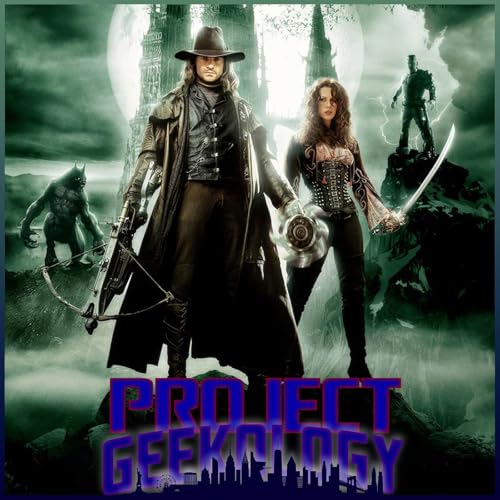
    Stake, silver, and a whole lot of spectacle; this week we dive headfirst into Van Helsing (2004), the loud, lavish monster mash that tried to launch a new Universal era and left us with glorious chaos. We unpack why this movie still feels like a relic from a braver time in blockbuster filmmaking: a place where studios gambled on pulpy ideas, action never took a breath, and Dracula could fund Frankenstein’s science to bring his bat-babies to life without irony getting in the way.

    We talk through the craft that often gets overlooked: the striking black-and-white prologue, clever camera choreography, map paintings that nod to classic Hollywood, and creature work that swings from impressive werewolf transformations to delightfully rubbery CGI. Hugh Jackman and Kate Beckinsale anchor the adventure while the supporting cast leans hard into operatic camp, especially a Dracula who turns melodrama into a contact sport. At the center of the noise sits Frankenstein’s monster, rendered as both eloquent and thunder-forged, the closest thing the film has to a soul.

    From there, we zoom out. Universal’s long quest to revive its monster pantheon, theme park crossovers, and why Van Helsing tried to do in one film what today’s studios stretch across phases. We compare it to Underworld, Reign of Fire, and Dungeons & Dragons: Honor Among Thieves, drawing a line between bold swings that win hearts and calculated “universes” that lose them. Along the way, expect laughs about Faramir in a bumbling turn, Jekyll and Hyde’s Andre the Giant homage, and a final set piece that’s equal parts juicy and joyous.

    If you crave throwback adventure with teeth, this one’s a wild ride worth revisiting. Hit play, then tell us: camp classic or beautiful mess? Subscribe, share with a fellow monster fan, and drop a review to keep the geeky goodness flowing.


    Twitter handles:
    Project Geekology: https://twitter.com/pgeekology
    Anthony's Twitter: https://twitter.com/odysseyswow
    Dakota's Twitter: https://twitter.com/geekritique_dak

    Instagram:
    https://instagram.com/projectgeekology?igshid=1v0sits7ipq9y

    YouTube:
    https://www.youtube.com/@projectgeekology

    Geekritique (Dakota):
    https://www.youtube.com/channel/UCBwciIqOoHwIx_uXtYTSEbA

    Support the show

    Mostra di più Mostra meno
    52 min
  • Frankenstein (2025)
    Dec 17 2025

    Send us a text

    A stitched body, a sharpened mind, and a creator who won’t claim what he made. We dive into Guillermo del Toro’s Frankenstein on Netflix with fresh eyes and full hearts, exploring how the film restores Mary Shelley’s original genius while reshaping a century of monster-movie expectations. From the icebound framing device to the creature’s own testimony, the story gives the “monster” his voice back—and with it, a moral authority that turns the tables on Victor.

    We talk about the texture of creation: the unsettling, hyper-real gore that makes every cut feel consequential, and the cinematography tricks that make key encounters float with eerie grace. Oscar Isaac’s Victor is magnetic and cold, driven by ambition he can’t control, while Jacob Elordi’s creature evolves from bewildered newborn to eloquent judge, his slender, powerful frame reading as reassembled personhood instead of prop. Mia Goth’s Elizabeth cuts through the gloom with presence that grounds the stakes. We also trace Del Toro’s love of cinema history, from the inclusion of an Igor archetype to the blend of gothic realism that separates his style from the baroque and the camp.

    The heart of the episode is the ethics: What do we owe what we create? If the creature is functionally immortal, does denying him a companion become the cruelest act? We follow the thread of generational harm—from Victor’s father to Victor himself—and the way indifference breeds monstrosity more reliably than lightning ever could. It’s not a perfect film; the pacing stretches in places. But the ideas, performances, and design make this a rare adaptation that feels both faithful and new.

    If you love smart horror, literary roots, and craft on screen, hit play. Then share your take, subscribe for more deep dives, and drop us a review so others can find the show.

    Twitter handles:
    Project Geekology: https://twitter.com/pgeekology
    Anthony's Twitter: https://twitter.com/odysseyswow
    Dakota's Twitter: https://twitter.com/geekritique_dak

    Instagram:
    https://instagram.com/projectgeekology?igshid=1v0sits7ipq9y

    YouTube:
    https://www.youtube.com/@projectgeekology

    Geekritique (Dakota):
    https://www.youtube.com/channel/UCBwciIqOoHwIx_uXtYTSEbA

    Support the show

    Mostra di più Mostra meno
    59 min
  • Back to the Future Part II (1989)
    Dec 10 2025

    Send us a text

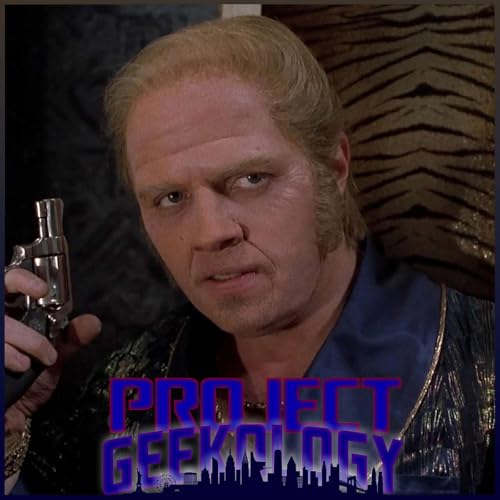
    A bully becomes a king, a genius breaks his own rules, and a timeline slips on a banana peel. We dive headfirst into Back to the Future Part II with a debate that starts in neon-soaked 2015 and lands right back in the grease and gears of 1955. We trade laughs over hoverboards, self-lacing Nikes, and that unforgettable manure gag, then get serious about the film’s true engine: the sports almanac heist and the branching consequences that follow. Along the way, we question Doc Brown’s selective ethics, cheer Thomas F. Wilson’s shape-shifting turn as Biff and Griff, and talk through why Elizabeth Shue’s Jennifer recast feels big even as the script sidelines her.

    Between the sponsor cold open and our Epic Universe field report, we explore how futurism in the film plays more like retro Tomorrowland than prophecy, yet still charms through texture and tone. The 1955 set-piece wins us over with razor-sharp timing and playful parallel editing that dovetails with Part I without collapsing it. We call out the cascade of Part III breadcrumbs—Mad Dog nods, Old West daydreams, the “chicken” trigger—while weighing whether it’s elegant foreshadowing or a flashing neon arrow. And yes, we spot baby Elijah Wood, laugh at inconspicuous outfits that aren’t, and rank the series’ best running jokes.

    If you love movie craft that balances stakes with wit, performances that stretch across ages and realities, and franchise storytelling that dares to fold back on itself, this conversation’s for you. Hit play, then tell us: did Part II nail 2015, or does its heart belong to 1955? Subscribe, share with a fellow time traveler, and leave a five-star review so we can keep the timeline humming.

    Twitter handles:
    Project Geekology: https://twitter.com/pgeekology
    Anthony's Twitter: https://twitter.com/odysseyswow
    Dakota's Twitter: https://twitter.com/geekritique_dak

    Instagram:
    https://instagram.com/projectgeekology?igshid=1v0sits7ipq9y

    YouTube:
    https://www.youtube.com/@projectgeekology

    Geekritique (Dakota):
    https://www.youtube.com/channel/UCBwciIqOoHwIx_uXtYTSEbA

    Support the show

    Mostra di più Mostra meno
    1 ora e 4 min
  • Harry Potter and the Goblet of Fire (2005)
    Nov 25 2025

    Send us a text

    The fourth trip to Hogwarts should feel bigger, bolder, and a little bit dangerous... and that’s exactly where our conversation goes. We crack open Harry Potter and the Goblet of Fire to ask why the book’s expansive scope soars while the movie’s world-building sometimes skims. Think missing Quidditch World Cup spectacle, a blink-and-you’ll-miss-it introduction to Beauxbatons and Durmstrang, and a Yule Ball that reveals more about teenage insecurity than the film gives it time to process. When the story grows up, not every scene survives the squeeze.

    We dig into character choices that define the adaptation. Brendan Gleeson’s Mad‑Eye Moody is a masterclass in look and presence, but the Barty Crouch Jr. twist sharpens every “helpful” gesture into manipulation on rewatch. Dumbledore’s famously calm question turns confrontational on screen, shifting the headmaster’s essence in ways later films quietly undo. Ron’s jealousy lands as one note, while Neville finally gets time to shine, especially when the Cruciatus demonstration brushes against the truth of his parents. The Pensieve earns its place as a narrative hinge, even if the movie drops key threads like Rita Skeeter’s Animagus reveal.

    And then there’s the graveyard. Ralph Fiennes’s Voldemort is operatic and chilling, a rebirth that reframes everything that came before. “Kill the spare” isn’t just a shock; it’s the moment the series announces that choices have a cost. We weigh the thrills of the expanded dragon chase against lost texture, debate the fairness of the lake task, and consider how a longer-form remake could restore the connective tissue that made the book sing.

    If you love sharp, story-first film talk equal parts heart and critique, then hit play. Then tell us: did Goblet of Fire nail the coming‑of‑age turn, or does the magic feel thinner on screen? Subscribe, share with a friend who still argues about houses, and leave a five-star review to keep the conversation going.


    Twitter handles:
    Project Geekology: https://twitter.com/pgeekology
    Anthony's Twitter: https://twitter.com/odysseyswow
    Dakota's Twitter: https://twitter.com/geekritique_dak

    Instagram:
    https://instagram.com/projectgeekology?igshid=1v0sits7ipq9y

    YouTube:
    https://www.youtube.com/@projectgeekology

    Geekritique (Dakota):
    https://www.youtube.com/channel/UCBwciIqOoHwIx_uXtYTSEbA


    ALLISON MACK: From Smallville to Cult Scandal & Taking Accountability for It Today
    https://youtu.be/ajZ1V-VnLNI?si=5EEQhE_TITZ_nJ4-

    Support the show

    Mostra di più Mostra meno
    1 ora e 13 min
  • Back to the Future (1985)
    Nov 18 2025

    Send us a text

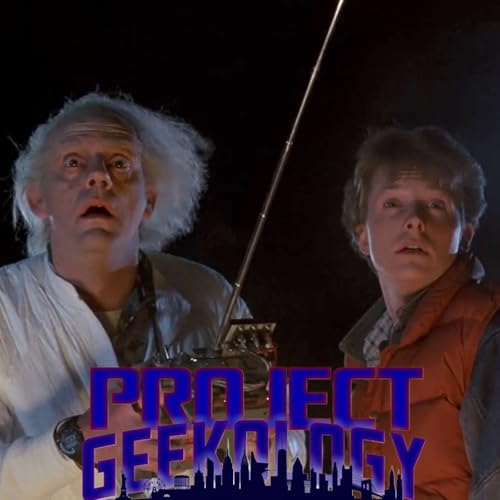
    Great Scott! Some movies don’t just age well, they keep gaining power like a clock tower in a storm. We unpack why Back to the Future still crackles: a script that pays off every setup, characters who change in ways you can feel, and time travel rules that invite geeky debate without derailing the fun. From the Save the Clock Tower flyer to Uncle Joey’s “bars” and the Twin Pines to Lone Pine switch, we map the film’s breadcrumbs and show how tight writing creates timeless rewatch value.

    We get obsessive about the timeline, too. Marty’s trip to 1955 unfolds over a week we can actually chart, and the story’s paradoxes: bootstrap loops, butterfly ripples, the photo fade, work together instead of fighting each other. We also talk texture: why the DeLorean is the perfect sci‑fi icon, how Biff’s blundering menace gives the story bite, and why those Hill Valley sets feel alive in both eras.

    Then there’s the alchemy of performance and music. Michael J. Fox plays panic as propulsion. Christopher Lloyd turns technobabble into wonder. Crispin Glover’s physical comedy makes George’s punch land like a symphony. And Alan Silvestri’s score glues it all together, blasting heroism during the lightning strike and winking when history pivots. It’s the rare blockbuster that mixes teen comedy, family drama, and sci‑fi puzzle with confidence, reminding us how bold 80s filmmaking could be without franchise safety nets.

    If you love film craft, time travel logic, or just want that rush of cinematic joy, you’re in the right feed. Hit play, share with a fellow movie nerd, and tell us: are you Team Twin Pines or Team Lone Pine? If this made you smile, subscribe, leave a review, and pass it to a friend who needs a 1.21 gigawatt boost.


    Twitter handles:
    Project Geekology: https://twitter.com/pgeekology
    Anthony's Twitter: https://twitter.com/odysseyswow
    Dakota's Twitter: https://twitter.com/geekritique_dak

    Instagram:
    https://instagram.com/projectgeekology?igshid=1v0sits7ipq9y

    YouTube:
    https://www.youtube.com/@projectgeekology

    Geekritique (Dakota):
    https://www.youtube.com/channel/UCBwciIqOoHwIx_uXtYTSEbA

    Support the show

    Mostra di più Mostra meno
    58 min