Parkinson's: An Athlete's Journey copertina

Parkinson's: An Athlete's Journey

Parkinson's: An Athlete's Journey

Di: Eric Von Frohlich and Todd Vogt
Ascolta gratuitamente

A proposito di questo titolo

Parkinson’s: An Athlete’s Journey is for athletes navigating Parkinson’s, the coaches and clinicians who train them, and anyone who wants real-world strategies for performance and longevity. Hosted by Eric Von Frohlich and Todd Vogt, the show focuses on tactical takeaways: how to train, recover, manage symptoms, and stay consistent when the rules keep changing. Expect honest conversations, tested routines, and guest experts who go deeper on what works.© 2026 Fitizens LLC Esercizio e fitness Fitness, dieta e nutrizione Igiene e vita sana
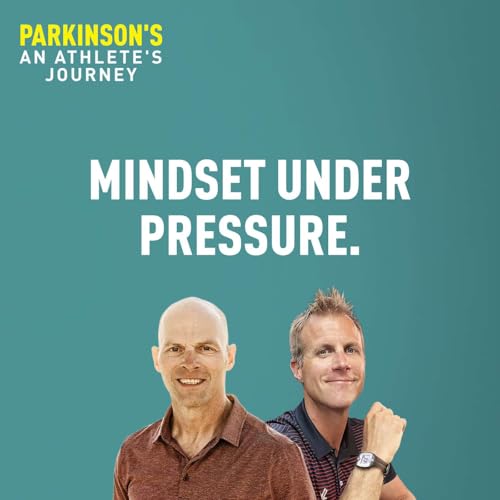
  • Mindset Under Pressure: Parkinson’s, Performance & Purpose
    Feb 18 2026

    Parkinson’s doesn’t just challenge your body. It challenges your identity.

    In this episode, Todd Vogt and Eric Von Frohlich talk candidly about what happens when Parkinson’s forces a shift in career, competition, and self-perception: what do you do when the thing that defined you starts changing?

    They explore nostalgia, gratitude, job hunting, and the difference between outcome goals and process goals. They discuss the mental highs and lows of not giving up, and redefining what competing looks like now.


    Key Takeaways:

    • The present moment matters most. Anxiety lives in the future; regret lives in the past. Training happens now.
    • Process > outcome. Focusing on daily actions compounds more than chasing times, rankings, or validation.
    • Athletic identity evolves. At some point, every athlete faces decline: Parkinson’s just accelerates the timeline.
    • Grace is part of the work. Transitions require patience with yourself.
    • Say yes. Community and new experiences (like inclusive sailing) can shift perspective fast.

    Key Moments:

    00:32 – Atmospheric river story + environmental exposure questions
    03:30 – Genetics vs. environment: the “what caused it?” conversation
    05:17 – Inclusive sailing + saying yes to opportunity
    07:28 – Mindset shift: openness, gratitude, and community
    11:20 – Nostalgia vs. fear of the future
    13:37 – “Any day on the water is a good day”
    15:48 – Ego, aging, and athletic decline
    18:18 – Process goals vs outcome goals
    22:28 – AFib update + training limitations
    23:10 – Career limbo + Parkinson’s and employment
    29:46 – Forced retirement vs choosing to walk away

    Follow / Connect:

    🔔 Subscribe: https://parkinsons-an-athletes-journey.transistor.fm/
    📸 Instagram: https://www.instagram.com/parkinsonsathletepodcast/
    🌐 Website: https://www.ericvonfrohlich.com/podcast
    💼 LinkedIn: https://www.linkedin.com/company/parkinsons-an-athlete-s-journey-podcast/?viewAsMember=true


    Disclaimer:

    Personal experience and education only, not medical advice. Always consult a qualified healthcare professional for medical decisions.

    Mostra di più Mostra meno
    33 min
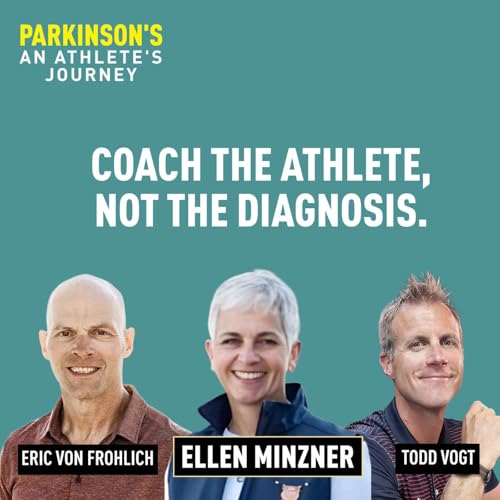
  • Treat the Athlete, Not the Diagnosis | Ellen Minzner
    Feb 11 2026

    Adaptive sport asks a simple question: what does the sport require, and how do you build the athlete to meet it. Todd Vogt and Eric Von Frohlich sit down with Ellen Minzner, elite rowing coach and leader in adaptive and Paralympic sport, to discuss coaching athletes with disabilities through standards, structure, and respect. From Parkinson’s to para rowing to the Paralympic Games, the conversation centers on competition, training, and an athlete-first approach.

    Ellen shares why being treated like an athlete matters, how competition supports development, and why Parkinson’s presents unique challenges in training because it is progressive and unstable. Coaching decisions, sport demands, and measurable progress remain central throughout.

    What You’ll Learn:

    • Why adaptive athletes don’t want to be “coddled.” They want standards, structure, and the chance to improve.
    • How competition functions as a training tool, not just a finish line.
    • What makes Parkinson’s different from other disabilities in sport and why coaching has to adapt.
    • How elite coaches separate sport demands from limitations.
    • Why the Paralympics normalize disability in a way everyday life often doesn’t.


    Key Takeaways:

    ➡️ Treat the person like an athlete, not a diagnosis. Expectations matter, and so does respect.
    ➡️ Competition drives integration. Skills, nerves, fitness, and mindset have to show up together.
    ➡️ Adaptive sport requires precision. Progressive conditions like Parkinson’s require constant adjustment.
    ➡️ Improvement fuels motivation. Athletes need evidence they are getting better, not just “participating.”

    Key Moments:

    00:00 – Introduction to Ellen Minzner and her background in rowing and adaptive sport
    03:10 – Why the Paralympic Games are so powerful and surprisingly accessible as a fan experience
    06:45 – “The world is built for them.” Disability normalized at the Paralympics
    10:20 – What adaptive athletes actually want from coaches
    14:05 – Competition as a tool for growth, not just medals
    18:40 – The spectrum of disability in adaptive sport including congenital, acquired, and progressive
    23:15 – Parkinson’s as a non-stable condition and what that means for training
    27:30 – Defining sport demands versus limitations. What must be trained, adapted, or accepted
    31:10 – “They just want to be treated like an athlete”
    34:50 – Why hard work and visible improvement matter more than inspiration
    38:20 – The danger of lowering standards in adaptive sport
    42:00 – Closing thoughts on respect, effort, and doing meaningful work

    About the guest:

    Ellen Minzner is the Para High Performance Director at USRowing, where she leads the U.S. Para national team program. She was named the U.S. Olympic & Paralympic Committee’s 2023 Paralympic Coach of the Year, and under her leadership, Team USA earned two silver medals at the 2023 World Rowing Championships and qualified boats for the 2024 Paralympic Games in Paris.

    A former elite athlete, Ellen is a two-time World Champion in the lightweight women’s pair (1995, 1996) and a Pan American Games gold medalist. She has also held leadership roles focused on inclusion and access in rowing, including work at Community Rowing, Inc.

    Connect with Ellen:

    Instagram: https://www.instagram.com/ellenminzner/?hl=en
    LinkedIn: https://www.linkedin.com/in/ellenminzner/

    About the hosts:

    Todd Vogt and Eric Von Frohlich are athletes living with Parkinson’s who share what they’re learning in real time: what’s working, what’s frustrating, and how to keep moving forward with an athlete’s mindset.

    Follow / connect:

    🎧 Subscribe: https://parkinsons-an-athletes-journey.transistor.fm/
    📸 Instagram: https://www.instagram.com/parkinsonsathletepodcast/
    🌐 Website: https://www.ericvonfrohlich.com/podcast
    🤝 LinkedIn: https://www.linkedin.com/company/parkinsons-an-athletes-journey-podcast/?viewAsMember=true

    This podcast contains personal experience and education only, not medical advice. Always consult a qualified healthcare professional for medical decisions.

    Mostra di più Mostra meno
    1 ora e 6 min
  • Gamify Your Day.
    Feb 4 2026

    Parkinson’s doesn’t only show up during workouts; it shows up when you’re putting on a shirt, tying shoes, walking the dog, or getting up off the floor. In this episode, Todd Vogt and Eric Von Frohlich share how they “gamify” everyday tasks to turn normal life into training: adding constraints, timing tasks, using the non-dominant hand, and stacking small challenges that build mobility, coordination, confidence, and consistency.

    What You’ll Learn:

    • How to turn daily tasks into “tests” you can repeat and improve (without needing more gym time).
    • Why adding load / biofeedback, balance constraints, and the non-dominant side can make movement practice more effective and engaging.
    • Simple “scoreboard” examples: the t-shirt challenge, timing your dog walk, shoe-tying reps, and “get ups.”
    • A mindset shift: choose your challenge on purpose, instead of feeling like Parkinson’s is choosing it for you.


    Key Takeaways:

    • Treat chores like training. “Gamification” makes daily work more engaging and helps skills that are already eroding show up stronger in real life.
    • Repeat the test. Do a task multiple times to refine technique and efficiency (instead of just “getting through it”).
    • Add constraints (load, balance, eyes closed, non-dominant hand) to create neurological + physical demand without fancy equipment.
    • The floor is training. Practicing getting up and down builds confidence and reduces fear around falls and floor transitions.
    • Do the work; don’t chase the outcome. The consistency compounds.


    Key Moments:

    00:32 – Weekly training check-in + medicine ball warmup ideas
    02:27 – Theme setup: movement practice “wherever you find it” + PT discussion (includes a mention of Jimmy Choi at the clinic)
    03:15 – Physical therapy tactics: add load, time tasks, and build “tests” (t-shirt/vest drill)
    05:28 – Why daily-life training matters: you notice PD more in day-to-day tasks than the gym
    06:00 – Stretching, mobility, juggling as cognitive/neurological work
    08:35 – Biofeedback + load (ankle/hand weights, trekking pole idea)
    09:47 – “Get ups” (Dan John) and why floor practice matters
    12:09 – Dog-walk gamification: 18 minutes → 15 minutes (move with purpose)
    36:22 – Shoe-tying reps + non-dominant hand + cognitive challenges
    38:49 – Shirt-on/off becomes training; add balance/load/eyes closed; “limited by imagination”
    43:18 – Why this is underappreciated + closing mindset (“do the work…”)


    Follow / Connect:

    🔔 Subscribe: https://parkinsons-an-athletes-journey.transistor.fm/
    📸 Instagram: https://www.instagram.com/parkinsonsathletepodcast/
    🌐 Website: https://www.ericvonfrohlich.com/podcast
    💼 LinkedIn: https://www.linkedin.com/company/parkinsons-an-athlete-s-journey-podcast/?viewAsMember=true


    Disclaimer:

    Personal experience and education only, not medical advice. Always consult a qualified healthcare professional for medical decisions.

    Mostra di più Mostra meno
    45 min
Ancora nessuna recensione