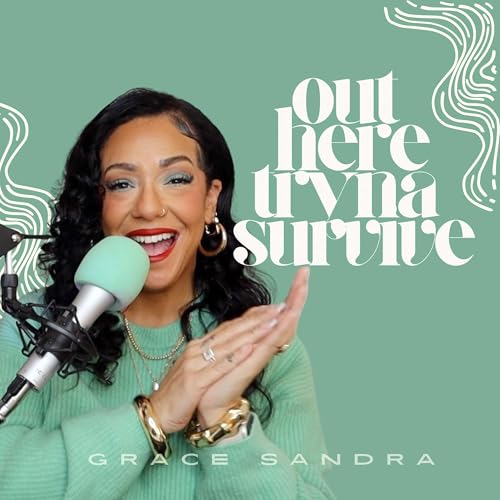
Out Here Tryna Survive copertina

Out Here Tryna Survive

Out Here Tryna Survive

Di: Grace Sandra
Ascolta gratuitamente

3 mesi a soli 0,99 €/mese

Dopo 3 mesi, 9,99 €/mese. Si applicano termini e condizioni.

A proposito di questo titolo

Out Here Tryna Survive is a trauma-informed, reflective podcast centering the emotional lives, resilience, and humanity of Black women — especially those of us navigating midlife, healing, motherhood, and healing after survival.


Hosted by Grace Sandra — Mama, storyteller, advocate, and lifelong student of survival — this podcast explores what it feels like to live in a world that constantly demands our strength while offering little protection.


Through personal storytelling, cultural reflection, and nervous-system-aware conversations, each episode holds space for truth, grief, joy, rage, softness, and repair.


This is not a place for perfection or performance. It’s a place for us as Black women to exhale, feel seen, and remember ourselves.


We are braver than we believe ✨


© 2026 Out Here Tryna Survive
Igiene e vita sana Psicologia Psicologia e salute mentale Successo personale Sviluppo personale
  • When The State Spins A Story: Renee Good, Media Power, And Black Women’s Clarity
    Jan 23 2026

    Send us a text

    The camera rolls, a woman dies, and then the story tries to kill her again. We talk about Renee Good’s killing and the speed with which power moves to rename a victim a threat, turning language into a shield for violence. As Black women, we know this pattern by heart. The harm happens, then the management of the harm—press briefings, headlines, talking points—asks us to doubt our eyes. We refuse that bargain. We grieve without confusion, and we get practical about what comes next.

    I share why the DOJ’s non-action reads as posture, not neutrality, and how labels like domestic terrorism blur law on purpose. We look at the long history of “law and order” as a tool to justify surveillance, force, and public fear, and we name the cost of that blur: fewer checks on state power and more room for abuse. For white listeners, this is a mirror as much as a map. Organizing is not a slogan; it’s sustained work—roles, logistics, fundraising, safety teams, and local pressure where you actually live. Study what Black organizers have built for generations and put your numbers to use.

    We also draw a hard line around energy and care. Doom scrolling is wrecking our nervous systems, so we set simple rules: choose two reliable sources, read once, log off. We talk through roles beyond protests—mutual aid, childcare, food banks, mental health support, and raising children who refuse dehumanization. If you do march, plan like it matters: buddies, meeting points, charged phones, shared locations, exits. If you don’t, support those who do. Most of all, we hold memory. They will try to erase what we saw and who Renee was. Don’t let them.

    If this lands heavy on your chest, you’re not broken—you’re human. Stay informed but not consumed. Stay connected so fear can’t isolate you. And if a Black woman you love is carrying too much, send this her way. Subscribe, share with a friend who needs clarity and care today, and leave a review with the role you’re choosing this week.

    Support the show

    Mostra di più Mostra meno
    19 min
  • Desmond & Kristy. Parasocial Grief, Religion & Choice. How I Messed up Too.
    Jan 15 2026

    Send us a text

    Headlines love a simple story, but real relationships rarely fit clean plots. When Christy filed for divorce and Desmond responded publicly, the internet crowned a villain overnight. We slow down the scroll and ask harder questions: why does a stranger’s breakup cut so deep, what myths about beauty and “being enough” do we keep swallowing, and how do religious rules shape the way people stay, confess, and finally leave?

    We talk candidly about parasocial grief—how attachment to public couples becomes a mirror for our own hopes—and the dangerous idea that fidelity can be earned through perfection. From there, we examine high-control faith cultures where divorce is framed as failure, endurance is praised over safety, and agency gets outsourced to pastors and communities. Grace shares her personal story of trying to exit under pressure, the costs of “confession” without accountability, and the quiet ways institutions protect themselves while individuals lose themselves.

    Then we go further. What if monogamy isn’t a moral default but one valid option among many? We explore how ethical non-monogamy, temporary separation with boundaries, and consent-forward renegotiations could reduce harm by normalizing honest conversations about desire and change. The goal isn’t to prescribe a model—it’s to champion clarity, boundaries, and the courage to tell the truth before the internet tells it for you.

    If the Christy–Desmond news or the Philip Yancey revelation stirred something in you, consider this your invitation to reflect without shame and reclaim your agency. Listen, share with a friend who needs nuance today, and if the conversation resonates, subscribe and leave a review so more people can find their way here. Your stories and questions help shape what we explore next.

    Support the show

    Mostra di più Mostra meno
    42 min
  • Ep 37: Unlearning Purity Culture And Choosing Guilt-Free Pleasure! Please Use Your Cl1t0ris.
    Jan 8 2026

    Send us a text

    Your sexuality is not a community project—and it never needed a committee’s approval. We’re pulling back the curtain on how purity culture, patriarchy, and respectability politics train women, especially Black Gen X women, to carry shame like an heirloom. I share where I’ve judged and been judged, why celibacy and casual sex are both valid when they’re chosen freely, and how agency turns the volume down on everyone else’s projections.

    We get practical and personal. I walk through the questions I ask before intimacy—am I safe, aligned, honest, and free to change my mind—and tell a story about a surprising, respectful one-night connection that felt calm, clean, and shame-free the morning after. From there, we dive into deprogramming: replacing endurance with consent, building aftercare to release guilt immediately, and dropping the imaginary audience of pastors, aunties, and internet pundits living rent-free in our heads. A woman with sexual agency is hard to control, and that’s exactly the point.

    Midlife brings its own truths. Perimenopause shifts sensitivity and libido, but pleasure remains powerful: better sleep, lower stress, improved mood, pelvic health, and deeper embodiment. We talk HRT, lube, longer foreplay, sex therapy, and the basics of safety—barriers, testing, clear exits, location sharing, and listening when your spirit says no. Sexual freedom today might be a season of celibacy, a safe friends-with-benefits, or simply self-pleasure without apology. Your body is yours. Your yes is yours. Your no is yours. If this conversation gives you language or relief, share it with a sister who needs to hear she’s not too old, not too much, and not required to be chosen to deserve pleasure.

    If this resonated, subscribe, leave a review on Apple or Spotify, share with a friend, and grab my book, Grace Axley: Memoirs of Life, Faith, Loss, and Black Womanhood. Then tell me: what belief about sex are you ready to retire?

    Support the show

    Mostra di più Mostra meno
    42 min
Ancora nessuna recensione