Episodi

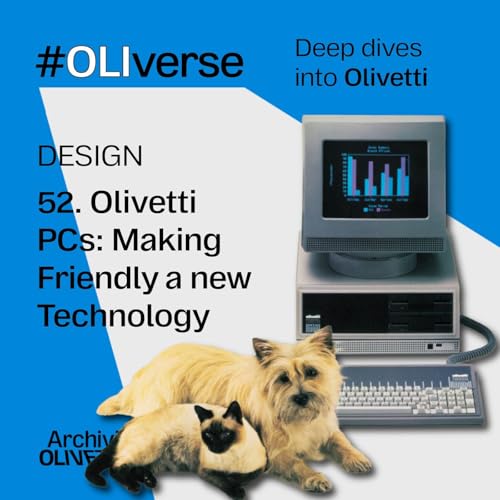
  • OLIverse - 52 - DESIGN - Olivetti PCs: Making Friendly a New Technology
    Apr 23 2026
    In the early 1980s, personal computing was still unfamiliar territory for most people. To introduce the M20 and M24, Olivetti developed a communication strategy that moved away from technical complexity, choosing instead a visual language based on metaphor and familiarity.

    Campaigns featured children, animals, and domestic scenes, presenting computers as intuitive tools rather than intimidating machines. While the M20 emphasized design and versatility, the M24 focused on compatibility and performance, aligning with emerging industry standards.

    This episode explores how Olivetti translated advanced technology into accessible narratives — shaping trust in a market that had yet to fully understand the personal computer.

    This episode includes AI-generated content.
    Mostra di più Mostra meno
    21 min
  • OLIverse - 51 - PEOPLE - Renzo Zorzi: Shaping Olivetti's Cultural Legacy
    Apr 2 2026
    Renzo Zorzi played a central role in preserving and evolving the cultural identity of Olivetti during a period of profound technological transformation.

    From editorial work and resistance activities to leading the company’s image, design, and cultural initiatives, Zorzi helped shape a model in which innovation and humanistic values remained deeply connected. He oversaw international exhibitions, art restorations, and collaborations with leading architects and designers, ensuring that aesthetic quality and intellectual depth were integral to the brand.

    This episode explores how Olivetti’s cultural strategy became a defining element of its global identity — and how Renzo Zorzi contributed to making culture a core business value.

    This episode includes AI-generated content.
    Mostra di più Mostra meno
    37 min
  • OLIverse - 50 - WELFARE - Beyond work: Olivetti's Innovative Recreational Group
    Mar 26 2026
    Long before corporate welfare became a structured discipline, Olivetti was already investing in the social and cultural life of its employees.

    From early 20th-century worker initiatives to the creation of the Gruppo Sportivo Ricreativo Olivetti (GSRO), the company developed a model where leisure, culture, and sport were integral to industrial life.
    Supported by leadership figures such as Camillo Olivetti, the GSRO grew into a complex and democratically organized system that strengthened community and personal development. Over time, changing economic conditions transformed its role, shifting from internal welfare structure to a broader travel and tourism organization.

    This episode explores how Olivetti redefined the relationship between work and life — shaping a model of corporate welfare that remains relevant today.

    This episode includes AI-generated content.
    Mostra di più Mostra meno
    19 min
  • OLIverse - 49 - PRODUCTS - Olivetti and the Rise of Electronic Writing
    Mar 19 2026
    Before the PC: Olivetti’s Word Processing Revolution
    The evolution of writing technologies marks one of the most significant transitions in the history of office work.
    In the 1970s and 1980s, Olivetti played a key role in this shift, moving from mechanical typewriters to advanced electronic writing systems. Machines such as the Editor S14 and the TES series introduced magnetic memory, video displays, and new ways to edit and store text before printing.

    These innovations transformed the act of writing into a process of revision and digital control, anticipating the logic of modern computing. While dedicated word processors would eventually be replaced by personal computers, they remain a crucial step in the transition from analog to digital text.

    This episode includes AI-generated content.
    Mostra di più Mostra meno
    42 min
  • OLIverse - 48 - ARCHITECTURE - Louis Kahn and the Olivetti Factory in Harrisburg
    Mar 12 2026
    Louis Kahn and the Olivetti Factory in Harrisburg explores one of the most remarkable encounters between industrial ambition and architectural innovation.

    Following the acquisition of Underwood, Olivetti sought to establish a modern manufacturing presence in the United States. To express its technological vision, the company commissioned architect Louis Kahn to design a new facility in Harrisburg, Pennsylvania.

    The result was a pioneering industrial building based on modular structures, distinctive inverted umbrella columns, and skylights that flooded the production spaces with natural light. The project also involved a young Renzo Piano in the development of the fiberglass roof system.
    More than a factory, the Harrisburg plant reflected Olivetti’s broader philosophy: integrating technology, architecture, and worker well-being into a coherent industrial environment.

    This episode includes AI-generated content.
    Mostra di più Mostra meno
    33 min
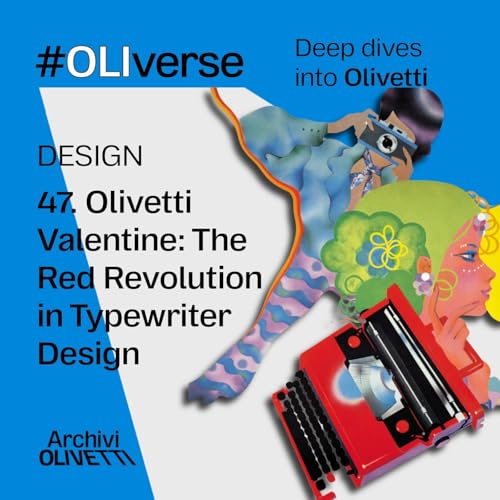
  • OLIverse - 47 - DESIGN - Olivetti Valentine: The Red Revolution in Typewriter Design
    Mar 5 2026
    In 1969, Olivetti introduced the Valentine, designed by Ettore Sottsass. More than a portable typewriter, it was a deliberate cultural statement.

    Launched in a saturated market, the Valentine shifted the focus from technical performance to identity, mobility, and lifestyle positioning. Its red ABS body and unconventional communication strategy transformed a functional object into a symbol of generational change.

    This episode explores how the Valentine marked a pivotal moment in which industrial design, branding, and corporate identity converged — earning its place in major museum collections and redefining the role of design within business strategy.

    This episode includes AI-generated content.
    Mostra di più Mostra meno
    31 min
  • OLIverse - 46 - PEOPLE - Mario Tchou and Olivetti: the Birth of Italian Computing
    Feb 26 2026
    Mario Tchou and the Dawn of Italian Computing explores the visionary engineer who led Olivetti into the electronic age.

    Recruited by Adriano Olivetti in 1954, Mario Tchou founded the pioneering research laboratory in Pisa, where a young team of engineers developed the Elea 9003 — the first Italian commercial transistorized computer.

    At a time when most companies still relied on vacuum tubes, Tchou chose advanced transistor technology, positioning Olivetti as a global competitor in computing. His sudden death in 1961, following that of Adriano Olivetti, marked a turning point for the company’s independent electronics division.

    This episode includes AI-generated content.
    Mostra di più Mostra meno
    Non ancora noto
  • OLIverse - 45 - WELFARE - Olivetti: Industry, Environment, and Vision in the 1970s
    Feb 19 2026
    Olivetti and the Early Roots of Corporate Environmental Responsibility explores a little-known chapter of industrial history.

    In the early 1970s — before environmental regulations became mandatory — Olivetti introduced internal commissions to control waste and pollution, invested in advanced filtration systems, and adopted cleaner energy solutions in plants such as Ivrea and Scarmagno.

    Beyond its factories, the company supported the international “Save Our Planet” campaign in collaboration with UNESCO and leading artists, anticipating the principles of corporate sustainability decades ahead of mainstream adoption.

    This episode reveals how environmental stewardship became part of Olivetti’s corporate identity — not as compliance, but as vision.

    This episode includes AI-generated content.
    Mostra di più Mostra meno
    30 min