Episodi

  • The Last First Family of Russia
    Jan 5 2026

    The story of the last Tsar of Russia, Nicholas II, and his family.

    We discuss their early lives, marriage, and the challenges they faced, such as their son Alexei's hemophilia and the introduction of Rasputin into their lives. Following this, we cover the political turmoil and the unrest leading up to World War I, Nicholas's role in the war, and his eventual abdication. Both primary sources, Sophie and Pierre, provide firsthand accounts of the family's final days.


    Image

    Nicholas II of Russia with the family (left to right): Olga, Maria, Nicholas II, Alexandra Fyodorovna, Anastasia, Alexei, and Tatiana.

    Livadiya, Crimea, 1913.

    Portrait by the Levitsky Studio, Livadiya. Today the original photograph is held at the Hermitage Museum, St. Petersburg, Russia.


    Sources

    Buxhoeveden, Sophie. The Life and Tragedy of Alexandra Feodorovna, Empress of Russia. Original, 1928.

    Denikin, Anton. The Russian Turmoil; Memoirs: Military, Social, and Political. The Field Press Ltd. Windsor, London, 1922.

    Figes, Orlando. A People’s Tragedy: The Russian Revolution 1891-1924. Penguin Books, 1998.

    Gatrell, Peter. A Whole Empire Walking: Refugees in Russia During World War I. Indiana University Press, 1999.

    Gillard, Peter. Thirteen Years in a Russian Court. 1920, Wentworth Press.

    Hasegawa, Tsuyoshi. The Last Tsar: The Abdication of Nicholas II and the Fall of the Romanovs. Basic Books, 2024.

    Lenin, Essential Works of Lenin: ‘What is to be Done?’ and Other Writings. Ed. By Henry M. Christman. Dover, 1929.

    Massie, Robert K. Nicholas and Alexandra: The Classic Account of the Fall of the Romanov Dynasty. Random House Trade, 2000.

    “Nicolas’s Diaries” https://www.alexanderpalace.org

    Pipes, Richard. Three ‘whys’ of the Russian Revolution. A Vintage Original, 1995.

    Radzinsky, Edward. The Last Tsar: The Life and Death of Nicholas II. Anchor, 1973.

    “Russian Revolution,” https://alphahistory.com/russianrevolution/russian-revolution-quotations-rasputin

    Semertzides, Meletios. The Twilight of the Tsars: Russia’s Fall and the Birth of Revolution. Volume 3. Trade Paperback, 2025.

    Smith, Douglas. Rasputin: Faith, Power, and the Twilight of the Romanovs. Picador Farrar, Straus and Giroux New York, 2016.

    “The Nicky and Willy Telegrams (1914).” https://alphahistory.com/worldwar1/nicky-and-willy-telegrams-1914

    Wilhelm II. The Willy-Nicky Correspondence: Being the Secret and Intimate Telegrams Exchanged between the Kaiser and the Tsar. Forward by Theodore Roosevelt. Toronto, 1918.

    Mostra di più Mostra meno
    1 ora e 40 min
  • Her Majesty's Drug Cartel
    Dec 20 2025

    That time China declared a war on drugs, and found themselves pitted against the narco traffickers of the 19th century - the British Empire. Welcome to the first Opium War.


    Image

    Commissioner Lin and the Destruction of the Opium in 1839.

    https://commons.wikimedia.org/wiki/File:Destruction_of_opium_in_1839.jpg


    Sources

    Chang, Hsin Pao. Commissioner Lin and the Opium War. The Norton Library. W.W. Norton and Company, inc. New York, 1970.

    Cree, Dr. Edward H. Naval Surgeon: The Voyages of Dr. Edward H. Cree, Royal Navy, as Related in his Private Journals, 1837-1856. Dutton Adult, 1982.

    Fu, Lo-shu (1966). A Documentary Chronicle of Sino-Western relations, Volume 1. p. 380

    Fairbank, John King. Trade and Diplomacy on the Chinese Coast, Vol. 1. The Opening of the Treaty Ports, 1842-1854. Harvard University Press, 1953.

    Farooqui, Amar. Smuggling as Subversion: Colonialism, Indian Merchants, and the Politics of Opium, Lexington, 2005.

    Fu, Lo-shu (1966). A Documentary Chronicle of Sino-Western relations, Volume 1. p. 380

    Haijian, Mao. The Qing Empire and the Opium War: The Collapse of the Heavenly Dynasty. English text edited by Joseph Lawson. Cambridge Univeristy Press, 2016.

    Letter to Queen Victoria. Chinese Repository, vol. VIII, no 10 (February 1940): 497-503. Internet Archive

    Levanthes, Louise. When China Ruled the Seas: The Treasure Fleet of the Dragon Throne, 1405-1433. Oxford University Press, 1994.

    Lovell, Julia. The Opium War: Drugs, Dreams, and the Making of Modern China. Picador, 2011.

    Morse, Hosea Ballou. The Trade and Administration of the Chinese Empire. London and New York, 1908.

    Morse. International Relations of the Chinese Empire, Vol. 1, Appendix A

    https://web.archive.org/web/20160502205830/http://chinaforeignrelations.net/node/247

    The Times (London). August 19, 1840, p. 3. [An account of the 1839 confinement of the foreign shipping at Whampoa by the surgeon of a detained ship, taken from The Times (London), August 19, 1840, pg. 3] in Hsin-pao Chang. Commissioner Lin and the Opium War. The Norton Library. W.W. Norton and Company, inc. New York, 1964.

    “Treaty of Nanking” https://worldjpn.net/documents/texts/pw/18420829.T1E.html

    Waley, Arthyr. The Opium War Through Chinese Eyes. Stanford University Press, 1958.

    Lin Zezu, Letter to Queen Victoria (1839) https://media.bloomsbury.com/rep/files/Primary%20Source%2013.0%20-%20Lin.pdf

    Mostra di più Mostra meno
    51 min
  • The Shanghai Refugees
    Dec 8 2025

    After Kristallnacht, there were few places still taking in Jews fleeing Nazi Germany. One of those was Shanghai, under Japanese occupation. When Japan entered the war as allies of Germany, the fate of these refugees hung in the balance.


    Photo

    The arrival of Jewish refugees from Austria in Shanghai. The refugees are disembarking from the Italian ship Conte Verde. 1938 December 14

    United States Holocaust Memorial Museum, courtesy of National Archives and Records Administration, College Park

    References

    German and Austrian Jewish Refugees in Shanghai

    Griffiths, James. Shanghei’s Forgotten Jewish Past in The Atlantic. 21 November 2013.

    Judgement of the International Military Tribunal for the Far East. Part B. Chapter VII: The Pacific War. November 1948 https://tile.loc.gov/storage-services/service/ll/llmlp/Judgment-IMTFE-Vol-II-PartB-Chapter-VIII/Judgment-IMTFE-Vol-II-PartB-Chapter-VIII.pdf

    Kozak, Warren. The Rabbi of 84th Street: The Extraordinary Life of Haskel Besser. Harper Perennial, 2005.

    Mitter, Rana. Forgotten Ally: China’s World War II, 1937-1945. Mariner Books, 2014.

    National Public Radio. “Where did 20,000 Jews hide from the Holocaust? In Shanghai”. 6 August 2023.

    Newman, Amy. The Nuremberg Laws: Institutionalized Anti-Semitism. Lucent Books Inc., 1999.

    “Polish Jewish Refugees in the Shanghai Ghetto, 1941-1945”. United States Holocaust Memorial Museum.

    “Proclamation of Restricted Zone in Shanghai for Refugees.” Issued 18 February 1943. From the USHMM special exhibition Flight and Rescue.

    “Research Starters: Worldwide Deaths in World War II”. The National World War II Museum: New Orleans.

    Reischauser, Edwin O. Japan: The Story of a Nation. 4th Edition. McGraw-Hill Publishing, 1964.

    Tennembaum, Baruch. “Feng-Shan Ho, Chinese Savior”. International Raoul Wallenberg Foundation”

    “Good-bye Mr. Ghoya pamphlet”. Accession number 1998.49.1. Friedrich Melchior Collection. United States Holocaust Memorial Museum, Washington D.C.

    RG-50.477.0391. Oral History Interview with Hans Arons. From the Bay Area Oral History Project donated to the United States Holocaust Memorial Museum, Washington DC

    RG-50.477.1231. Oral History Interview with Hella Levi. From the Bay Area Holocaust Oral History Project donated to the United States Holocaust Memorial Museum, Washington DC

    RG-50.462.0069 Oral History Interview with Walter Silberstein. Gift of the Gratz College Holocaust Oral History Archive. United States Holocaust Memorial Museum, Washington D.C.

    RG-50.462.0441. Oral History Interview with Willie Nowak From the Gratz College Oral History Archive donated to the United States Holocaust Memorial Museum, Washington DC

    Mostra di più Mostra meno
    1 ora e 22 min
  • Holodomor Remembrance
    Nov 22 2025

    A short except from a survivor of the Ukrainian Hunger Famines. In solemn remembrance of the millions who perished.

    Source:

    Execution By Hunger: The Hidden Holocaust, Miron Dolot, 1985


    Mostra di più Mostra meno
    8 min
  • A Jew Who Stood Guard for Hitler
    Nov 12 2025

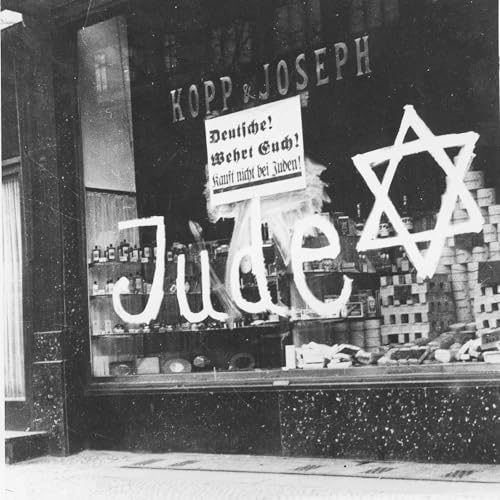
    We discuss the experiences of Edward Adler, a Jewish man in 1930's Germany, as he describes growing anti-semitism, being forced to build one of the first extermination camps, and his narrow escape after Kristallnacht. And that one time he was a kid and joined the Nazis - before they found out he was a Jew.

    Image
    Germany - a sign on a Jewish store: Protect Yourselves, Germans, Do Not Buy From Jews.
    Yad Vashem Archives
    Archival Signature: 3116/50

    Sources
    RG Number: RG-50.042.0003 Interview with Edward Adler. United States Holocaust Memorial Museum
    https://collections.ushmm.org/search/catalog/irn505557


    Mostra di più Mostra meno
    54 min
  • King Leopold and his Rubber
    Nov 5 2025

    Today we talk about Leopold II, King of Belgium from 1865-1909, and his personal empire in the African Congo. This is the story of a man who put his pocketbook ahead of a people, the nation he enslaved, and the global cast of writers and advocates that worked to bring him down.

    Image

    In The Rubber Coils. Scene - The Congo 'Free' State" Linley Sambourne depicts King Leopold II of Belgium as a snake attacking a Congolese rubber collector. Published on 28 November 1906

    Edward Linley Sambourne, Public domain, via Wikimedia Commons

    Bibliography

    Adam Hochschild, King Leopold’s Ghost: A Story of Greed, Terror and Heroism in Colonial Africa. Mariner Books, United States, 1999.

    David Renton; Seddon, David; Zeilig, Leo. The Congo: Plunder and Resistance. London: Zed Books, 2007.

    “General Act of the Berlin Conference on West Africa, 26 February 1885”. Signed by the representatives of the United Kingdom, France, Germany, Austria, Belgium, Denmark, Spain, the United States of America, Italy, the Netherlands, Portugal, Russia, Sweden-Norway, and Turkey (Ottoman Empire). Berlin, February 26, 1885.

    George Washington Williams. “Appendix 1: An Open Letter to His Serene Majesty Leopold II, King of the Belgians and Sovereign of the Independent State of Congo.” Stanley Falls, Central Africa, July 18th 1890.

    George Washington Williams. “Report upon the Congo-State and country to the President of the Republic of the United States of America, ” 1890.

    “In the Rubber Coils.” Punch, 1906 from King Leopold’s Ghost, 120.

    “The Guilt of Delay.” Punch, 1909. In King Leopold’s Ghost, p. 120.

    Joseph Conrad. Heart of Darkness. Originally published 1899. Independently published, December 9, 2019

    Inventory of the Stanley Archives. “Henry Morton Stanley: correspondence.”

    Maps from the Belgian Congo and Congo Free State. 1921. Internet Archive.

    Mark Twain. King Leopold’s Soliloquy: A Defense of His Congo Rule. Boston: The P.R. Warren Co., 1905. In King Leopold’s Soliloquy.The University of New Orleans Press Edition, 2016.

    David Renton; Seddon, David; Zeilig, Leo (2007). The Congo: Plunder and Resistance. London: Zed Books.

    Sir Arthur Conan Doyle. The Crime of Congo. New York Doubleday, Page & Company, 1909.

    Vachal Lindsay (1914). The Congo and Other Poems. New York: The Macmillian Company. OCLC 40402773

    Accounts and Papers: Sixty-Five Volumes. (14) Colonies and British Possessions—continued. Africa—continued. Session: 2 February 1904-15 August 1904. Vol. LXLL. Correspondence relating to the Recruitment of Labour in the British Central Africa Protectorate for Employment in the Transvaal. [In continuation of “Africa No 2 (1903.] “Correspondence and Report from Hist Majesty’s Consul at Boma Respecting the Administration of the Independent State of the Congo.” Presented to both Houses of Parliament by Command of His Majesty. February 1904. London: Printed for His Majesty’s Stationary Office, by Harrison and Sons, 1904. Found in Project Gutenberg eBooks.

    Mostra di più Mostra meno
    59 min
  • The Kindertransport - When Britain Came to the Rescue
    Oct 30 2025

    We discuss the Kindertransport program through which around 10,000 children were saved from Nazi occupied Europe from November 1938 until German occupation of the Netherlands in 1940.

    Image

    A picture of one of the tags that children wore around their neck when arriving in Britain, as a way for them to meet with their foster families. This numbered identification tag was worn by Henry Schmelzer when he was a member of a Kindertransport sent from Austria to England in December 1938.

    United States Holocaust Memorial Museum
    Copyright: United States Holocaust Memorial Museum
    Provenance: Henry Schmelzer
    Source Record ID: Collections: 1989.215.2

    Errata

    Kristallnacht started on November 9th 1938. The Beer Hall Putsch started on November 8th 1923.

    Bibliography

    “A Bipartisan Move”, Washington Post, 14 Feb. 1939; see also “Clerics Ask US Help for German Child Refugees”, Newport News [Virginia] Daily Press, 10 Jan. 1939.

    Rymph, C. (2020). American child welfare and the Wagner-Rogers Bill of 1939. Jewish Historical Studies, 51(1). https://doi.org/10.14324/111.444.jhs.2020v51.019

    Daniel Jonah Goldhagen. Hitler’s Willing Executioners: Ordinary Germans and the Holocaust. Vintage Press, 1997.

    Escaping the Nazis on the Kindertransport (Encounter: Narrative Nonfiction Stories). Emma Carlson Berne. Capstone Press. February 2017.

    In America 1933-45: Response to the Holocaust, Rescuing the Future

    Into the Arms of Strangers: Stories of the Kindertransport. Mark Jonathan Harris and Deborah Oppenheimer. Bloomsbruy Publishing PLC. November 2017

    “Introduction to the Holocaust.” Holocaust Encyclopedia

    Jeffery Gurock (Editor). America, American Jews, and the Holocaust: American Jewish History. Taylor and Francis, 1998.

    Judy Bolton- Fasman. “And Then: The U.S.’s Culpability in the Holocaust”

    The Night of Broken Glass: Eyewitness Accounts of Kristallnacht. Edited by Uta Gerhardt and Thomas Karlauf. Translated by Robber Simmons and Nick Sommers. Polity Press, 2009.


    Interviews from the United States Holocaust Memorial Museum, Washington D.C.

    RG Number: RG50.614.0038. Oral History Interview with Norbert Wollheim. The Jeff and Toby Herr Oral History Archive, United States Holocaust memorial Museum.

    RG Number: RG-90.008.0012, Oral History Interview with Ernest Goodman, The Jeff and Toby Herr Oral History Archive, United States Holocaust Museum, Washington D.C.

    RG Number: RG-90.008.0027. Oral History Interview with Ralph Samuel. The Jeff and Toby Herr Oral History Archive, United States Holocaust Memorial Museum, Washington D.C.

    RG Number: RG-90.008.0035. Oral History Interview with Gita Rossi Zalmons, The Jeff and Toby Herr Oral History Archive, United States Holocaust Memorial Museum, Washington D.C.

    Mostra di più Mostra meno
    55 min