Living decoloniality copertina

Living decoloniality

Living decoloniality

Di: Carla Vitantonio
Ascolta gratuitamente

Offerte di stagione | 0,99 €/mese per i primi 3 mesi

A seguire 9,99 €/mese – si applicano condizioni. Puoi disdire mensilmente.
Practical experiences of decolonial re-existence through the aid sector.
A podcast by Carla Vitantonio
With the support of the Center for Humanitarian LeadershipCarla Vitantonio
Filosofia Scienze sociali
  • S 04 Ep 09 Hasta la proxima
    Mar 19 2026
    Español

    En este último episodio de la cuarta temporada de Living Decoloniality, Carla Vitantonio conversa con Matilde Dani y Asier Hernando Malax-Echevarria para recoger algunos de los hilos que han atravesado esta temporada, la primera realizada en español.
    A partir de las voces que han participado en los distintos episodios, reflexionamos sobre la ética del cuidado, el lugar de los cuerpos y los saberes situados, y sobre cómo la colonialidad se reproduce en lo cotidiano dentro del trabajo cultural, social y de cooperación.La conversación retoma también una pregunta clave que atraviesa toda la temporada: cómo pasar del discurso a la práctica, entendiendo la decolonialidad no como una identidad, sino como una práctica cotidiana hecha de decisiones, tensiones y responsabilidades.En la parte final, Carla abre además una reflexión sobre la colonialidad del género, un tema todavía poco abordado en el sector de la cooperación internacional y la acción humanitaria.

    °°°°°°°°°°°°°°°°°°°°°°°°°°°

    English

    In this final episode of the fourth season of Living Decoloniality, Carla Vitantonio is joined by Matilde Dani and Asier Hernando Malax-Echevarria to reflect on some of the key threads that have shaped this season, the first one produced in Spanish.
    Drawing on the voices featured throughout the series, the conversation explores the ethics of care, the role of bodies and situated knowledge, and the ways coloniality continues to operate in everyday practices within cultural work, social action, and international cooperation.The discussion also returns to a central question running through the season: how to move from discourse to practice, understanding decoloniality not as an identity, but as a daily practice shaped by choices, tensions, and responsibilities.In the final part of the episode, Carla opens a reflection on the coloniality of gender, a topic that remains largely unaddressed within international cooperation and humanitarian sectors.

    Source List// Recursos:
    Kamlongera, M. I., & Katenga-Kaunda, M. W. (2023). Researchers’ reflections on ethics of care as decolonial research practice: understanding Indigenous knowledge communication systems to navigate moments of ethical tension in rural Malawi. Research Ethics, 19(3), 312-324.

    Mathebula, Kgatitswe (2026). More than paperwork: Towards a relational, reflexive, and decolonial ethics in research with black women in South Africa. Methods in Psychology

    Constantinou, C.M., McConnell, F., Dilar Dirik, Asebe Regassa, Loong, S. and Rauna Kuokkanen (2024). Reimagining self-determination: Relational, decolonial, and intersectional perspectives. Political geography, pp.103112–103112.

    Lugones, Maria. 2007. “Heterosexualism and the Colonial / Modern Gender System.” Hypatia 22, no. 1: 186-209.

    Jhagroe, S., & Salazar-Morales, D. (2025). A theory of policy coloniality: the role of race and colonial knowledge in policy formulation. Critical Policy Studies, 1–21.

    Trisos, C.H., Auerbach, J. & Katti, M. Decoloniality and anti-oppressive practices for a more ethical ecology. Nat Ecol Evol 5, 1205–1212 (2021).

    Transcript// transcripciòn
    Mostra di più Mostra meno
    16 min
  • S 04 Ep 08 Maydi
    Mar 5 2026

    La protagonista de este episodio es Maydi Bayona Estrada, antropóloga cultural, que nos habla desde Cuba.
    Activista feminista y decolonial, Maydi comparte con nosotras su mirada lucida hacia la cooperación internacional en su país y en la academia, tocando cone ejemplos evidentes y reales aspectos como la reproducción del privilegio y el poder.

    Al mismo tiempo, Maydi nos propone alternativas y practicas de sanación que pueden apoyar nuestro trabajo de re-existencia decolonial.


    °°°°°

    This episode features Maydi Bayona Estrada, a cultural anthropologist, who speaks to us from Cuba.
    A feminist and decolonial activist, Maydi shares her insightful perspective on international cooperation in her country and in academia, addressing issues such as the reproduction of privilege and power with clear and real-world examples.At the same time, Maydi proposes alternatives and healing practices that can support our work of decolonial re-existence.


    Transcipcción aqui// transcript here

    Recursos// Resources
    Oshún in front of the mirror: the defense of the territory-body-land of herself, in Afropolitical keys
    Afrofeminismos: P eminismos: Pensamient ensamiento, Ciencia y Acción
    Queremos romper con la visión colonial
    Pluriversario: Crisis climática y racismo ecosistémico en Afroamérica
    Mostra di più Mostra meno
    17 min
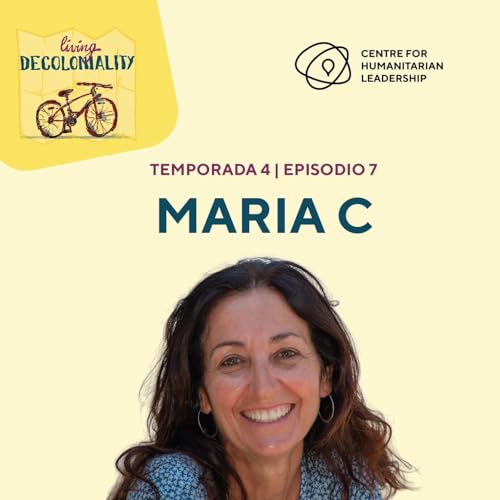
  • S 04 Ep 07 Maria C
    Feb 19 2026
    En este episodio conversamos con Maria Chalaux, del equipo de Fundació Nous Cims en Barcelona, sobre impacto social, responsabilidad y el papel de las fundaciones en la transformación de las desigualdades estructurales.
    A partir de su experiencia en el ámbito de la filantropía y la innovación social, Maria reflexiona sobre cómo el poder, la financiación y la toma de decisiones condicionan lo que se considera impacto y lo que queda fuera de foco.Exploramos juntas las tensiones entre la medición del impacto y los procesos de cambio a largo plazo, la importancia de los enfoques ecosistémicos y la necesidad de ir más allá de soluciones tecnocráticas hacia prácticas relacionales, éticas y situadas.

    ***English*****

    In this episode, we speak with Maria Chalaux, who works at Fundació Nous Cims in Barcelona, about social impact, responsibility, and the role of foundations in addressing structural inequalities.
    Starting from her experience within philanthropy and social innovation ecosystems, Maria reflects on how power, funding, and decision-making shape what is possible, and what remains invisible in social and international cooperation.Together, we explore the tensions between impact measurement and long-term transformation, the importance of ecosystem approaches, and the need to move beyond technocratic solutions toward relational, ethical, and context-aware practices.

    Resursos// Resources

    Ebrahim, A. & Rangan, V. K. (2014). What Impact? A Framework for Measuring the Scale and Scope of Social Performance

    Nous Cims

    Biggs, R., Clements, H. S., Cumming, G. S., Cundill, G., de Vos, A., Hamann, M., … Reyers, B. (2022). Social-ecological change: insights from the Southern African Program on Ecosystem Change and Society.

    de Sousa Santos, B. (2014). Epistemologies of the South

    Moulaert, F. et al. (2013). The International Handbook on Social Innovation
    Mostra di più Mostra meno
    13 min
adbl_web_anon_alc_button_suppression_t1
Ancora nessuna recensione