Episodi

  • LGR 306: Rachel Hall on the New Maverik KREASE Goalie Head and the Future of Goalie Gear
    Nov 10 2026

    In this episode, we sit down with Rachel Hall, professional Women's Lacrosse League (WLL) goalie and Maverik brand manager, to discuss the new Maverik Krease goalie head and the latest innovations in goalie gear.

    Rachel takes us behind the design of the Maverik Krease, explaining how its familiar face shape, reinforced scoop, and carefully balanced stiffness and flexibility help goalies perform with confidence. She also shares details about its Degree heat-resistant material, comfortable throat design, grip, and stringing options.

    We also discuss the Maverik Movement thigh pad, designed to provide lightweight protection without limiting mobility.

    What You'll Learn in This Episode
    • The Maverik Krease goalie head: What makes its design different and how it supports goalies.

    • Durability and performance: How the reinforced scoop and Degree material contribute to the head's construction.

    • Stiffness and flexibility: Finding the right balance for consistent performance.

    • Stringing preferences: Rachel's thoughts on top strings and sidewall options.

    • Maverik Movement thigh pads: A closer look at lightweight protection designed for goalies.

    • Rachel's experience as a professional goalie: Her approach to training, film study, and improving her game.

    Episode Highlights

    Rachel discusses how the Maverik Krease was developed with input from goalies and how it compares with other goalie heads in terms of weight and feel. She also shares how she and Logan McNaney use the new head.

    The Maverik Krease launched on September 1, with several purchasing options available:

    • Unstrung: $129.99

    • Degree unstrung: $159.99

    • Factory strung: $174.99

    • Complete stick: $199.99

    Rachel also explains the design behind the Maverik Movement thigh pad, which combines thin foam protection with a four-inch spandex design to support movement and comfort.

    Beyond equipment, Rachel shares advice for goalies looking to improve, including getting shots from a good shooter, studying game footage, and watching goalie saves to learn from other players.

    Final Takeaway

    The right equipment can make a difference in a goalie's confidence and performance. Rachel's insights offer a closer look at how goalie gear is designed and what players should consider when choosing equipment.

    Tune in to hear more about the Maverik Krease and get practical advice from a professional goalie.

    About the Podcast

    The Lax Goalie Rat Podcast shares insights, tips, and conversations with coaches, players, and experts to help lacrosse goalies improve their skills, confidence, and performance.

    Mostra di più Mostra meno
    38 min
  • LGR 305: Logan McNaney on What It Takes to Become an Elite Goalie: Positioning, Confidence & Recovery
    Oct 16 2026
    What does it take to become an elite lacrosse goalie? In Episode 305 of the Lax Goalie Rat Podcast, Coach Damon sits down with professional goalie Logan McNaney to discuss his journey from Maryland lacrosse to the professional level with the Denver Outlaws. Logan shares how he developed his game, improved his positioning, and learned to use his strengths as a 5'8" goalie. He breaks down the importance of lateral movement, clean saves, stick skills, and becoming a reliable part of the team's clearing game. The conversation also explores the mental side of goaltending, including Logan's recovery from a torn ACL, handling difficult stretches of games, and building confidence through visualization and preparation. Logan also discusses his experience with Coach John Tillman at Maryland, his favorite career moments, and his thoughts on the Maverik goalie head. Whether you're a young goalie, an experienced player, or a coach looking to help your goalies improve, this episode offers practical lessons on technique, athletic development, and maintaining the right mindset. What You'll Learn in This Episode Finding your style as a goalie: Why there is no single correct way to play the position and why you should adapt your technique to your strengths. Improving goalie positioning: How Logan refined his positioning at Maryland, including using a string drill to understand angles and avoid getting to the pipes too early. Making the most of a smaller frame: How smaller goalies can use agility, quickness, and athleticism to their advantage. Learning from teammates: Why communicating with shooters and understanding how they think can improve your reads and decision-making. Developing a stronger clearing game: Why goalies should take pride in their stick skills, practice with both hands, and work on transitioning quickly from a save to a pass. Building better movement: Logan's approach to lateral movement and why efficient footwork can help goalies cover more of the goal. Controlling rebounds: How consistent catching practice, hand-eye coordination, and a well-suited pocket can help produce cleaner saves. Recovering from a major injury: Logan's experience with a torn ACL, additional injuries, and the mental challenges of returning to the field. Building confidence during difficult stretches: How visualization, remembering successful performances, and trusting your preparation can help you bounce back. Learning from great coaches: What Logan learned from Maryland coach John Tillman and his individualized approach to coaching goalies. Balancing confidence and perspective: Why goalies need to believe in themselves while remembering to enjoy the game. Key Takeaways for Lacrosse Goalies 1. Find What Works for You Every goalie is different. Your body type, movement, and natural tendencies should influence your technique. Learn from other goalies, but adapt what you see to fit your own game. 2. Make Positioning a Priority Good positioning helps you make saves without relying entirely on reaction speed. Work on your angles, stay balanced, and avoid moving too far ahead of the ball. 3. Become an Asset in the Clear Your job doesn't end when you make a save. Develop reliable stick skills, practice passing with both hands, and learn to prepare your body for the next pass as you make the save. 4. Train Your Athleticism Strength, lateral movement, balance, and goalie-specific training can make a significant difference. Logan's experience showed him how much his movement improved when he began focusing more deliberately on athletic development. 5. Take Recovery One Day at a Time Injury recovery can be mentally demanding. Focus on what you can control each day, trust the process, and recognize small improvements along the way. 6. Build Confidence Through Preparation Visualize successful saves, remember how you felt during strong performances, and keep putting in the work. Confidence grows when you learn to trust your abilities and preparation. 7. Remember to Have Fun Getting scored on is part of being a goalie. Don't let one goal or one difficult stretch define you. Stay positive, learn from the experience, and remember why you started playing. About Logan McNaney Logan McNaney is a professional lacrosse goalie who played collegiate lacrosse at the University of Maryland, where he helped the Terrapins win a national championship during a perfect 18–0 season. He later competed professionally with the Denver Outlaws, reaching back-to-back championship games. Known for his agility, positioning, clearing ability, and strong performances in the crease, Logan offers valuable insight into the technical and mental demands of elite-level goaltending. Resources Mentioned Lax Goalie Rat Academy: Get access to more than 130 hours of goalie training, drills, technique breakdowns, mental game resources, and coaching content. Join for $40 for your first month at https://www.laxgoalierat.com/camp ThighPro Protection: Explore ...
    Mostra di più Mostra meno
    58 min
  • LGR 304: Andrew Cook - Train With Intent, Play Free & Fall in Love With the Process
    Oct 5 2026
    In Episode 304 of the Lax Goalie Rat Podcast, Coach Damon Wilson sits down with Andrew Cook, also known as Cookie Strings, to discuss his journey from being thrown into the cage by his older brother to playing Division I lacrosse at Johns Hopkins and transferring to Dartmouth. Andrew shares how he developed his goalie skills, adapted to the speed of college lacrosse, and built a structured training routine to improve specific areas of his game. He also discusses the importance of playing freely, staying present when you're a backup, and using visualization and breathing techniques to strengthen the mental side of the position. The conversation also covers Andrew's stringing business, his experience testing different goalie heads, and his advice for young goalies who want to reach the next level. What You'll Learn in This Episode Starting the goalie journey: How Andrew's older brother introduced him to the position and helped him learn the fundamentals through research, YouTube, and advice from other goalies. Finding motivation in the position: Why the pressure, responsibility, and ability to influence a game's outcome make being a goalie so rewarding. Navigating the recruiting process: How the Apex Goalie Showcase helped Andrew get noticed by Johns Hopkins and why developing your skills should come before worrying about recruitment. Adjusting to Division I lacrosse: How Andrew changed his stance to become more efficient against low shots and learned that every goalie needs a style that works for their body and comfort level. Playing freely as a backup: Lessons from his time on the Hopkins scout team with fellow goalie Orange Alinas, including how having fun and staying present helped them improve. Training with intent: How Andrew structures his shooting sessions around specific situations, including outside shots, shots on the run, midrange shots with screens, and inside finishing. Developing footwork and hand speed: The drills he has practised since childhood, including ladder work, jump rope, stepping drills, juggling, and wall ball. Strengthening the mental game: How meditation, box breathing, and visualization help Andrew prepare for games and handle the possibility of getting scored on. Responding to a slump: Why focusing on communication, clearing, supporting teammates, and bringing positive energy can help a goalie get through a difficult stretch. Building Cookie Strings: How Andrew learned to string lacrosse sticks, grew his Instagram presence, and turned his interest into a stringing business. Choosing the right goalie head: Andrew's thoughts on the Warrior Answer and Maverik Crease, including their shape, stiffness, throat design, and impact on rebounds and ball release. Transferring to Dartmouth: Why Andrew decided to explore new opportunities after two years at Johns Hopkins and what made Dartmouth feel like the right fit. Key Takeaways for Lacrosse Goalies 1. Train with a purpose.Rather than taking random shots, identify the specific parts of your game that need improvement and build your sessions around them. Practising realistic game situations, such as getting set between feeders, can make your training more effective. 2. Focus on what you can control.You cannot always control your place on the depth chart or how others evaluate you. You can control your preparation, effort, attitude, communication, and how you support your teammates. 3. Prepare mentally for both success and adversity.Andrew visualizes making saves as well as getting scored on. By mentally rehearsing difficult moments, goalies can be better prepared to respond calmly during a game. 4. Find a stance that works for you.Small adjustments can make a significant difference. Andrew found that bringing his hips back and leaning his chest forward helped him reach low shots more effectively. However, he emphasizes that no two goalies play exactly alike. 5. Remember why you started playing.Even when you're struggling or playing a backup role, stay connected to the enjoyment of the game. Have fun, be a good teammate, and keep working to improve. About Andrew Cook Andrew Cook, better known as Cookie Strings, is a lacrosse goalie who played at Johns Hopkins before transferring to Dartmouth for the upcoming season discussed in this episode. Originally from Utah and later a standout at Torrey Pines in San Diego, Andrew developed his game through years of dedicated practice, structured shooting sessions, and a strong interest in learning the technical and mental sides of goaltending. Outside the cage, Andrew creates lacrosse content and runs Cookie Strings, a stringing business that grew from his early efforts to learn how to string his own sticks. Follow Cookie Strings on Instagram for goalie training videos, stringing content, and more. Resources Mentioned Lax Goalie Rat Academy: Access more than 130 hours of goalie training content covering technique, drills, mental performance, lacrosse IQ, physical training, and more...
    Mostra di più Mostra meno
    56 min
  • LGR 303: Grayson Manning on Embracing Imperfection, Staying Ready, and Having Fun
    Sep 20 2026
    In this episode of the Lax Goalie Rat Podcast, Coach Damon sits down with Denver starting goalie Grayson Manning to discuss his journey from box lacrosse in Canada to becoming a standout Division I field lacrosse goalie. Grayson shares how playing box lacrosse shaped his physicality, patience, and ability to handle close-range shots. He also discusses adjusting to the faster pace of American field lacrosse, developing his technique at Denver, and learning from experienced coaches and mentors. The conversation also covers his recruiting journey, his first college game in a snowy matchup against Utah, and his experience representing Team Canada at the U20 World Championships in South Korea, where he helped win gold with a dramatic walk-off save. Whether you're a young goalie or an experienced player looking to improve, Grayson's insights offer practical lessons on positioning, movement, confidence, and the mental side of the position. What You'll Learn in This Episode How box lacrosse builds better field goalies: Why playing box helped Grayson develop physicality, patience, confidence, and the ability to read fakes on close-range shots. Adjusting from box to field lacrosse: How he adapted to faster shots, shots on the run, and sweeping shots from American players. The importance of being set: Why having a balanced, athletic stance can be more valuable than constantly chasing the shooter's movement. Improving hand positioning: How adjusting his grip and using his middle finger helped Grayson improve his hand speed and make cleaner movements. Making better low saves: Why pushing off the back foot, keeping the head level, and finishing on the knees can improve control and rebound recovery. Learning from mistakes: How reviewing every goal against helped him identify weaknesses and make specific improvements. Handling goals against: Why goalies should focus on resetting themselves and their defense instead of blaming themselves after every goal. Making technical changes: How working with goalie coach Coach Metzbauer helped Grayson improve his stance and positioning over time. Preparing as a backup goalie: How he approached his first college appearance without putting too much pressure on himself. Winning gold with Team Canada: What it was like competing at the U20 World Championships in South Korea and making the final save to secure the championship. Key Takeaways for Lacrosse Goalies Use your background to your advantage. Grayson's experience in box lacrosse helped him develop physicality, confidence, and patience that carried over into field lacrosse. Stay balanced and be ready. Being set in an athletic position gives you a better chance to react, even if you're not in the perfect spot. Keep your eyes on the ball. On off-stick saves, keep your hands on the same plane and make the save out in front of your body so you can track the ball throughout the movement. Learn from every goal against. Review your footage, identify patterns, and turn mistakes into specific areas to improve. Reset as a team. After a goal, communicate with your defenders, understand what went wrong, and focus on how to stop the next shot. Make technical changes gradually. New techniques can feel uncomfortable at first. Give yourself time to practice and adjust before deciding whether they work. Stay engaged even when injured. If you cannot work on your full movements, find other ways to train, such as wall ball and hand-speed exercises. Remember why you play. Goalkeeping is an imperfect position. Enjoy the process, keep improving, and have fun. About Grayson Manning Grayson Manning is the starting goalie for the University of Denver men's lacrosse team and a Team Canada U20 gold medallist. Originally from Victoria, British Columbia, Grayson grew up playing box lacrosse and hockey before transitioning to field lacrosse at around 14 years old. His box lacrosse background helped shape his aggressive, physical style and ability to make close-range saves. At Denver, he developed his technique under goalie coach Coach Metzbauer and earned the opportunity to compete for the starting position as a freshman. He also set a new Denver single-season saves record, breaking the previous mark by one save. Grayson represented Team Canada at the U20 World Championships in South Korea, where the team won gold following a dramatic championship game finished by his walk-off save. He also helps with Ryan LaPlante and Trevor Tierney's Goalie Evolution Academy. Final Advice from Grayson "Just have fun with it." Grayson reminds goalies not to get so caught up in the game that they forget the joy of making a save. You will never stop goals every time, and nobody has ever played the position perfectly. Embrace the imperfections, keep striving to improve, and remember that you're out there to have fun and become the best version of yourself.
    Mostra di più Mostra meno
    50 min
  • LGR 302: Travis Wagner: Goalie Development, Mental Game, and Finding Your Style
    Sep 7 2026
    In this episode of the LAX Goalie Rat Podcast, Coach Damon Wilson sits down with Travis Wagner, college lacrosse goalie and coach, to discuss his journey through the position and the lessons he has learned both as a player and a coach. Travis shares how he started playing goalie at just three years old and how watching indoor lacrosse helped inspire his love for the position. He discusses the coaches and goalies who influenced his development, his experience playing box lacrosse, and how he developed his own unique style in the cage. The conversation also covers goalie mechanics, bottom-hand dominance, tracking shots, five-hole saves, footwork, positioning, athletic development, and training in the weight room. Travis explains how his experience with injuries and equipment led him to experiment with additional thumb protection. Damon and Travis also dive into the mental side of goaltending, including pregame routines, staying present, dealing with slumps, building confidence, and learning how to stay loose during games. Travis also shares what he looks for as a college coach when evaluating goalies, including communication, clearing ability, body language, footwork, and how they respond to mistakes. In This Episode Travis explains how he became a goalie at a very young age after being inspired by indoor lacrosse goaltender Pat O'Toole and his famous "Tool Time" celebration. He discusses how his grandfather helped him develop as a young goalie by shooting on him in the cold and teaching him to simply get in front of the ball and keep going. Travis shares how coaches and goalies from the Rochester area, including Willie Clancy, Dennis Costanza, and Blaze Reardon, influenced his development and helped him create his own style. The conversation explores how playing box lacrosse helped Travis improve his angles, presence in the cage, and ability to see different types of shots. Travis explains his philosophy of being a bottom-hand dominant goalie and compares the bottom hand to a gas pedal and the top hand to a steering wheel. He discusses five-hole saves, keeping the hips loaded back, preventing the knees from buckling, and how strengthening the glute medius helped improve his athletic position. Travis also talks about his college experience, including transferring to Cortland, becoming a four-year starter, and learning how important team culture and being comfortable around his teammates were to his development. After breaking his thumb multiple times, Travis explains how he experimented with equipment and developed additional thumb protection to help prevent further injuries. The conversation also covers his pregame routine, eye exercises, tracking shots, studying shooters, and using conversations with teammates to understand where shooters are likely to place the ball. Travis discusses going through a difficult slump during his junior year and how using short phrases such as "Be here now" helped him stay focused and avoid overthinking. As a coach, Travis explains why there is no one-size-fits-all approach to goaltending and why coaches need to work with each goalie's individual body type, athleticism, strengths, and weaknesses. Key Takeaways Develop Your Own Style There is no single correct way to play goalie. Travis emphasizes understanding your own strengths and building a style that works for your body, athleticism, and abilities. Stay Present Travis uses simple reminders and routines to keep himself focused on the moment instead of overthinking his movements or worrying about the next shot. Keep Your Body Loose Staying relaxed allows goalies to react more naturally. Travis discusses techniques such as keeping the armpits loose, moving between shots, and avoiding unnecessary tension. Train Your Hips Strong hips and glute medius muscles can help goalies maintain their athletic position and prevent their knees from collapsing inward. Study the Shooter Understanding shooting tendencies and having conversations with teammates can help goalies anticipate where shots are likely to go. There Is No One-Size-Fits-All Goalie Goalies come in different sizes, athletic abilities, and styles. Coaches should build on what each goalie does well instead of forcing everyone into the same technique. Communication Matters For goalies going through the recruiting process, Travis emphasizes loud and clear communication with defenders as one of the most important things college coaches look for. Your Response Matters College coaches pay attention not only to saves, but also to clearing ability, body language, footwork, communication, and how a goalie reacts after giving up a goal. Topics Covered Starting lacrosse and becoming a goalie at a young ageBeing inspired by indoor lacrossePlaying box lacrosseLearning from experienced goalie mentorsDeveloping a unique goalie styleBottom-hand dominant goaltendingGoalie hand mechanicsFive-hole savesHip positioning and athletic stancePreventing the knees from bucklingGlute medius ...
    Mostra di più Mostra meno
    1 ora e 1 min
  • LGR 301: Cornell Goalie Matt Tully: Rebuilding a Stance, Backup Mentality, and the Hard Hat Legacy
    Aug 21 2026
    In this episode of the LAX Goalie Rat Podcast, Coach Damon Wilson sits down with Matt Tully, Cornell lacrosse goalie and national champion, to discuss his development as a goalie, his approach to training, and what it takes to compete at the highest level of college lacrosse. Matt shares his journey from starting lacrosse in kindergarten to committing to the goalie position in third grade and eventually playing at Cornell. He talks about developing his athleticism and quick hands, experimenting with his stance, and learning how to make cleaner saves. He also discusses the importance of mental toughness, preparation, and enjoying the game, whether you're a starter or a backup. From his favourite goalie drills to Cornell's Hard Hat tradition, this episode offers practical advice for goalies looking to improve their technique, build confidence, and become better teammates. In This Episode Matt breaks down the technical and mental skills that have helped him develop as a college goalie. He explains why goalies need to experiment with different techniques to find what works for them, how wall ball and juggling can improve hand-eye coordination, and why getting your body behind the ball is essential for making clean saves. He also shares lessons from his time at Cornell, including how he adjusted his stance after struggling early in his college career, what he learned from former teammate Wyatt Neuman, and how he stayed motivated while serving as a backup. Matt discusses managing negative thoughts, staying focused during timeouts, and embracing the daily work required to compete for a national championship. Key Takeaways Find your own style as a goalie. Matt explains that there is no single formula for making saves. Learn the fundamentals, experiment with different techniques, and give yourself time to discover what works best for your game. Love the process of getting better. Matt believes that enjoying the position is essential to continued development. You do not need to take endless shots, but you should enjoy practicing, seeing shots, and working on your weaknesses. Develop your hands through consistent repetitions. Wall ball, catching progressions, and juggling can help improve hand-eye coordination and prepare you to track the ball. Matt particularly enjoys juggling off a wall because it helps him focus and get into the zone. Use your feet and body to support your saves. Short-stick drills and foot-save exercises can help goalies improve their reactions and learn to watch the ball all the way into their hands or feet. Stay balanced when recovering from a fake. Matt uses a small hop to help reset his stance after biting on a shot fake. Bringing the chest back up, facing the shooter, and maintaining balanced weight distribution can help you prepare for the next shot. Make stance adjustments during the off-season. Matt explains how he moved to a lower stance with a wider base to trust his athleticism, then adjusted his chest position to stay effective against high shots. He recommends testing major changes when there is time to adapt. Soft hands can help create cleaner saves. Matt is working on catching more shots rather than relying on body saves that create rebounds. Getting your body behind the ball, staying relaxed, and moving under control can help you absorb shots more effectively. Backup goalies must prepare like starters. Matt encourages goalies to treat every practice like a game day. Focus on what you can control, make the most of every repetition, and stay engaged with your team even when you're not getting the starting role. Preparation builds confidence and composure. Matt learned from former teammate Wyatt Neuman, who remained calm under pressure. Consistent preparation and daily work can help goalies trust their abilities when game day arrives. Learn to manage negative thoughts. Matt discusses acknowledging self-doubt instead of letting it take over. Simple self-talk and reminders such as focusing on the next shot can help you reset and stay present. Remember that lacrosse is a team sport. Although goalies can feel isolated, they are part of the defensive unit. Communicating with teammates and trusting the players in front of you can help reduce the pressure of feeling responsible for everything. Enjoy every second of playing. Matt's final advice is to have fun and appreciate the opportunity to play. Improvement matters, but enjoying the experience and your time with teammates is just as important. Topics Covered Matt's lacrosse journey from kindergarten to Cornell Why he committed to playing goalie in third grade The pressure and rewards of the goalie position How goalies can rely on teammates and communicate with their defense Developing an individual goalie style through experimentation Building athleticism and improving hand speed Wall ball routines and juggling drills Short-stick training and foot-save drills Recovering after biting on a shot fake Using a hop to reset your ...
    Mostra di più Mostra meno
    42 min
  • LGR 300 - Jack Allen: Syracuse Roots, England Lacrosse, Ohio State Cage
    Aug 9 2026
    We made it to Episode 300! Thank you to everyone who has been part of this journey. I enjoy talking shop with lacrosse goalies so much that I would keep doing this even if nobody were listening. Knowing that so many of you enjoy these conversations and take the time to reach out means a lot. For this milestone episode, I’m joined by Jack Allen, Ohio State lacrosse goalie, whose path to Division I lacrosse is anything but ordinary. Born in Syracuse and raised in Ohio, Jack moved to England at just 10 years old. With lacrosse still a niche sport there, finding opportunities to develop as a goalie was a challenge. One of his best options for getting experience was playing in a men's league alongside players from local Air Force bases. Jack shares how that unusual experience shaped his development and eventually helped him reach the Division I level at Ohio State. We also get into the technical and mental sides of playing goalie, including how he studies other goalies on film, works through slumps with targeted repetitions, and uses sports psychology techniques to stay composed during games. At 5'9", Jack has also developed his own approach to using his body effectively in the cage. He explains what it means to play like a "rubber band, not a slinky," how he adjusted to up-the-hash shots at the college level, and what he has learned from practicing alongside Casey "Big Tasty" Yamron. Plus, Jack shares his recruiting journey, his experience coming off the bench against Rutgers, and a detailed breakdown of the equipment and stick setup he uses. What You'll Learn in This Episode How Jack developed his love for playing goalie across different sports Moving to England at age 10 and finding opportunities to play lacrosse Getting experience in a men's league with players from local Air Force bases How playing in the World Championships helped with his recruiting process Navigating recruiting when many college emails went unanswered What Jack looks for when studying other goalies on film How targeted repetitions can help goalies work through a slump Using sports psychology resources at Ohio State How box breathing helps him reset during games The French word that helps him move on after allowing a goal Playing effectively as a 5'9" goalie using the "rubber band, not a slinky" approach Adjusting to up-the-hash shots at the college level Lessons learned from practicing alongside Casey "Big Tasty" Yamron Preparing to enter a game cold, including his experience against Rutgers Jack's complete goalie gear and stick setup Key Takeaways for Lacrosse Goalies Your path does not have to look like everyone else's.Jack's journey from the United States to England and eventually Ohio State shows that there are different ways to develop as a goalie. Make the most of the opportunities available to you, even when they look unconventional. Study with a purpose.Watching other goalies on film is more than just observing their saves. Pay attention to their positioning, movement, decisions, and techniques. Look for details you can apply to your own game. Use targeted repetitions to work through slumps.Instead of simply taking more shots, identify what is giving you trouble and build repetitions around that specific area. Focused practice can help you regain confidence and improve your performance. Develop a mental reset routine.Jack discusses using box breathing and a French word to help him move on after allowing a goal. Having a simple reset routine can help you stay present and focus on the next shot. Use your body effectively.Being a shorter goalie does not mean you cannot compete at a high level. Jack shares how he uses his size and movement to his advantage, including his approach to playing like a "rubber band, not a slinky." Be ready when your opportunity comes.Jack's experience coming off the bench against Rutgers is a reminder that goalies need to stay mentally prepared, even when they are not starting. Jack Allen's Goalie Gear and Stick Setup Jack breaks down the equipment he currently uses, including: STX Eclipse 3 Memory mesh RZR 2 gloves A backwards top string that changed his release About Jack Allen Jack Allen is a lacrosse goalie for Ohio State University. Born in Syracuse and raised in Ohio, he moved to England at age 10, where he continued developing his game in a very different lacrosse environment. His journey included playing in the World Championships before making his way to Division I lacrosse. Jack's Final Advice Jack leaves goalies with a simple reminder: Lacrosse is the medicine game. Have fun with it, enjoy the sport, and find ways to give back to the game that has given you so much. Thank you again for being part of 300 episodes of the Lax Goalie Rat Podcast!
    Mostra di più Mostra meno
    57 min
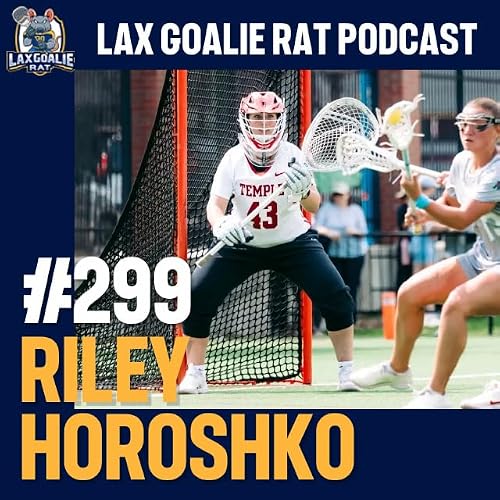
  • LGR 299: Riley Horoshko on Finding Fun in the Goal, Staying Ready, and Trusting the Process
    Jul 6 2026

    In this episode, I’m joined by Riley Horoshko, Temple University’s starting goalie, recent graduate, and American Conference Goalie of the Year. Riley shares her lacrosse goalie journey, from stepping into the cage in fourth grade because it meant “less running,” to becoming a standout college goalie after spending much of her college career as a backup.

    We talk about the lessons Riley learned from playing multiple sports, why she did not start club lacrosse until late in high school, and how she navigated the recruiting process by focusing on schools she would love even without lacrosse. Riley also opens up about the mental side of being a goalie, including comparison, pressure, staying relaxed, and how not playing for several seasons helped her rediscover her love for the game.

    This conversation is packed with practical advice for goalies, especially taller goalies, backups waiting for their chance, and athletes who are trying to enjoy the game while still competing at a high level.

    In this episode, we talk about:

    • How Riley first became a goalie in fourth grade
    • Why volleyball helped her develop as a lacrosse goalie
    • Starting club lacrosse late and still having a successful recruiting process
    • Choosing a school you would love even without lacrosse
    • What made Temple’s team culture so special
    • The coaching concept of “repetition without repetition”
    • Why taller goalies should use their size instead of shrinking in the cage
    • How Riley improved on low shots
    • Goalie drills she used at Temple and now uses while coaching
    • What she learned from being a backup for most of her college career
    • How not playing helped her rediscover the joy of lacrosse
    • Dealing with comparison as a goalie
    • Mental game strategies, including staying loose, box breathing, and keeping things fun
    • Riley’s approach to 8-meter shots
    • Why her final advice to goalies is simple: find a way to make it fun

    Key Takeaways

    Being a backup can still be a huge part of your growth. Riley spent much of her college career waiting for her chance, but she credits that time with helping her mature, support her teammates, and fall back in love with lacrosse.

    Goalies play better when they are relaxed. Riley emphasized that she played her best when she was having fun, talking to defenders, dancing a little, staying present, and not letting every shot feel heavy.

    Stop comparing and start redirecting your focus. For young goalies stuck comparing themselves to teammates or opponents, Riley’s advice is to look away, reset, talk to teammates, study the shooters, and put your attention somewhere useful.

    Use the tools you have. As a taller goalie, Riley learned to use her height, wingspan, and legs to her advantage, especially when teams tried to target her low.

    Keep the game simple when things feel hard. On tough days, Riley would focus on basic cues like tracking the top of the shooter’s stick and making the saves she knew she could make.

    Memorable Quote

    “Just find a way to make the sport fun and find a way to make yourself relaxed in the goal.”

    About Riley Horoshko

    Riley Horoshko is a goalie from Lehigh Valley, Pennsylvania, and a recent graduate of Temple University. After stepping into goal in fourth grade, Riley went on to become Temple’s starting goalie and earn American Conference Goalie of the Year honors. She now coaches young goalies in the Lehigh Valley area.

    Final Thoughts

    Riley’s story is a great reminder that every goalie’s path looks different. You do not need to be the earliest recruit, the biggest gear person, or the starter from day one to have a great career. Stay ready, support your teammates, keep learning, and most importantly, find ways to enjoy the game.

    Mostra di più Mostra meno
    38 min