Episodi

  • Drowned Secrets: The Susan Smith Tragedy
    Oct 25 2026

    On October 25, 1994, a South Carolina mother’s frantic cries launched a nationwide hunt for two missing boys — but what began as a desperate plea soon became a shockingly unraveling lie. In this episode of In Time Crime, I Robin Bagayoko will guide listeners through Susan Smith’s troubled past, a failing marriage, and the fateful night that turned a family’s life to ruin.

    With measured compassion for the victims and a hard look at the deception that gripped a community, this episode reconstructs the investigation, the confession that changed everything, and the aching aftermath that still raises questions about grief, guilt, and accountability.

    For all things In Time Crime and all Ear Balls media podcast join us at:

    Ear Balls Media

    Music by- Jeremy Blake

    Sources:

    • The State — Susan Smith: How the Crime Unfolded A detailed timeline of the case, including Susan's relationship with Tom Findlay, the nine-day investigation, her confession, and the trial. Read Article
    • The Washington Post — Woman Held in Sons' Deaths Details Abuse (1995) Covers Susan's troubled childhood, allegations of sexual abuse by her stepfather, and family court records. Read Article
    • ABC News — Revisiting Susan Smith's 1994 Case Explores the disappearance, inconsistencies investigators discovered, and the confession. Read Article
    • The Washington Post — South Carolina Mother Arrested in Sons' Deaths (November 1994) Original reporting about the discovery of the boys and Susan's arrest. Read Article
    • Los Angeles Times — Susan Smith Asked for Gun, Confessed, Sheriff Testifies (July 1995) Covers Sheriff Howard Wells' courtroom testimony about how Susan eventually confessed. Read Article
    • Los Angeles Times — State Rests in Smith Trial; Defense Opens (July 1995) Details testimony about Susan's emotional state, childhood experiences, relationships, and defense arguments. Read Article
    • Associated Press — Smith Spared Death Penalty (July 29, 1995) Explains the jury's decision to sentence Susan to life imprisonment rather than death. Read Article
    • The Washington Post — 1994 Murders of Two Boys Still Trouble South Carolina Town (2004) Examines the lasting impact of the murders on the community and the victims' families. Read Article
    • Associated Press / PBS News — Susan Smith Denied Parole (November 2024) Covers Susan's first parole hearing, David Smith's opposition to her release, and the board's unanimous decision. Read Article
    • The State — Susan Smith Applies for Parole Again (April 2026) Reports on her second parole application and the hearing scheduled for November 19, 2026. Read Article
    Mostra di più Mostra meno
    1 ora e 27 min
  • The First Fallen Agent: The Edwin Shanahan Case
    Oct 11 2026

    October 11, 1925 begins like any other day in a bustling Chicago garage—until a single arrest attempt explodes into violence and an ordinary car thief becomes the most wanted man in America. In this episode, we follow Special Agent Edwin C. Shanahan as he walks into a trap that will change federal law enforcement forever.

    Through breathless eyewitness accounts and the era’s paper-thin communications, we reconstruct Durkin’s trail of stolen Cadillacs, the small clues that built a nationwide dragnet, and the tense winter morning when a train became his final undoing. Feel the urgency of investigators piecing together telegrams and train schedules, racing against a fugitive who lived to steal and kill.

    More than a historical case file, this is a human story—of a man doing his job, a city on edge, and the birth of a legacy preserved on the FBI’s wall of honor. Join us as we guide you through the suspense, the sorrow, and the surprising twists of a manhunt that played out across states and changed a bureau forever.

    For all things In Time Crime and all Ear Balls media podcast join us at:

    Ear Balls Media

    Music by- Jeremy Blake

    Sources:

    • FBI — “Durkin: Murder of an FBI Agent” This is the main source for the case. It covers Shanahan’s October 11, 1925 attempt to arrest Martin James Durkin, the shooting, the nationwide manhunt, Durkin’s capture near St. Louis on January 20, 1926, and his later convictions. FBI case history
    • FBI Wall of Honor — Edwin C. Shanahan This confirms that Shanahan was the first FBI agent killed in the line of duty, gives his background, and summarizes the fatal encounter with Durkin. Edwin C. Shanahan — FBI Wall of Honor
    • FBI — Duty Weapon of First Special Agent Killed in the Line of Duty This supports the stakeout details, Shanahan’s attempt to arrest Durkin, the nationwide search, the January 1926 capture, and the preservation of Shanahan’s duty weapon as an FBI historical artifact. Shanahan’s duty weapon and case history
    • FBI Chicago Field Office History This gives broader historical context for the Bureau in the 1920s and discusses Shanahan’s death and the manhunt that followed. FBI Chicago history
    • FBI Historical Timeline This independently confirms the key date—October 11, 1925—and Shanahan’s status as the first Bureau agent killed in the line of duty. FBI historical timeline
    Mostra di più Mostra meno
    34 min
  • Night of Terror on the Strip: The Las Vegas Concert Shooting
    Oct 9 2026

    Trigger Warning: Sound of gunshots after intro music

    More than 22,000 people gathered in Las Vegas for the final night of the Route 91 Harvest Music Festival, expecting nothing more than music, dancing, and a good time. But in minutes, the night became one of the deadliest mass shootings in modern U.S. history. In today's episode of In Time Crime, we travel back to October 1, 2017, to reconstruct the hours leading up to, during, and after the attack.

    Through eyewitness accounts, the courage of first responders, and the fractured trail left by the shooter, we trace how a retired auditor turned reclusive gambler assembled an arsenal, chose a vantage point high above the crowd, and unleashed over a thousand rounds. Alongside heartbreaking profiles of victims and survivors, the episode explores the chaotic scramble of evacuation, the surge of compassion that followed, and the enduring mystery of motive — the unanswered question that haunts investigators and families alike.

    Join us as we remember those who were lost, honor those who rushed toward danger to save strangers, and grapple with the societal reverberations of a night that changed Las Vegas forever.

    For all things In Time Crime and all Ear Balls media podcast join us at:

    Ear Balls Media

    Music by- Jeremy Blake

    Sources:

    • Las Vegas Metropolitan Police Department — Final Criminal Investigative Report of the 1 October Mass Casualty Shooting This is the best primary source for the timeline, hotel rooms, weapons, police response, Jesus Campos, Paddock’s movements, evidence recovered, and the conclusion that no second gunman or conspiracy was established. Las Vegas Metropolitan Police Department LVMPD 1 October records and reports

    • LVMPD — 1 October After-Action Review Useful for the emergency response, police deployment, hospital evidence recovery, command decisions, and lessons learned after the attack. Las Vegas Metropolitan Police Department

    • FBI Behavioral Analysis Unit — Las Vegas Review Panel Key Findings This is the strongest source for the motive section. The FBI concluded there was no single or clear motivating factor and found no evidence that Paddock was targeting a particular hotel, casino, festival, or victim. FBI

    • ATF / Federal Register — Bump-Stock-Type Devices rulemaking Useful for the bump-stock section, including their use in the shooting and the federal regulatory response that followed. ATF

    • ATF — National Firearms Commerce and Trafficking Assessment Provides background on how bump stocks had previously been classified and how the Las Vegas attack led ATF and DOJ to reconsider those classifications. ATF

    • Clark County — 1 October Memorial Committee / Memorial Project Best source for the permanent memorial, the memorial committee, the victims and survivors being honored, and the community’s long-term remembrance efforts. Clark County, NV Clark County 1 October Memorial

    • Clark County and LVMPD remembrance materials Useful for the continuing memorial ceremonies and how Las Vegas still publicly remembers the victims, survivors, and first responders.

    Mostra di più Mostra meno
    46 min
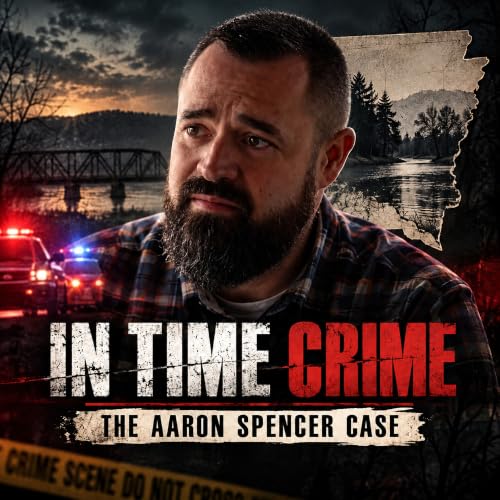
  • The Father, the Rapist, and the Unanswered Shot (Aaron Stephens)
    Oct 8 2026

    October 8, 2024: a father wakes to find his teenage daughter gone and spots her in a pickup with a man already accused of abusing her. What follows is a high-stakes, heart-stopping confrontation that ends with the father firing the fatal shots and calling 911 himself.

    As the county prepares to weigh justice against vengeance, a single piece of evidence — a dash camera memory card — vanishes while in police custody. With the footage lost and the murder charge dismissed, the central question remains unresolved: did a desperate parent save his child or did he take the law into his own hands? Join Robin Bagayoko on this episode of In Time Crime as we retrace the twists, the missing evidence, and the verdict the jury never reached.

    For all things In Time Crime and all Ear Balls media podcast join us at:

    Ear Balls Media

    Music by- Jeremy Blake

    Sources:

    • Arkansas Supreme Court — Spencer v. State of Arkansas (2025): this is the most important legal source. It confirms that Spencer was charged with second-degree murder and a firearm enhancement, that Michael Fosler had been charged with numerous sexual offenses involving Spencer’s teenage daughter and was out on bond, and that Spencer found his daughter in Fosler’s truck before the fatal confrontation. Read the Arkansas Supreme Court decision
    • Arkansas Advocate — June 4, 2026: covers Judge Ralph Wilson Jr.’s dismissal of the murder charge because of due-process violations involving the mishandled dash camera and missing memory card. It also explains that the court considered dismissal an extraordinary remedy. Read the Arkansas Advocate report
    • Associated Press / Washington Post — June 4, 2026: gives a detailed account of the shooting, Spencer’s defense that he was protecting his daughter, the prosecution’s argument that he could have called police while following Fosler, and the missing dash-camera evidence that led to dismissal. Read the AP/Washington Post report
    • Associated Press — March 2026: covers Spencer winning the Republican nomination for Lonoke County sheriff while awaiting trial, including his campaign focus on child-sex-abuse investigations. Read the AP primary-election report
    • Associated Press — 2025 profile: useful for Spencer’s background, his decision to run for sheriff while awaiting trial, and his public position that he acted to protect his daughter. Read the AP profile
    • Arkansas Advocate — March 4, 2026: reports Spencer’s GOP primary victory and summarizes the pending murder case and the Arkansas Supreme Court’s earlier intervention involving the trial judge and gag order. Read the Arkansas Advocate primary report
    • Stuttgart Daily Leader — May 28, 2026: covers the defense motion asking for dismissal because law enforcement allegedly lost critical evidence from the dash camera in Fosler’s truck. Read the Stuttgart Daily Leader report
    • Stuttgart Daily Leader — June 8, 2026: reports that the Lonoke County Sheriff’s Office fired the detective whose handling of the dash camera and SD card was cited in the dismissal. Read the follow-up report
    Mostra di più Mostra meno
    30 min
  • Vows and Gunfire: The Wedding Day Murder (Murder Mystery Monday)
    Oct 5 2026

    June 11, 1988 — a bright afternoon outside St. Francis Chapel turns from celebration to carnage in the blink of an eye. Thomas Dalton, thirty, collapses after two gunshots as guests reel from the impossible sight: a woman in sunglasses slipping back into a silver sedan and driving away. Surveillance photos, ammunition receipts, a .32 revolver recovered in the getaway car, and a haunting journal line about a wedding day "without her" point the investigation toward one person: Sarah Whitmore.

    In this Murder Mystery Monday episode, the case reads like a dark ballad — obsession, planning, and a flight to Tijuana before capture. Listen closely as the clues unfold and the courtroom delivers its verdict: life without parole. The twist? The entire crime is hiding inside the lyrics of a song you probably already know. Can you name the track and the artist? Tune in, follow the evidence, and send your guess to Ear Balls Media

    Mostra di più Mostra meno
    10 min
  • Duct Tape, Dog Hair, and 60 Years: The Karen Slover Story
    Sep 29 2026
    On September 27, 1996, 23-year-old Karyn Slover left work with plans for her son and a budding modeling career — and vanished. Days later her remains were found in Lake Shelbyville, bound and weighed down; investigators assembled a case from the smallest traces: rivets, a button, concrete fragments and even dog hair. In this episode we follow the detectives, the courtroom drama that sent three family members to prison for 60 years, and the later challenges that would reopen the story. Through evidence, motive and the controversial rise of animal DNA forensics, the episode reconstructs how ordinary clues became the foundation of a life-and-death verdict. We end by remembering Karyn as more than the headlines: a young mother with a future, and a son whose life was forever altered. Tune in to hear a careful, compelling retelling of a case that still leaves questions in its wake. For all things In Time Crime and all Ear Balls media podcast join us at: Ear Balls Media Music by- Jeremy Blake Sources: Illinois Appellate Court — People v. Slover (2003): confirms the 2002 murder convictions, 60-year sentences, and the extra five-year concealment sentences for Michael Sr. and Michael Jr. Justia Law Read the 2003 appellate decision Illinois Appellate Court — People v. Slover (2011): especially useful for the later Innocence Project-era litigation and the request to test fingerprint evidence from the bridge and vehicle. Justia Law Read the official 2011 Illinois court opinion Illinois Appellate Court — People v. Slover (2001): documents the January 2000 indictments and some of the evidence/discovery issues surrounding the investigation and trial. FindLaw Read the 2001 appellate decision 2024 post-conviction petition filed in Macon County Circuit Court: this is one of the most important sources for the current innocence claims. The filing argues there was no confession, murder weapon, eyewitness placing Karyn at Miracle Motors, or original DNA evidence tying the Slovers to the murder, and lays out the newer defense arguments. Bloximages WAND-TV — Illinois Innocence Project coverage: reports on the 2024 amended petition and the claim that new DNA evidence was linked to three unidentified men; it also covers the continued effort after Jeannette Slover’s death. https://www.wandtv.com Read WAND-TV’s Innocence Project update ABC News — “Family Murder Plot in Custody Battle”: useful for the later custody fight involving Karyn’s son Kolten and Mary Slover. It documents the state’s concerns that Mary may have known about or helped conceal the murder. ABC News Read the ABC News custody report Crime Library — Karyn Hearn Slover case: detailed secondary account covering the Miracle Motors search, concrete comparison, cinders, clothing evidence, dog-hair evidence, trial, convictions, and later custody fight. It is useful for narrative details, although I would cite the court records first whenever possible. Crime Library Read the Crime Library case history Oxygen — One Deadly Mistake: summarizes the Miracle Motors evidence, the rivets/buttons, January 2000 arrests, and the 2002 convictions. Oxygen Read Oxygen’s Karyn Slover case coverage Forensic Files — “Concrete Alibi”: the episode covers the forensic case involving the concrete, clothing evidence, and dog hair. TV Guide confirms the episode and its focus on the Karyn Slover investigation. TV Guide Forensic Files transcript — “Key Evidence/Concrete Alibi”: useful if you want the detailed forensic explanation of the button, fabric weave, concrete, and animal-hair comparisons presented in the show. Forever Dreaming Karyn Hearn Slover case overview / reference compilation: useful for cross-checking the timeline, 2008–2011 innocence litigation, 2022 death of Michael Sr., March 2024 release of Michael Jr., January 2025 death of Jeannette, and the list of television/podcast coverage. For your published source list, I’d treat this as a starting point rather than a primary source. https://en.wikipedia.org/wiki/Murder_of_Karyn_Hearn_Slover?utm_source=chatgpt.com
    Mostra di più Mostra meno
    45 min
  • When Workday Turned Deadly: The Accent Signage Shootings (Victims: Reuven Rahamim, Rami Cooks, Jacob Beneke, Ronald Edberg, Keith Basinski and Eric Rivers)
    Sep 28 2026

    On September 27, 2012, an ordinary shift at Accent Signage Systems fractured in minutes: a termination meeting, a return to a car, and then a calm, deadly walk through an office where colleagues hid beneath desks and a UPS driver making a routine delivery became one more casualty. This episode reconstructs that afternoon step by step, following the shooter’s movements from the executive suite to the loading dock and into the basement where the killer ended his spree.

    Through the voices of survivors, the scramble of failed 911 calls, and the quiet bravery of coworkers who tried to help the wounded, we trace how long-standing workplace friction spiraled into violence and how a community coped with shock, grief, and unanswered questions. We focus on the people who were lost—the founder who came out to help, the managers and production staff who never left their posts, and the delivery driver caught in the wrong place at the wrong time.

    Join us for a careful, human-centered retelling that honors the victims, examines the chain of events that allowed the attack to unfold, and asks what can be learned to keep workplaces safer. This is a story about loss, memory, and the small, urgent acts of courage that mattered that day.

    For all things In Time Crime and all Ear Balls media podcast join us at:

    Ear Balls Media

    Music by- Jeremy Blake

    Sources:

    • MPR News — “Police: Workplace gunman started shooting at dismissal meeting” Used for the firing meeting, Engeldinger’s employment history, the movement through the building, Reuven Rahamim’s actions, and witness accounts.
    • MPR News — “Accent Signage workers’ 911 calls failed to connect” Used for the failed 911 calls, Sheryl McAdams hiding under her desk, the struggle in the termination meeting, employee testimony, the police search, the two workers barricaded in the basement, and details from the police report.
    • Star Tribune — “Police timeline for Accent Signage shootings” One of the most important sources. Used for the minute-by-minute sequence of the shooting, the 9mm Glock, the office struggle, the order in which victims were encountered, the loading dock shootings, Engeldinger going into the basement, and police finding him.
    • Star Tribune — “911 calls reveal fear inside, out during attack at Accent Signage” Used for the approximately 4:34 p.m. emergency call, the woman waiting outside for her husband, the UPS truck arriving, and the later police radio timeline.
    • Star Tribune — “Accent Signage Systems shooting: First victims fought for their lives” Used for additional details about the termination meeting, the struggle over the gun, and evidence suggesting Engeldinger went to his vehicle before returning armed.
    • CBS News — “Sixth victim of Minneapolis workplace shooting died in hospital, family says” Used for Eric Rivers, his injuries, hospitalization, and eventual death.
    • CBS Minnesota — “6th Accent Signage Shooting Victim Dies” Used to confirm that Eric Rivers died on October 10, 2012, making him the sixth person killed.
    • CBS Minnesota — “After Workplace Shooting, Mpls. Changes 911 Procedures” Used for the problems employees experienced trying to reach 911, the number of failed emergency calls, and the changes Minneapolis made afterward.

    Mostra di più Mostra meno
    43 min
  • Trails of Trust, Trails of Terror: The Appalachian Trail Murders
    Sep 13 2026
    On September 13, 1990, thru‑hikers Molly LaRue and Geoff Hood stopped at Thelma Marks Shelter—and never made it home. In this episode of In Time Crime, I your host Robin Bagayoko threads together witness accounts, cold‑case breakthroughs, and the haunted beauty of the Appalachian Trail to trace how a place of refuge became the scene of unspeakable loss. From sudden violence in remote shelters to decades of investigations, the story unfolds like a hike gone wrong: quiet moments broken by alarming sounds, a race for answers through dense forest and forensic time, and the determined effort to remember the lives behind the headlines. Tune in for a compassionate, suspenseful retelling that centers the victims, the investigation, and the fragile trust that binds trail communities. For all things In Time Crime and all Ear Balls media podcast join us at: Ear Balls Media Music by- Jeremy Blake Sources: Julie Williams & Lollie Winans (1996) — FBI: The FBI’s official 2024 announcement explains the murders, the cold-case review, DNA testing, CODIS match, and identification of Walter “Leo” Jackson Sr. FBI — 2024 Identification of Walter Leo Jackson Sr. FBI — 25 Years Later Case Background FBI — Walter “Leo” Jackson Sr. Seeking Information PageRobert Mountford Jr. & Laura Susan Ramsay / Randall Lee Smith (1981): Contemporary reporting covers Smith's arrest and extradition; UPI documents his guilty pleas to two counts of second-degree murder and sentencing. Washington Post — Smith Extradition and 1981 Case UPI — Randall Lee Smith Guilty PleasRandall Lee Smith's 2008 attack: The Washington Post reported on Smith's attack on Scott Johnston and Sean Farmer, their survival, Smith's vehicle crash and his subsequent death. Washington Post — Randall Lee Smith's 2008 Attack and DeathRebecca Wight & Claudia Brenner (1988): Contemporary UPI reports cover the shooting in Michaux State Forest and the capture of Stephen Roy Carr. UPI — Murder on the Appalachian Trail UPI — Capture of Stephen Roy CarrMolly LaRue & Geoffrey Hood (1990): The Pennsylvania Supreme Court decision is especially valuable because it documents the murders, Paul David Crews' conviction and the DNA evidence used at trial. Contemporary reporting also documents the original investigation and guilty verdict. Pennsylvania Supreme Court — Commonwealth v. Crews Washington Post — 1990 Investigation Washington Post — Crews Guilty VerdictRonald Sanchez Jr. / James Jordan (2019): Reporting based on federal court records covers the attack, Sanchez's military background, Jordan's psychiatric evaluations and his 2021 finding of not guilty by reason of insanity. Washington Post — James Jordan/Ronald Sanchez CaseAppalachian Trail shelters/background: The Appalachian Trail Conservancy explains how the trail's backcountry shelters work, including the typical three-wall design mentioned in the script. Appalachian Trail Conservancy — Camping & Shelters
    Mostra di più Mostra meno
    59 min