• The God-No-God Divide (Matthew Shear, March 2026)
    Apr 5 2026

    Rev. Dr. Matthew Shear’s presentation explores the long‑standing divide between those who believe in God and those who do not, beginning with the observation that people often mean very different things when they use the word God. As he notes, when asked whether he believes in God, he responds, “Tell me what you mean by God,” because most people describe not a biblical figure but “a spirit or a presence, something outside of and greater than themselves.” This divide, he argues, is no longer just theological but increasingly political, shaping how people perceive one another across social and ideological lines.

    To illuminate the complexity of the God–No‑God question, Shear draws on cultural and literary references. He reflects on the song “From a Distance,” which evokes what transcendentalist Theodore Parker called the “infinite God,” a perspective from which human differences diminish. He then turns to Isaac Asimov’s story “The Last Question,” summarizing its exploration of entropy and cosmic evolution. The story ends with the line “Let there be light and there was light,” prompting Shear to suggest that scientific and religious narratives may not be as incompatible as they seem—perhaps the Big Bang and creation stories are different expressions of the same mystery.

    Shear then situates the God–No‑God divide within a broader historical and cultural context. He traces how scientific advancement, humanism, and shifting religious identities have shaped Unitarian Universalism, sometimes pushing it toward defining itself by what it rejects rather than by a positive spiritual vision. He cites contemporary political commentary, including David French’s warning that “we have reached end‑stage polarization,” to show how religious identity and political identity have become entangled in ways that deepen division.

    To offer a path forward, Shear highlights the work of Krista Tippett, who emphasizes the importance of language, deep listening, and love as tools for navigating polarization. Tippett argues that “we are starved for fresh language to approach each other,” and that listening requires “a willingness to be surprised… and take in ambiguity.” She frames virtues as “spiritual technologies” that can help communities move beyond tribalism. Shear also discusses Amanda Montel’s analysis of cultish language and cognitive bias, noting how easily people can be drawn into rigid ideological groups—and how religious communities can instead cultivate “ritual time” that supports meaning without fanaticism.

    In closing, Shear argues that congregations have an opportunity to counteract polarization by fostering wisdom, transcendence, and spiritual practice rooted in compassion rather than dogma. As he puts it, “we can make the choice to turn away from… fanaticism and… practice speaking of a faith dedicated to becoming wise.” The presentation ultimately invites listeners to reconsider the God–No‑God divide not as a battleground but as a space for curiosity, humility, and shared human striving.

    Mostra di più Mostra meno
    23 min
  • Dancing with the Panthers Part One (Campbell & Rice, c2000)
    Mar 23 2026

    This episode of Dancing with the Panthers features a conversation recorded around the year 2000 with Rev. Dr. Finley C. Campbell and historian Dr. Jon Rice, reflecting on their involvement with the Black Panther Party roughly thirty years earlier. Barbara Jean Walsh introduces the discussion by explaining that both men—Campbell in Indiana and Rice in Chicago—became deeply influenced by the Panthers’ philosophy, especially its emphasis on multiracial unity, socialism, and community self‑determination.

    Dr. Campbell opens with personal reflections on race, class, and the spread of economic oppression, using a chance encounter as a metaphor for the interconnectedness of racial and class struggle. He recounts how he was “drafted” into the Panthers’ Ministry of Education in Indiana, helping organize Black Student Unions and translating Panther ideology for largely white academic audiences. Campbell describes his political awakening, shaped by the Panthers’ Ten‑Point Program, their critique of capitalism, and their insistence that commitment—not racial purity—defined solidarity.

    Dr. Rice then shares his experience as a young volunteer in the Chicago chapter beginning in 1969. He traces the Panthers’ roots to the moral courage of the civil rights movement, arguing that the collapse of legal segregation revealed deeper economic inequalities that required more radical solutions. Rice explains how the Panthers studied global revolutionary movements, equated racism with capitalism, and sought to build class‑based coalitions across racial lines. This vision led to groundbreaking alliances with groups like the Young Patriots (poor white migrants) and the Young Lords (a Puerto Rican organization), forming Chicago’s original Rainbow Coalition.

    Both speakers emphasize the Panthers’ boldness, youth, and idealism, as well as the challenges they faced—from internal discipline to external repression such as COINTELPRO. The episode highlights the Panthers’ community programs, their efforts to unite marginalized groups, and the lasting impact of leaders like Fred Hampton, who was only 21 when he was killed. Together, Campbell and Rice offer a vivid, personal account of a turbulent era and the revolutionary imagination that shaped it.

    Mostra di più Mostra meno
    28 min
  • A Different Take on The Good Samaritan (Richard Trudeau February 2026)
    Mar 14 2026

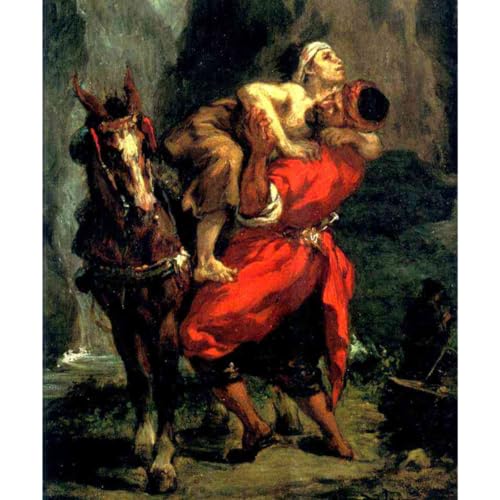
    Rev. Richard Trudeau’s sermon invites listeners to reconsider the familiar parable of the Good Samaritan by challenging the interpretive frame supplied by the Gospel of Luke. Trudeau argues that Luke, writing as a non‑Jewish Christian several generations after Jesus, misunderstood both the cultural meaning of “Samaritan” and the nature of Jesus’s parables. Luke’s framing dialogue—“Go and do likewise”—is presented as a later moralizing overlay rather than Jesus’s own teaching, a point Trudeau underscores by noting that Jesus’s parables are rarely, if ever, straightforward morality tales. Instead, he insists, they function as puzzles meant to “tease the mind into active thought,” not as ethical instructions.

    To recover Jesus’s original intent, Trudeau urges listeners to begin with what Jesus’s audience would have known implicitly: Samaritans were not merely outsiders but longstanding enemies, viewed as heretical descendants of a breakaway kingdom with its own temple and Torah. This cultural memory, he argues, is essential to hearing the parable as Jesus’s contemporaries would have heard it. The peasants and displaced farmers who made up Jesus’s audience would not have identified with the priest, Levite, or innkeeper, but with the man “left for half dead”—the only character present throughout the story. The shock of the parable, then, is not that a Samaritan behaves ethically, but that the victim experiences compassion from someone he has been taught to despise.

    From this vantage point, Trudeau reframes the parable as an expression of Jesus’s central proclamation: the “Empire of God,” a term he argues is more accurate than the traditional “Kingdom of God.” In this vision, God’s reign is not an afterlife reward but a transformed social reality marked by justice, sufficiency, and mutual care. The parable becomes an imaginative doorway into that world—a world in which one’s supposed enemy becomes the agent of one’s healing. This, Trudeau contends, is the parable’s true theological force: not a call to imitate the Samaritan, but an invitation to imagine a society reordered so profoundly that compassion flows across entrenched lines of hostility.

    The discussion that follows the sermon reflects how Trudeau’s reframing resonates with listeners. Participants connect the parable to contemporary prejudices, institutional failures of compassion, and the perennial question of what brings antagonistic groups together. Some raise textual or historical questions—such as whether ritual purity laws would truly have prevented the priest and Levite from helping—while others affirm the power of reading the story through the lens of social estrangement and unexpected grace. The conversation underscores Trudeau’s central claim: that the parable’s enduring power lies not in moral exhortation but in its capacity to unsettle, reorient, and expand the moral imagination.

    Mostra di più Mostra meno
    25 min
  • Unitarianism & the Birth of Humanism (Todd Ekloff June 2025)
    Feb 14 2026

    Rev. Todd Eklof’s talk traces the deep historical roots of humanism and argues that it has always been intertwined with Unitarianism. He begins with early 20th‑century religious humanism and figures like John Dietrich, noting that Dietrich’s shift toward humanism took shape during his ministry in Spokane, where the congregation’s 1888 bylaws affirmed “reason” and “scientific” inquiry as the basis of religious belief. Eklof highlights how Dietrich and Curtis Reese sparked the early Humanist Debate within Unitarianism, and he challenges the modern assumption that humanism is a recent add‑on to the tradition. As he puts it, humanism is grounded in “the betterment of humanity,” a theme he traces through Jewish monotheism, the teachings of Jesus, Renaissance humanism, and Enlightenment rationalism.

    From there, Eklof broadens the lens, showing how humanistic values—human dignity, agency, welfare, and the use of reason—have persisted across every era in which Unitarianism has existed. He contrasts this long lineage with what he sees as today’s drift toward anti‑rationalism within Unitarian Universalism. Drawing on examples from the transcript such as the Edict of Torda, which he describes as “the first religious toleration law in human history,” he argues that Unitarianism’s survival depends on reclaiming its historic North Star: a commitment to truth, freedom, and the flourishing of all people.

    Mostra di più Mostra meno
    35 min
  • The Improbability of Us (Ewen Hadington January 2026)
    Feb 6 2026

    This UUMUAC podcast episode features Evan Hadingham, former Senior Science Editor of PBS's Nova, who brings his extensive background in prehistory and archaeology to explore humanity's precarious existence. Drawing on his experience and writings, Evan guides listeners through a journey of cosmology, climate, catastrophes, and human evolution, highlighting the many critical points where humanity's survival was far from certain. He incorporates insights from scientists, philosophers, poets, and popular culture to frame this exploration.

    Evan's talk, titled "The Improbability of Us," invites listeners to reflect on the fragility of human history and our present condition with a sense of wonder and gratitude rather than fear. He discusses how scientific understanding has evolved from ancient cosmologies to modern perspectives, touching on indigenous creation stories, classical Western views, and the transformative impact of Renaissance discoveries. This episode offers a thoughtful examination of how improbable it is that humans exist today and encourages appreciation for the complex chain of events that brought us here.

    Mostra di più Mostra meno
    20 min
  • Children of the Rainbow (Rev. Dr. Finley Campbell, 1970)
    Jan 27 2026

    Rev. Dr. Finley C. Campbell’s Children of the Rainbow is a stirring call to recognize difference as the foundation for genuine unity. Speaking in 1970, he argued that the presence of Black students on white campuses was never neutral—it was meant to be a shock, a confrontation, a reminder of America’s unfinished reckoning with slavery, segregation, and systemic racism. Their very existence in classrooms challenged the myth of “colorblindness,” insisting instead that difference must be acknowledged and valued, like the many colors of a rainbow. This confrontation opened doors to humility, awareness, and the possibility of deeper human connection.

    Campbell went on to describe Black students as catalysts for educational and cultural transformation, demanding that Black history, literature, and art be integrated into mainstream learning. Their organizing created space not only for Black liberation but also for white students to confront the “Blackness” within themselves—the suppressed vitality and soul that society had long repressed. Finally, he placed Black student activism in a broader political frame: beginning with the liberation of Black people, but extending toward the liberation of all humanity. In his vision, the “Children of the Rainbow” are living witnesses against oppression, carriers of resilience, and heralds of a future where justice is shared across race, class, and nation.

    Mostra di più Mostra meno
    27 min
  • Denise Tracy on the "Beloved Community" (July 2025)
    Jan 21 2026

    Reverend Denise Tracy continues her exploration of Beloved Community with vivid stories that show how compassion dissolves fear and how ordinary people can rise to extraordinary humanity. Drawing on the musical Come From Away, she reflects on the generosity of the people of Gander, Newfoundland, who sheltered thousands of stranded travelers after 9/11. Through song and story, the musical reveals how strangers overcame fear, grief, and difference to form lifelong bonds—an embodiment of beloved community that continued long after the crisis ended. Reverend Tracy connects this to her own experiences of unexpected connection, from a simple exchange with a family in Brussels to witnessing a diverse crowd united by music in a public square.

    Her message widens into a meditation on the countless ways people quietly care for one another every day—through worship, through crisis response, through acts of solidarity that rarely make headlines. She reminds us that beloved community is not an abstract ideal but something we create in real time, with the people right in front of us. Whether in a Zoom service, a village cemetery in Belgium, or an airport gate in Albuquerque, the sacredness of community emerges when people choose compassion, presence, and shared responsibility.

    Reverend Tracy closes with a call to action rooted in Unitarian Universalist values: to witness, to help, to speak, to sing, to show up for one another, and to build the beloved community both within our congregations and beyond them. Her reflections, paired with the words of Dr. Martin Luther King Jr., invite listeners to imagine a world where love guides our choices and where every day offers an opportunity to create connection. It’s a moving, hopeful message—one that will stay with listeners long after the episode ends.

    Mostra di più Mostra meno
    20 min
  • Deb Reich on Transcending the Power of Words that Bind Us (Dec 2025)
    Jan 13 2026

    🎙️ Synopsis

    Transcending the Power of Words That Bind Us — Deb Reich (introduced by Jack Reich)

    The podcast opens with host Barbara Jean Walsh introducing a Vespers Service featuring writer and peace‑builder Deb Reich, preceded by a warm biographical introduction from her brother Jack Reich. Jack traces Deb’s journey from her New York upbringing to her decades living in Israel and Palestine, where she immersed herself in both Jewish and Palestinian communities and committed her life to intercommunal reconciliation.

    Deb’s central theme is how certain words and phrases—especially those used in discourse about Israel and Palestine—become “sacred terminology” that both inspire and imprison us. She argues that these emotionally charged terms accumulate symbolic weight over generations, eventually constraining thought, empathy, and political imagination.

    She reflects on her own evolving relationship with words like “Zionism,” “democracy,” “homeland,” “resistance,” and “liberation.” Raised to see Zionism as wholly positive, she was stunned to discover how Palestinians experienced the same word as the source of their suffering. She illustrates how language becomes a kind of ideological inheritance, shaping identity and allegiance long after its original meaning has shifted or fractured.

    Deb shares stories from her life, including her work with peace organizations, her friendships across communities, and her experiences living in a Muslim Arab village. These stories highlight how direct human contact dissolves the abstractions that words often harden into. She contrasts this with the way slogans, dogma, and political rigidity—on both left and right—can “gaslight” people into avoiding uncomfortable truths.

    She critiques the way certain activist phrases (e.g., “from the river to the sea”) or Israeli statements (e.g., “there are no innocents in Gaza”) function as verbal weapons, shutting down dialogue and alienating potential allies. She also examines the Palestinian concept of anti‑normalization, acknowledging its historical logic but lamenting how it has often suffocated grassroots cooperation.

    Deb refuses to be bound by the word “genocide,” insisting that the moral catastrophe in Gaza must be confronted without becoming trapped in semantic battles. She emphasizes the human toll—trauma, displacement, grief—and the profit motives that quietly fuel ongoing destruction.

    Throughout, she returns to the idea that language can either entrench enmity or open pathways to shared humanity. She describes her own transformation as she learned Arabic, lived among Palestinian families, and experienced daily life in all its ordinariness—children playing, neighbors calling to one another, the rhythms of village mornings. These experiences, she says, “irrevocably humanized” the people and the language for her.

    In the Q&A portion, Deb expands on the psychological exhaustion many Israelis feel, the lack of political leadership committed to justice, and the research organizations that track public sentiment. She recommends books that illuminate lived experiences on both sides and discusses long‑term political possibilities, including confederation models that might someday evolve into shared governance—though she stresses that such visions require healing, trust, and leadership not currently present.

    The podcast closes with an invitation to explore more UUMUAC programming and to engage with the organization’s work toward multiracial unity and justice.

    Mostra di più Mostra meno
    25 min