Only on Video copertina

Only on Video

Only on Video

Di: Karl Hughes
Ascolta gratuitamente

A proposito di questo titolo

Only on Video is a film review podcast by Karl Hughes. Each season focuses on the work of a single director, highlighting the common themes, strengths, and weaknesses of their movies as part of their broader careers.Copyright, Karl Hughes Arte
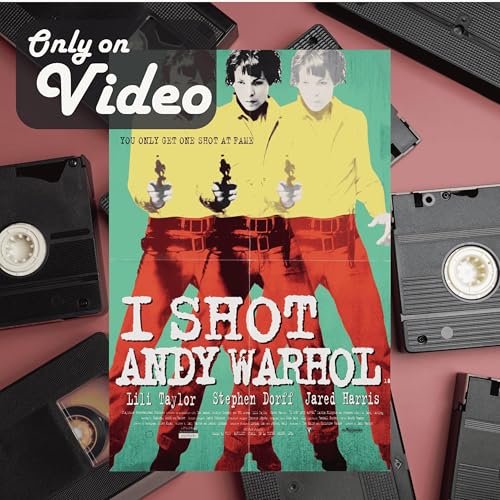
  • I Shot Andy Warhol: Mary Harron’s Uncomfortable, Brilliant Debut
    Jan 27 2026
    What if the most famous moment in Andy Warhol’s life wasn’t really about him at all?In this episode of Only On Video, I kick off a season focused on director Mary Harron, with her debut feature, I Shot Andy Warhol.This isn’t a true-crime thriller or a political screed. It’s a character study that forces you to consider Valerie Solanas without telling you how to feel about her. And as a starting point for Harron’s career, it already contains the DNA of American Psycho: dark humor, moral ambiguity, and an obsession with outsiders who don’t fit cleanly into cultural myths.In This Epsiode🎬 Context: The Film and the MomentThe mid-1990s indie film boom (Fargo, Trainspotting, Dazed and Confused)VHS, Sundance, and why forgotten stories suddenly had an audienceAndy Warhol as a canonized pop icon—and Valerie Solanas as a cultural footnoteWhy Harron was drawn to Solanas instead of Warhol🎥 Why Mary Harron?How American Psycho made me start paying attention to directorsWhy Harron’s worldview—not genre or actors—is the connective tissueWhat makes I Shot Andy Warhol such a confident first feature👥 Cast & Crew BreakdownMary Harron and her background in punk journalism and outsider cultureEllen Kuras’ gritty, claustrophobic cinematographyJohn Cale (Velvet Underground) scoring a Warhol-adjacent storyChristine Vachon’s track record producing marginalized, character-driven filmsLili Taylor’s unsettling, fully committed performance as Valerie SolanasJared Harris as a deliberately hollow, distant Andy Warhol📕 StorylineThe film’s fragmented structure and why it avoids procedural storytellingValerie’s trauma, radicalization, and obsession with being taken seriouslyThe SCUM Manifesto as ideology, satire, and emotional anchorParanoia, rejection, and the slow march back to the opening crime🎞 HighlightsLili Taylor’s fearless performanceUnexpected dark humor (“I don’t wanna get into that right now”)The Factory as a strange, temporary refugeCampy moments like the anarchist “militarization” montageA restrained, effective soundtrack🧠 LegacyHow this film launched Mary Harron’s career and set her thematic blueprintThe clear through-line to American PsychoWhy the film gave Valerie Solanas context without redemptionThe SCUM Manifesto’s renewed cultural life after the film’s releaseFun & Weird Trivia from the Episode🎥 Almost a documentary: Harron originally planned this as a doc but pivoted due to lack of archival material and reluctant interview subjects.🖼 Replica Warhol art was destroyed after filming at the request of Warhol’s estate.🎸 Lou Reed hated the movie—specifically the idea of giving Solanas attention at all.🎶 Yo La Tengo appears as the Factory band, channeling ’60s art-rock through a ’90s indie lens.🤝 John Cale scoring the film adds a meta layer—he and Warhol actually knew each other.Next UpAmerican Psycho, Mary Harron’s most famous film, Christian Bale’s breakout role, and one of the most misunderstood satires of the last 30 years.If you enjoy thoughtful, director-focused deep dives that go beyond plot summaries, follow the show and share it with a fellow film nerd.Listen and subscribe at https://onlyonvideo.com
    Mostra di più Mostra meno
    22 min
  • The Notorious Bettie Page: The Reason Your Grandfather Kept the Garage Door Locked
    Feb 9 2026
    In Episode 3 of Only On Video (Mary Harron Season), I cover The Notorious Bettie Page—Harron and Guinevere Turner’s tonal left-turn after American Psycho. Instead of a satire about a narcissistic killer, this one follows a woman who becomes a cultural flashpoint simply for existing publicly in her own body.But, Bettie isn’t a rebel or a provocateur.She’s an “unintentional revolutionary”: cheerful, sincere, religious, and—by the standards of mid-century America—dangerously unashamed. The film’s central tension isn’t Bettie versus herself. It’s Bettie versus a society that worships her in private and condemns her in public.In This EpisodeContext: Release, Reception, and the Cultural MomentPremiered at TIFF (2005), U.S. release (April 2006)A mid-2000s culture split: nostalgia for “old America” alongside renewed debates about censorship, sexual agency, and patriarchyBettie’s rediscovery in the 80s and revival in the 90s/early 2000s (fashion, pop culture, pin-up aesthetics)Why the film didn’t hit as a box-office “moment” despite Page’s renewed visibilityHistorical Frame: Post-War Moral Panic1950s America, Red Scare-era anxiety, and the “war on obscenity”A national panic where men hold the microphone: government, church, and institutions defining “corruption”The film’s recurring hypocrisy: the same culture that profits from desire punishes women for being desirableDirector’s Context: Harron and Turner’s “Unintentional Revolutionary”Harron’s third feature and her second collaboration with Guinevere TurnerThe long development history (work began in the early 1990s)Harron’s fascination with Bettie’s contradictions: nude without shame, devout without ironyThe visual idea: black-and-white vintage Americana shifting to color as Bettie finds freer groundWhy This Film Belongs in This SeasonSame core Harron themes: power, gender, control, hypocrisy, and cultural punishmentA clean contrast with American Psycho: Bateman hides behind perfection; Bettie refuses to hide at allThe story is not cynical—Bettie is neither villain nor cautionary tale, just a likable person navigating a society built to shame herCast & Crew BreakdownBehind the CameraMary Harron + Guinevere Turner: the same team as American Psycho, but with a warmer, more curious toneCinematography by Maysie Hoy:Black-and-white as a direct echo of vintage pin-up photographyColor in Miami as a visual marker of space, freedom, and easeScore by Mark Suozzo:Period-adjacent, light, jazzy, supportive without pushing the film into melodramaHBO Films backing: more polish, but still intimate and character-focusedIn Front of the CameraGretchen Mol as Bettie Page:Radiant, sincere, and strangely untouched by the moral noise around herA “comeback” lead performance that carries the movie’s tonal balancing actLili Taylor as Paula Klaw:Pragmatic and protective, grounding Bettie within the pin-up worldChris Bauer as Irving Klaw:Opportunistic but not cartoonish; a businessman with limitsDavid Strathairn as Senator Estes Kefauver:Quiet menace as the face of institutional controlReturning Harron collaborators (Jared Harris, Cara Seymour, others) adding continuity across wildly different filmsStory Highlights (Spoilers)Act I: Innocence and ConstraintNashville upbringing, strict religious framework, and implied early traumaMarriage, violence, and the first quiet act of defiance: leavingNew York as escape, reset, and search for controlAct II: Discovery and ContradictionModeling begins as playful and almost innocent—joyful rather than “scandalous”“Men’s photography clubs,” obscenity laws, and the Klaws introducing fetish/bondage workThe surprising tone of the fetish scenes: not lurid, not exploitative, often upbeatA defining contradiction the film leans into:“I believe in Jesus,” delivered while in bondage gearBettie’s worldview: talent is a gift from God, and she’s using hersAct III: Exposure and “Redemption”Miami shift into color and a new sense of easeThe home-front hypocrisy: family judgment paired with private keeping of her imagesThe Senate investigation tightening—and Bettie never being allowed to speak for herselfThe film’s closing statement on shame:“I’m not ashamed… Adam and Eve were naked… when they sinned, they put on clothes.”Lowlights and HighlightsLowlightsPacing: at 90 minutes, it can still feel slow, with tension arriving lateLimited emotional range: Bettie’s internal drive remains deliberately opaque, sometimes to the film’s detrimentStylization: black-and-white-to-color is effective, but can feel blunt or “conceptual”A neat ending: faith-as-closure feels tidier than the ambiguity you might expect after Harron’s earlier filmsUnderplayed legacy: the film ends before Bettie’s second life as a pop-culture icon fully emergesHighlightsThe social critique: men commit real harm with little consequence while Bettie’s body becomes the “national crisis”...
    Mostra di più Mostra meno
    21 min
Ancora nessuna recensione