Episodi

  • What is AI actually good at? | Rohit Krishnan - Engineer, Economist, Investor & Author
    Oct 13 2026

    So much of the debate around AI is on the level of vibes or mystic predictions.


    I wanted to come back to a grounded view of what AI is actually good at today. No doom, no hype.


    I've long admired Rohit's work and his excellent Substack - Strange Loop Canon - much of which details his extensive experimentation and assessment of AI, so he was the perfect guest for this topic


    Key topics

    • AI's superpowers in verifiable domains like coding and problem-solving
    • Limitations in reasoning and judgment
    • The role of benchmarks in evaluating AI performance
    • The concept of AGI and its misconceptions
    • Societal responses and accountability for AI risks
    • Legal and regulatory considerations for AI safety
    • The importance of realistic expectations and responsible innovation


    Where you can watch/listen

    Youtube⁠⁠⁠⁠⁠ - ⁠https://www.youtube.com/@HumansintheLoopPod

    Apple podcasts⁠⁠⁠⁠⁠ - ⁠https://podcasts.apple.com/us/podcast/humans-in-the-loop/id1831285114⁠

    Spotify⁠⁠⁠ - ⁠https://open.spotify.com/show/4BbslJR0KA5bfqrcYRhJER?si=b5a46211098b4f3e⁠

    Or wherever you get your podcasts!Get in touch

    Instagram⁠⁠⁠ - ⁠https://www.instagram.com/humansinthelooppod/⁠

    Email: ⁠seb@theuncommonfounder.com⁠

    Website: ⁠https://www.theuncommonfounder.comWhere to find Rohit

    https://www.strangeloopcanon.com/

    Mostra di più Mostra meno
    1 ora
  • What Quantum Computing is Actually Good For | Scott Aaronson- Computer Scientist Complexity Theorist
    Sep 29 2026

    Scott Aaronson is a Computer Scientist, Complexity Theorist and leading authority on Quantum Computing.


    As he says himself, he's spent twenty years trying to dispel some of the commonly held myths about it.


    As a non-scientist, I've spent some time trying to wrap my head around quantum mechanics and it still blows my mind everytime I try to think about it. This conversation was as close as I've ever been to properly understanding it.


    Key topics

    Quantum mechanics and probability

    Quantum superposition and interference

    Building reliable quantum hardware

    Quantum algorithms like Shor's and Grover's

    Cryptography and post-quantum security

    Quantum error correction and scalability

    Implications for AI and societal risks


    Where you can watch/listen

    Youtube⁠⁠⁠⁠⁠ - ⁠https://www.youtube.com/@HumansintheLoopPod

    Apple podcasts⁠⁠⁠⁠⁠ - ⁠https://podcasts.apple.com/us/podcast/humans-in-the-loop/id1831285114⁠

    Spotify⁠⁠⁠ - ⁠https://open.spotify.com/show/4BbslJR0KA5bfqrcYRhJER?si=b5a46211098b4f3e⁠

    Or wherever you get your podcasts!


    Get in touch

    Instagram⁠⁠⁠ - ⁠https://www.instagram.com/humansinthelooppod/⁠

    Email: ⁠seb@theuncommonfounder.com⁠

    Website: ⁠https://www.theuncommonfounder.com

    Mostra di più Mostra meno
    1 ora e 3 min
  • British Energy Sovereignty | Sir Dieter Helm - Leading UK Energy Economist
    Sep 15 2026

    Sir Dieter Helm is the UK's leading energy economist and Professor of Economic Policy at the University of Oxford.


    He is also the first Knight of the Realm on Humans in the Loop.


    As a proud Brit and European, I care deeply about British and European prosperity. Technology is not the only driver of that, but it is an important one. And given the geopolitical state of the world, there is going to be more and more importance placed on sovereignty i.e. our ability to stand on our own two feet.


    I often run into this argument that one of the major blockers to sovereign British technology is the high cost of British energy, so I brought Dieter on to talk about British energy and what a more sovereign technological future might look like.


    Dieter's book - Climate Realism: Facing the Facts about Energy is out on October 8th: https://dieterhelm.co.uk/books/climate-realism/


    Key topics

    UK deindustrialization and its impact on emissions

    Intermittent renewable energy and system costs

    Cost structure of industrial energy in the UK

    Global competitiveness and energy prices

    The role of nuclear and firm power

    Sovereignty and energy independence post-Brexit

    Global energy resources and geopolitical risks

    Technological innovation in energy and AI


    Where you can watch/listen

    Youtube⁠⁠⁠⁠⁠ - ⁠https://www.youtube.com/@HumansintheLoopPod

    Apple podcasts⁠⁠⁠⁠⁠ - ⁠https://podcasts.apple.com/us/podcast/humans-in-the-loop/id1831285114⁠

    Spotify⁠⁠⁠ - ⁠https://open.spotify.com/show/4BbslJR0KA5bfqrcYRhJER?si=b5a46211098b4f3e⁠Or wherever you get your podcasts!


    Get in touch

    Instagram⁠⁠⁠ - ⁠https://www.instagram.com/humansinthelooppod/⁠

    Email: ⁠seb@theuncommonfounder.com⁠

    Website: ⁠https://www.theuncommonfounder.com


    Where to find Sir Dieter

    LinkedIn: https://www.linkedin.com/in/dieter-helm-3077b214b/

    Website: https://dieterhelm.co.uk/

    Mostra di più Mostra meno
    1 ora e 3 min
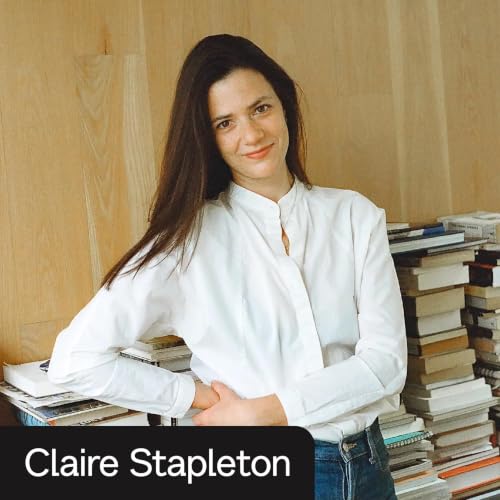
  • Don't Be Evil. The Cost of Speaking out as a Google Insider | Claire Stapleton - Fmr Google Employee
    Aug 25 2026

    Claire Stapleton spent 12 years at Google from 2007 - 2019. She joined as a fresh grad at a time of peak optimism and idealism in Silicon Valley, and soon became somewhat of a 'Bard' - responsible for shaping the story and sharing the folklore around Google with employees and later the outside world.


    In 2018, feeling increasingly disillusioned with what Google had become, Claire was one of the organizers of a 20k employee walkout in protest against the company's handling of sexual harassment allegations against certain senior executives - one of whom, Andy Rubin, had allegations against him deemed credible by an internal investigation - yet walked away with a warm handshake and $90m exit package.


    Claire and the other women who organised faced a backlash from Google with their roles and responsibilities being diminished in the aftermath.


    Claire eventually left in 2019, and her memoir, 'Don't Be Evil' has recently been released and is available at any good bookshop near you: https://www.nytimes.com/2026/08/04/books/review/dont-be-evil-claire-stapleton.html


    Claire's own journey maps to a time in which internal and public sentiment towards big tech in general has shifted so we sat down to talk not just about her own experience at Google, but also the wider vibe shift in the industry as a whole.


    Key topics

    • The early idealistic days of Google
    • Claire's role as 'The Bard' - telling the internal folklore of Google to its employees and the outside world
    • Google's Me Too moment - her role as organizer of 20k employee walkout
    • The backlash that she and other women at Google faced as a consequence
    • The vibe shift from idealism to corporate ruthlessness
    • When she stopped believing the story she was telling
    • Her experiences of parenting and grief and how that shaped how she felt about her work


    Where you can watch/listen

    Youtube⁠⁠⁠⁠⁠ - ⁠https://www.youtube.com/@HumansintheLoopPod

    Apple podcasts⁠⁠⁠⁠⁠ - ⁠https://podcasts.apple.com/us/podcast/humans-in-the-loop/id1831285114⁠

    Spotify⁠⁠⁠ - ⁠https://open.spotify.com/show/4BbslJR0KA5bfqrcYRhJER?si=b5a46211098b4f3e⁠Or wherever you get your podcasts!


    Get in touch

    Instagram⁠⁠⁠ - ⁠https://www.instagram.com/humansinthelooppod/⁠

    Email: ⁠seb@theuncommonfounder.com⁠

    Website: ⁠https://www.theuncommonfounder.com


    Where to find Claire

    LinkedIn: https://www.linkedin.com/in/claire-stapleton-868a935/

    Substack: ⁠https://techsupport.substack.com/

    X: https://x.com/clairewaves?s=20

    Instagram: https://www.instagram.com/clairewaves

    Mostra di più Mostra meno
    51 min
  • A rational take on tech | Benedict Evans - Tech Analyst & Fmr A16z Partner
    Aug 11 2026

    Benedict Evans is a tech analyst and former partner at A16z.

    His newsletter with rational takes on tech goes out to over 175k people.

    In amongst the noise around AI and the tech industry more broadly, Benedict has built a reputation for high quality, level headed analysis.

    I sat down with Benedict to discuss topics such as:

    • The current state of technology and ongoing platform shifts
    • Whether this time is truly different or not
    • Historical comparisons of technological revolutions
    • Challenges in predicting AI's future trajectory
    • Silicon Valley’s naivety about the world
    • The cultural and philosophical aspects of AI and art
    • The importance of understanding complex systems and markets


    Where else you can listen

    Youtube⁠⁠⁠⁠ - https://www.youtube.com/@HumansintheLoopPod

    ⁠⁠Apple podcasts⁠⁠⁠⁠ - https://podcasts.apple.com/us/podcast/humans-in-the-loop/id1831285114

    Spotify⁠⁠ - https://open.spotify.com/show/4BbslJR0KA5bfqrcYRhJER?si=b5a46211098b4f3e

    Or wherever you get your podcasts!


    Chapters

    00:00 Introduction and Benedict Evans' perspective on tech noise

    03:33 E-commerce growth and retail media expansion

    07:05 Historical scale of technological change and exponential growth

    10:33 The unpredictability of technological evolution

    14:08 The difference between automating tasks and jobs

    17:24 The limitations of AI in creating authentic art

    18:13 The organizational and deployment challenges of AI

    20:39 The emergence of new pathways and the unpredictability of AI evolution

    22:20 Historical perspectives on internet and mobile adoption

    23:37 The importance of questions and uncertainty in analysis

    25:01 The impact of the internet on industries and productivity

    26:29 The exponential nature of technological progress

    28:23 Organizational inertia and the difficulty of change

    30:04 The complexity of automating jobs versus tasks

    32:38 The role of models in understanding human work and creativity

    36:26 The potential of AI as a pattern matcher and logic system

    39:23 The philosophical limits of AI and human judgment

    41:24 Cultural perceptions of art, authenticity, and AI

    44:52 The enduring human element and cultural value in art

    45:46 The future of AI and human creativity

    48:47 The broader implications of AI as a platform for a new economy

    50:15 Historical context of technological revolutions and their long timelines

    52:24 Philosophical debates on existence, value, and AI

    54:07 Benedict Evans' perspective on Silicon Valley and tech optimism

    55:35 The influence of politics and regulation on AI development

    56:49 The mindset needed for startup innovation and large-scale change

    57:20 Benedict Evans' optimism about the future and long-term progress

    58:47 Reflections on historical hardships and the progress of humanity

    01:00:51 The long arc of human history and technological progress


    Get in touch

    Instagram⁠⁠⁠ - https://www.instagram.com/humansinthelooppod/

    Email: ⁠seb@theuncommonfounder.com⁠

    Website: ⁠https://www.theuncommonfounder.com


    Where to find Benedict

    LinkedIn: https://www.linkedin.com/in/benedictevans/

    Newsletter: https://www.ben-evans.com/newsletter

    Website: https://www.ben-evans.com

    Mostra di più Mostra meno
    1 ora e 2 min
  • Stochastic Parrots | Emily M. Bender - Professor of Computational Linguistics
    Jul 14 2026

    Few people understand language quite like today's guest. Emily M. Bender is a Professor of Computational Linguistics at the University of Washington.

    She's also the person who coined the term 'Stochastic Parrots' in the now infamous paper that saw Google fire its Ethical AI lead; and the co-author of The AI Con, a book which is unflinching in its criticism of both AI boosterism and doomerism (in fact she objects to the term AI).

    I sat down with Emily to discuss topics such as:

    • How language really works
    • What LLMs are actually doing
    • What Stochastic Parrots really means
    • Why doomers and boosters are two sides of the same, misleading coin


    Where else you can listen

    ⁠⁠⁠Youtube⁠⁠⁠ - https://www.youtube.com/@HumansintheLoopPod

    ⁠Apple podcasts⁠⁠⁠ - https://podcasts.apple.com/us/podcast/humans-in-the-loop/id1831285114

    ⁠Spotify⁠ - https://open.spotify.com/show/4BbslJR0KA5bfqrcYRhJER?si=b5a46211098b4f3e


    Or wherever you get your podcasts!


    Chapters

    00:00 Introduction to AI and Linguistics

    02:54 Understanding Computational Linguistics

    05:47 The Stochastic Parrots Paper

    08:32 The Implications of AI Terminology

    10:57 Skepticism Towards AI Claims

    12:58 The Illusion of Intelligence in AI

    15:55 The Dangers of AI in Professional Settings

    18:33 Democratization and Distrust in AI Development

    28:02 Doomers vs. Boosters: The AI Narrative

    32:57 Skepticism in AI: A Personal Journey

    36:30 The Rapid Evolution of AI: Are We Outdated?

    40:13 The Role of Software Engineering in AI

    48:14 Automation vs. Human Expertise: A Balancing Act

    53:02 Geopolitical Narratives: The AI Arms Race

    56:33 The Future of AI: Regulation and Ethical Use

    57:44 Pride in Expertise: Understanding Our Value


    Get in touch

    ⁠⁠Instagram⁠⁠ - https://www.instagram.com/humansinthelooppod/

    Email: ⁠seb@theuncommonfounder.com⁠

    Website: ⁠https://www.theuncommonfounder.com

    Mostra di più Mostra meno
    58 min
  • The AI Bubble | Paul Kedrosky - Investor, Researcher, MIT Fellow
    Jun 23 2026

    I sat down with Paul Kedrosky - investor, researcher and one of the smartest voices out there on the economics of AI and the risks of a bubble.


    Here are a few of the questions we talked about:

    • What is a bubble?
    • Is AI a bubble?
    • How does it compare to past bubbles?
    • What would cause the bubble to burst?
    • Why should the average person care?
    • Will we see a bull market in laser tag in all the abandoned data centres?
    • What needs to be true for AI to NOT be a bubble?


    More info about Paul

    Paul Kedrosky is an investor, writer, and researcher. He has been a regular on-air contributor at CNBC and Bloomberg, and has written for the New York Times, the Wall Street Journal, and publications around the world.

    Paul started as an engineer, became a quota-carrying salesperson, then a technology equity analyst on Wall Street, and eventually a venture capitalist. He has started companies, held academic positions in the U.S. and Canada, has a popular newsletter, and is a research fellow at MIT's Institute for the Digital Economy. His Ph.D. research focused on risk, adoption, and path dependence in finance and technology.


    Where else you can listen

    ⁠⁠Youtube⁠⁠ - https://www.youtube.com/@HumansintheLoopPod

    Apple podcasts⁠⁠ - https://podcasts.apple.com/us/podcast/humans-in-the-loop/id1831285114

    Spotify - https://open.spotify.com/show/4BbslJR0KA5bfqrcYRhJER?si=b5a46211098b4f3e


    Or wherever you get your podcasts!


    Chapters

    00:00 The AI Bubble Debate

    06:44 Understanding Bubbles and Their Characteristics

    12:04 Historical Context: Railroads and AI

    17:51 The Call Option on AI's Future

    19:29 The Necessity of Bubbles for Progress

    25:31 Consequences of Stranded Assets

    26:51 The Dilemma of Data Centers

    28:46 The AI Bubble Dynamics

    31:20 The Impact of Economic Bubbles on Society

    34:06 The Interconnectedness of Global Financial Systems

    36:17 Public Sentiment Towards AI and Job Security

    38:18 The Fallacy of Technological Inevitability

    40:20 Regulatory Challenges in a Globalized Economy

    42:50 Predicting the Burst of the AI Bubble

    45:37 Market Sentiment and AI Valuations

    49:21 The Token Economy and Its Implications

    52:28 Possibilities of Change in the Current Landscape

    54:57 The Future of Work and Economic Stability


    Links

    https://paulkedrosky.com/


    Get in touch

    ⁠Instagram⁠ - https://www.instagram.com/humansinthelooppod/

    Email: ⁠seb@theuncommonfounder.com⁠

    Website: ⁠https://www.theuncommonfounder.com

    Mostra di più Mostra meno
    57 min
  • Epstein, Conspiracy and How Ideas Spread | Investigative Journalist James R Ball
    Jun 9 2026

    How do ideas, however crazy they might seem, spread?


    Who's a true believer vs. a grifter following the money?


    Can you talk about Epstein and QAnon without losing your rational mind?


    How can investigative journalism move with the times?


    These are just some of the questions I sat down to discuss with award-winning journalist and author James R Ball.


    He has worked as the global editor of TBIJ, a special correspondent at BuzzFeed UK and special projects editor at The Guardian, where he played a key role in the Pulitzer Prize-winning coverage of the NSA leaks by Edward Snowden, as well as the offshore leaks, HSBC Files, Reading the Riots and Keep it in the Ground projects. At WikiLeaks he was closely involved in Cablegate – the publication of 250,000 classified US embassy cables in 2010 – as well as working on two documentaries based on the Iraq War Logs.

    James is the author of multiple books, including Post-Truth: How Bullshit Conquered The World and The Tangled Web We Weave: Inside The Shadow System That Shapes the Internet. His most recent book, The Other Pandemic: How Qanon Contaminated The World, was published by Bloomsbury in July 2023.


    Where else you can listen

    ⁠Youtube⁠

    ⁠Apple podcasts⁠

    Or wherever you get your podcasts!


    Chapters

    00:00 The Evolution of Information Sharing

    08:41 Understanding QAnon: Origins and Impact

    28:37 The Social Dynamics of Conspiracy Theories

    29:34 Navigating Adolescence and Online Radicalization

    34:20 The Manosphere and Young Men's Perspectives

    37:01 Moral Panics and Information Overload

    40:04 The Epstein Connection and Conspiracy Theories

    52:37 The Future of Information in the Digital Age


    Links

    https://bsky.app/profile/jamesrball.com

    https://www.jamesrball.com/about


    Get in touch

    Instagram

    Email: ⁠seb@theuncommonfounder.com⁠

    Website: ⁠https://www.theuncommonfounder.com

    Mostra di più Mostra meno
    1 ora