

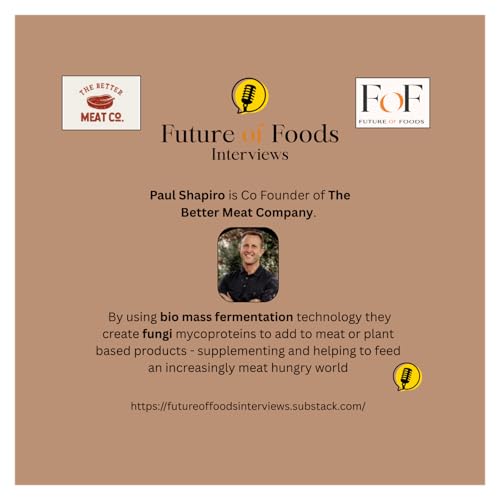
How BioMass Fungi is Supplementing Meat - Paul Shapiro
Impossibile aggiungere al carrello
Rimozione dalla Lista desideri non riuscita.
Non è stato possibile aggiungere il titolo alla Libreria
Non è stato possibile seguire il Podcast
Esecuzione del comando Non seguire più non riuscita

How BioMass Fungi is Supplementing Meat - Paul Shapiro
-
Letto da:
-
Di:
A proposito di questo titolo
In this episode of Future of Foods – Interviews, I speak with Paul Shapiro about one of the most pragmatic paths toward reducing the environmental impact of meat: biomass fungi.
Rather than attempting to replace meat outright, Shapiro explains how fungal biomass, grown through fermentation, can supplement conventional meat in ways that dramatically cut cost, emissions, and resource use while preserving the sensory experience consumers expect. Drawing on his work at The Better Meat Company, he describes how mycelium, the fast-growing, protein-rich root structure of fungi, can be produced at industrial scale using existing fermentation infrastructure.
A key insight from the conversation is that hybridization, not substitution, may be the fastest route to impact. By blending fungal biomass into meat products, producers can reduce reliance on animal protein without asking consumers to change behavior, taste preferences, or cooking habits. Shapiro argues that this approach avoids many of the bottlenecks facing fully plant-based or cultivated meat alternatives, particularly around cost, scale, and manufacturing complexity.
The discussion also cuts through common misconceptions about fermentation-based foods. Shapiro emphasizes that biomass fungi are minimally processed, nutritionally dense, and well suited to large-scale production—making them a practical tool rather than a speculative technology. Ultimately, the episode frames biomass fungi not as a futuristic novelty, but as a quietly powerful lever for near-term change in the global food system.