Episodi

  • I Ran Steven Bartlett's Socials. Here's Why Your Content Flops w/ Holly Hayes
    Oct 15 2026

    Everyone thinks Steven Bartlett's personal brand was built on talent. It was built on 200 posts a month.


    Most people post once a week, check the likes after half an hour and delete anything that flops. Behind The Diary of a CEO, every decision started with one question: "what's the data?" Every guest got an essay's worth of research, the awkward silences were left in, and content was tested on TikTok before it ever reached Instagram.


    Holly Hayes started in Steven Bartlett's kitchen with a login, a password and his accounts, when the whole team was about five people. As his brand manager she posted around 200 pieces of content a month, made LinkedIn the "golden child" of his brand, and now builds personal brands for founders and creators. She is honest about why most content never gets seen.


    In this episode:

    ◼️ How Steven Bartlett's personal brand was built... 200 posts a month, LinkedIn first, and talking about the things other founders wouldn't

    ◼️ The Diary of a CEO details nobody notices, from the scent of the room to an essay's worth of research on every guest

    ◼️ Why holding a silence is an under-trained skill, especially for women

    ◼️ Brand pillars explained: how to niche down without losing your personality

    ◼️ The biggest content mistake: saving the best part for the end instead of the first five seconds

    ◼️ Why repetition isn't boring, and how one well-worn topic hit 200,000 views in 24 hours

    ◼️ "What's the data?" The metrics that actually matter: watch time, profile views, skip rate and shareability

    ◼️ The founder spending £15,000 a month on Meta ads with nothing to show for it, and what was really broken

    ◼️ Which platforms to prioritise, why your LinkedIn company page gets ignored, and why a pretty feed doesn't matter

    ◼️ Only getting six likes? How to find what's broken, and why you should never delete a post after 30 minutes


    Nobody cares about your content… But you can give them a reason to.


    Chapters:

    00:00 Meet Holly Hayes, Steven Bartlett's former brand manager

    01:24 200 posts a month: the brief behind Steven Bartlett's brand

    03:06 Why LinkedIn was the "golden child"

    05:01 Is LinkedIn still a white space?

    06:28 The Diary of a CEO details nobody notices

    09:25 The power of holding a silence

    12:25 Great content vs average content

    14:30 "Pretend nobody cares"

    17:48 Brand pillars explained

    19:40 Niche down or show every side of you?

    23:59 The biggest mistake: your first five seconds

    25:52 Is AI making content worse?

    28:18 Why repetition builds a brand

    33:15 "What's the data?": the metrics that matter

    35:35 Shareability: the free paid ad

    37:35 £15,000 a month on ads and no return

    39:35 Which platforms to prioritise

    42:14 Why your LinkedIn company page gets ignored

    43:36 Should you stress about a pretty feed?

    48:33 Posting more: expanding your surface area for luck

    50:59 How to post more without burning out

    54:42 Only getting six likes? What's broken

    59:27 Why a personal brand is freedom

    1:01:16 Visual repetition and recognisable content

    1:07:29 Post while you're excited about it

    1:14:43 Save or Splurge


    What's the one thing stopping you from posting more? Tell us below 👇


    Subscribe to @hgfpod for new episodes every week.

    💜 Stream on Spotify: https://tr.ee/hgfspotify

    💜 Stream on Apple Podcasts: https://tr.ee/hgfapple

    💜 Follow us on Instagram: https://www.instagram.com/hgf/


    💸 Powered by Aave App. Start saving smarter: https://aave.com/app

    Mostra di più Mostra meno
    1 ora e 17 min
  • Mined Diamonds Lose 40%: Why Lab-Grown Is Worth It! w/ Jessica Warch
    Oct 7 2026

    The diamond industry told us diamonds are rare. They're not, and the moment you buy one it can lose 40% of its value.


    A mined diamond and a lab-grown one are chemically identical. A certified gemologist cannot tell them apart without a machine, and the machine still gets it wrong. One of them costs three to four times more, and loses around 40% of its value the moment you buy it.


    Jessica Warch grew up inside the Antwerp diamond trade, where her parents still work. She left to build Kimaï, took Diane von Fürstenberg as an investor and opened stores in London and Paris. She is blunt about what you are actually paying for.


    In this episode:

    ◼️ The diamond industry explained... who controls the supply, who sets the price, and why diamonds were never actually rare

    ◼️ Lab-grown vs mined diamonds: chemically identical, and even specialist machines can't always tell them apart

    ◼️ Is a diamond a good investment? Why a mined diamond can lose around 40% of its value the moment you resell it

    ◼️ Why the average Kimaï engagement ring is about £5,000, and what the same ring would cost with a mined diamond

    ◼️ The cold email to Meghan Markle's circle that led to 100 articles in one day, with almost no stock to sell

    ◼️ Raising $2 million "way too early", and the branding agency mistake she'd never make again

    ◼️ How Diane von Furstenberg became an investor, sitting on her floor showing Jess her own jewellery

    ◼️ Why some magazines won't feature lab-grown diamonds, and the word Kimaï isn't allowed to use on its own

    ◼️ How she runs the business with Claude Code, from sales reports to checking supplier invoices line by line


    Diamonds are forever… But overpaying for them doesn't have to be.


    Chapters:

    00:00 The truth about diamonds

    01:39 From Antwerp's diamond trade to lab-grown diamonds

    03:30 What the diamond industry doesn't want you to know

    04:50 Is a diamond a good investment? (You lose 40%)

    05:42 Lab-grown vs mined diamonds: is there any difference?

    08:54 From 2% of the market to engagement ring favourite

    09:17 Are lab-grown diamonds actually sustainable?

    10:54 Bridal: 50–60% of sales and a £5K average ring

    15:19 Starting a jewellery brand on the side of a full-time job

    16:57 The cold email that got Kimaï on Meghan Markle

    18:40 100 articles in a day: the Meghan effect

    21:55 From online-only to opening retail stores

    24:10 Raising $2 million "way too early"

    26:01 Founder mistakes: branding agencies and hiring

    28:24 How Diane von Furstenberg became an investor

    30:28 Why Kimaï went on Dragons' Den

    33:01 Why magazines won't write about lab-grown diamonds

    35:44 The word "diamond" they're not allowed to use

    36:42 Marketing without influencers

    42:01 How to make a co-founder relationship work

    44:25 Running a business with Claude Code and AI

    47:35 Best business advice: never take no for an answer

    50:12 How much should founders pay themselves?

    52:10 Save or Splurge


    Would you choose a lab-grown diamond for your engagement ring? Tell us below 👇


    Subscribe to @hgfpod for new episodes every week.

    💜 Stream on Spotify: https://tr.ee/hgfspotify

    💜 Stream on Apple Podcasts: https://tr.ee/hgfapple

    💜 Follow us on Instagram: https://www.instagram.com/hgf/

    Mostra di più Mostra meno
    54 min
  • Inside the Business of Documentaries, With an Oscar Winner w/ Odessa Rae
    Sep 30 2026

    How do you pay for an Oscar-winning documentary on your own credit card? Why does the person carrying the legal and financial risk of a film get the least credit for it? And why does a $6 million film need an $18 million campaign to win Best Picture?


    Odessa Rae is the Oscar-winning producer of Navalny, and she funded the first four months of it on her own credit card. She walks Poppy through how the money works, from who funds a film to who owns it at the end, and what winning an Oscar actually costs.


    In this episode:

    ◼️ The $90,000 of credit card debt that funded the first four months of Navalny

    ◼️ How film financing actually works, from the investor's premium to the points on the back end

    ◼️ Why the IP of a film sits in its own company, and why an investor never owns a piece of it

    ◼️ Three days of Navalny's last interview sit in a vault, and the filmmakers have no right to them

    ◼️ Why the Best Picture Oscar goes to the producer, and why the industry still treats producers as staff

    ◼️ What an Oscar campaign really is, and why you fly to a city to screen for two voters

    ◼️ Why the money for an Oscar campaign has to be raised as donation rather than investment

    ◼️ What a film costs to make now, and why AI is pulling that number down every year

    ◼️ Why she was followed for six months after Navalny died

    ◼️ How she actually finds investors, and why she keeps the ones she likes


    💜 Stream on Spotify: https://tr.ee/hgfspotify

    💜 Stream on Apple Podcasts: https://tr.ee/hgfapple

    💜 Follow us on Instagram: https://www.instagram.com/hgf/

    💸 Powered by Aave App. Start saving smarter: https://aave.com/app


    Mostra di più Mostra meno
    1 ora
  • Everything It Takes to Build a Profitable Swimwear Brand w/ Alexandra Miro
    Sep 16 2026

    How does a swimsuit get from a drawing to a shop floor? Why did she have to pay for her own stock before Selfridges would sell it? And why did the brand only start making money once she took production in house?


    Alexandra Miro started her swimwear label with five swimsuits and her own money, and now sells it around the world with a team of five.


    She tells Poppy how the money really works in fashion, from the factories in Portugal to the payment terms and the cost of a photo shoot. It is her first ever podcast, and it is for anyone building a product business who wants to know where the money goes before they spend it.


    In this episode:

    ◼️ Start with five products, not fifty, and why a big launch collection works against you

    ◼️ Stocking a department store means funding the stock yourself, and taking it back if it does not sell

    ◼️ A consignment order can mean eight months from starting production to any payment

    ◼️ The business turned profitable when she stopped outsourcing production

    ◼️ Four years running everything alone, customer service, logistics, social and design

    ◼️ Nobody gets discovered at a trade show anymore, and what replaced it

    ◼️ A collection shot on an iPhone in 24 hours that no buyer questioned

    ◼️ One local model instead of a flown-in one, and 20 grand saved on a single shoot

    ◼️ 100 pieces of a print, never repeated, and what that does to demand


    Subscribe to @hgfpod⁩ for new episodes every week.


    💜 Stream on Spotify: https://tr.ee/hgfspotify

    💜 Stream on Apple Podcasts: https://tr.ee/hgfapple

    💜 Follow us on Instagram: https://www.instagram.com/hgf/

    💸 Powered by Aave App. Start saving smarter: https://aave.com/app

    Mostra di più Mostra meno
    45 min
  • How To Read A Stock (Investing For Beginners)
    Sep 9 2026

    In this Hot Girl Finance breakdown, we go through every number you see when you look up a stock, what each one is telling you, and which ones actually change whether it is worth buying.


    In this episode:

    ◼️ Market cap measures the size of a company, and people read it as a price signal, which is how they end up overpaying.

    ◼️ The PE ratio is a promise about future growth, and the higher it climbs the less room the company has to be wrong.

    ◼️ A low PE is rarely a bargain, because the market is usually pricing in a doubt you have not spotted yet.

    ◼️ A small dividend can be a good sign, once you know what the company is doing with the money instead.

    ◼️ The 52 week range tells you whether you are buying near the top, which is the check most people skip.


    No prior finance knowledge needed. By the end you can open any investing app and know exactly what you are looking at.


    Subscribe to @hgfpod⁩ for new episodes every week.


    💜 Stream on Spotify: https://tr.ee/hgfspotify

    💜 Stream on Apple Podcasts: https://tr.ee/hgfapple

    💜 Follow us on Instagram: https://www.instagram.com/hgf/

    💸 Powered by Aave App. Start saving smarter: https://aave.com/app

    Mostra di più Mostra meno
    4 min
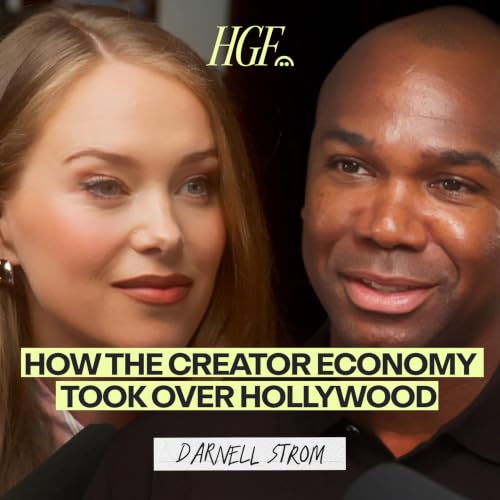
  • How Creators Took Over Hollywood and the Talent Agency Business w/ Darnell Strom
    Sep 2 2026

    What does a talent agent actually do for their 10%? Why are creators and brands now sitting in the top ten earners at one of the biggest agencies in the world, next to the actors and the athletes? And why does the man who runs UTA in Europe tell his clients that a brand coming to them directly is a brand planning to undercut them?


    Darnell Strom is Head of UTA Europe, the agent behind Malala Yousafzai, Michaela Coel, Jon Batiste and Karlie Kloss. He walks Poppy through how the money actually moves in the talent business, from the $30 million guarantees of the 90s and early 2000s to the equity deals being written for talent now, and what that teaches anyone negotiating their own worth without an agent in the room.


    In this episode:

    ◼️ Why UTA signed YouTubers 20 years ago while rival agencies laughed, and who is scrambling now

    ◼️ Why TV and film went from 85% of UTA's business to under half in 15 years

    ◼️ How the definition of talent expanded to anyone with a platform and a following

    ◼️ Why creators and brands now sit in the top ten earners next to the actors and the athletes

    ◼️ What a brand is really doing when it comes to you directly instead of your agent

    ◼️ Why giving up 10% beats getting paid 50% less on a deal you negotiated yourself

    ◼️ Why the data on your own audience is the leverage you cannot get on your own

    ◼️ Why a creator's recommendation converts like a friend's, and what that is worth to a brand

    ◼️ Whether to stay the expert in one thing or expand, and how to expand without losing the audience

    ◼️ The film made with AI tools for $750,000 that reached cinemas because the audience asked


    💜 Stream on Spotify: https://tr.ee/hgfspotify

    💜 Stream on Apple Podcasts: https://tr.ee/hgfapple

    💜 Follow us on Instagram: https://www.instagram.com/hgf/

    💸 Powered by Aave App. Start saving smarter: https://aave.com/app

    Mostra di più Mostra meno
    1 ora e 3 min
  • Why Your Pension Depends on Other People's Children w/ Paul Morland
    Aug 26 2026

    What happens to your pension when there is barely one worker left per retiree? Why does a demographer say the best money decision you can make in your thirties is having a child? And why does he think the next great crisis will be a bond crisis?

    Paul Morland is the demographer behind No One Left. His next book, Bust: The Economics of Population Decline, is out in November.

    He walks Poppy through the economics of a shrinking population, a story usually argued as culture and never costed as money, and what it means for your tax bill and the state that promised to look after you.


    In this episode:

    ◼️ How a low birth rate turns 100 people into 40, then into 16, inside two generations

    ◼️ What an ageing country does to your wages, your savings and your tax bill

    ◼️ Japan as the preview, going from 8 or 9 workers supporting each retiree to barely one

    ◼️ Why Paul thinks the next crash will come from governments that cannot pay their bills

    ◼️ Why he calls the state a Ponzi scheme once the population pyramid inverts, and what he thinks happens when it can no longer meet its promises

    ◼️ Why he says not to count on a state pension, and what he tells anyone in their thirties to do instead

    ◼️ Why you cannot fix a worker shortage by sending half the workers home

    ◼️ What happens to birth rates when men pick up more of the housework

    ◼️ The changes employers could make tomorrow, starting with why offices have gyms and no nurseries

    ◼️ How the tax system could pay mothers back for the pension years they lose

    ◼️ Why he does not believe AI or robots will be looking after us in old age


    💜 Stream on Spotify: https://tr.ee/hgfspotify

    💜 Stream on Apple Podcasts: https://tr.ee/hgfapple

    💜 Follow us on Instagram: https://www.instagram.com/hgf/

    💸 Powered by Aave App. Start saving smarter: https://aave.com/app


    Mostra di più Mostra meno
    55 min
  • How to Run a Profitable Cult Fashion Brand w/ Jana Sascha, De La Vali
    Aug 12 2026

    Jana Sascha started De La Vali selling dresses from the back of a car in Ibiza, to anyone who would buy them. Nearly ten years later the brand is stocked by its dream retailers, worn by Kate Moss, and online sales are up 300% in a year. So how do you actually make a fashion brand profitable?

    This week Poppy sits down with Jana Sascha, founder and creative director of De La Vali. Jana breaks down the real numbers behind scaling an independent fashion brand, from a first collection sewn on a shoestring to a restructure and back to profit.

    In this episode:

    ◼️ How much it really costs to start a fashion brand

    ◼️ Why on-time delivery decides whether your stockists keep you

    ◼️ How shifting from wholesale to 60% direct to consumer can transform a business

    ◼️ How a spare dress handed to Kate Moss at a party changed the brand's trajectory

    ◼️ How to pick the most important first hire for a small brand

    ◼️ Why giving retailers a 2.4 to 2.8x margin can still make you money

    ◼️ Why Jana now keeps De La Vali privately funded and running on its own profits


    💜 Stream on Spotify: https://tr.ee/hgfspotify

    💜 Stream on Apple Podcasts: https://tr.ee/hgfapple

    💜 Follow us on Instagram: https://www.instagram.com/hgf/

    💸 Powered by Aave App. Start saving smarter: https://aave.com/app

    Mostra di più Mostra meno
    49 min