Episodi

  • John Adams: From Boston Courtrooms To Independence. His Relentless Push For A Nation
    Jan 7 2026

    CLICK HERE! To send us a message! Ask us a Question or just let us know what you think!

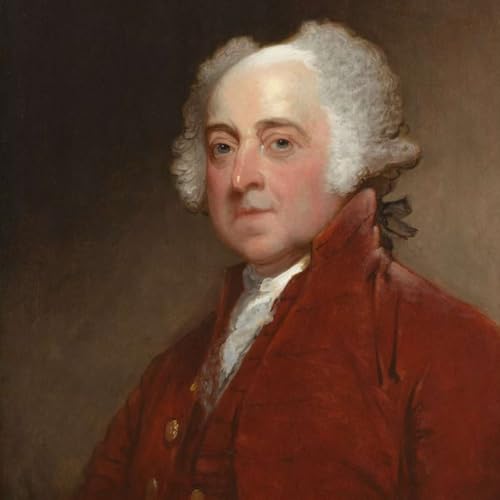
    Fireworks didn’t make America—hard choices did. We open the new year by diving into the fierce, flawed, and fiercely honest life of John Adams: the lawyer who defended British soldiers on principle, the strategist who made independence possible, and the president who chose peace over applause when the nation begged for war.

    We walk through Adams’ unlikely path from a shoemaker’s son to Harvard scholar, his daring defense after the Boston Massacre, and the way he engineered unity at the Continental Congress by nominating George Washington and persuading Virginia to align with New England. You’ll hear the real timeline behind July 2 and July 4, how Jefferson became the Declaration’s scribe while Adams supplied its voice, and why the early war looked hopeless until foreign loans and alliances—driven in part by Adams—changed everything. From Hessian mercenaries to the prison ships of New York, we pull the camera back to show the stakes and the strategy that wore down the British empire.

    Then we tackle the 1790s knife fight: parties taking shape, newspapers as political weapons, and Jefferson’s covert funding of hit pieces. Inside the presidency, Adams faced riots, the France crisis, and crushing pressure to go to war. He signed the Alien and Sedition Acts—an error that scarred his reputation—yet he also made the bravest call of his career: sending envoys to secure peace, sacrificing reelection to spare the republic a disastrous conflict. Finally, we explore Adams’ long reconciliation with Jefferson, the treasure trove of letters that still teach us how to argue in good faith, and the towering legacy of John Quincy Adams, whose work on the Monroe Doctrine, the Amistad case, and national science policy carried the family’s ethic forward.

    If you care about the birth of American institutions, the messy truth of leadership, and the costs of choosing country over self, this story has layers you’ll love. Press play, then tell a friend—and if this conversation changed how you see Adams, subscribe, rate, and leave a review to help others find the show.

    Mostra di più Mostra meno
    1 ora e 23 min
  • A New Name for A New Year! Happy New Year!
    Jan 2 2026

    CLICK HERE! To send us a message! Ask us a Question or just let us know what you think!

    A New Name for A New Year! Happy New Year! Podcast Update!

    Mostra di più Mostra meno
    7 min
  • JFK Part 4 - RoundTable Discussion with Jack and Dom. | Dec 11, 2025
    Dec 11 2025

    CLICK HERE! To send us a message! Ask us a Question or just let us know what you think!

    The autopsy reads like a military operation. The brain goes missing. From the first minutes on the tarmac to the last page of the Warren Commission, the JFK story is stitched with contradictions that refuse to die. We brought our roundtable back together to follow the hard edges: the casket swap accounts from Bethesda, morgue staff who recall a body bag and pre-autopsy surgery, and the chain-of-evidence gaps around the so‑called magic bullet. If a first-year defense attorney could dismantle the case, why did the nation accept it?

    We dig into the operational backdrop most people never see: JM/WAVE’s web of CIA officers, anti-Castro exiles, and mob figures forged in the struggle against Castro; Operation Northwoods, which proved false flags were not fantasy but policy; and the rush to paint Oswald as a Cuban- and Soviet-linked agent via New Orleans leafleting, Mexico City legends, and convenient IDs. We weigh Lyndon Johnson’s choices—why the Cuba blame was abandoned, how Vietnam escalated immediately, and what his behavior in Dealey Plaza and on Air Force One might tell us. Along the way, names like E. Howard Hunt and Curtis LeMay surface, tying Dallas to a broader culture of covert power and political pressure.

    This isn’t a hunt for every shooter. It’s a search for the employers—the coalition with the reach to manage an autopsy, redirect the press, and outlast oversight. We revisit Parkland doctors’ accounts of the head wound, explore the “Prayer Man” doorway footage that could upend the sixth-floor narrative, and confront the witness attrition that shadows the case. If you care about the integrity of evidence, the architecture of cover stories, and how national security can bend truth, you’ll want to hear this unvarnished exchange.

    If this conversation moves you, follow the show, share it with a friend who still has questions about Dallas, and leave a review telling us what piece of evidence you think matters most. Your take might guide our next deep dive.

    Mostra di più Mostra meno
    1 ora e 19 min
  • Who is David Berkowitz? - Another Look - Part Two
    Oct 19 2025

    CLICK HERE! To send us a message! Ask us a Question or just let us know what you think!

    Summary
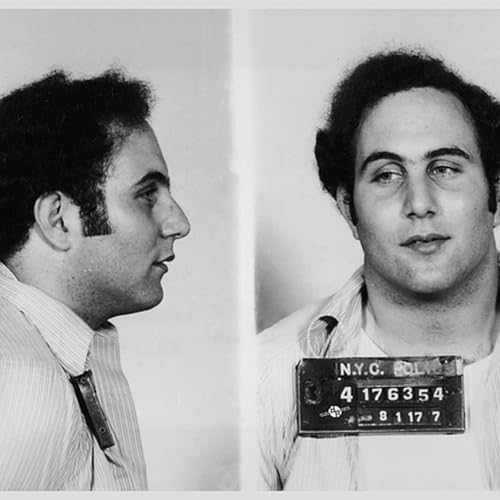
    This conversation delves into the complex life of David Berkowitz, the infamous Son of Sam. The hosts explore his early life, psychological influences, military service, and the various narratives surrounding his actions. They discuss the interplay of perception and truth, the impact of community and family dynamics, and the role of conspiracy theories in understanding Berkowitz's motivations. The conversation highlights the contradictions in Berkowitz's story and raises questions about the nature of his crimes, ultimately painting a multifaceted portrait of a troubled individual. In this conversation, Steven Kasarda and Chris Junior delve into the life of David Berkowitz, exploring his psychological transformation, military experiences, and the connections he formed with various communities. They discuss the misunderstandings surrounding his arrest, his behavioral therapy, and the impact of his upbringing and adoption on his psyche. The conversation also touches on his involvement with the occult and the relationships he built after returning to civilian life, leading to a deeper understanding of his motivations and actions as the infamous Son of Sam.

    Sound bites
    "He was a troubled kid."
    "He wanted to kill people."
    "He was introduced to the occult."

    Chapters
    00:00 Introduction to David Berkowitz
    00:57 The Complexity of David Berkowitz
    03:29 Early Life and Adoption
    08:15 Psychological Profiling and Perceptions
    14:38 The Impact of Loss and Family Dynamics
    18:54 Counterculture and Occult Influences
    30:44 Engagement with Esoteric Practices
    31:26 The Enigmatic Necronomicon
    33:07 Berkowitz's Military Journey
    35:01 Behavioral Health and Religious Transformation
    38:30 The Influence of MKUltra and Cults
    41:48 Assassination Patterns and Berkowitz's Methods
    45:27 The Complexity of Berkowitz's Confessions
    49:15 Berkowitz's Return to Society
    01:01:16 The Struggles of Alienation
    01:06:40 The Firestarter's Path
    01:11:03 Searching for Identity
    01:17:08 The Shift to Darkness
    01:24:08 Connections and Coincidences

    Mostra di più Mostra meno
    1 ora e 34 min
  • "Son of Sam" - Another Look - Part One with Chris Piero Jr.
    Oct 4 2025

    CLICK HERE! To send us a message! Ask us a Question or just let us know what you think!

    Summary
    This conversation delves into the historical context and cultural landscape of New York City during the 1970s, particularly focusing on the infamous Son of Sam murders committed by David Berkowitz. The hosts explore the societal reactions, the police investigations, and the psychological implications of the killings, while also discussing the media's role in shaping public perception. The discussion highlights the chaotic environment of New York at the time, marked by financial crises, cultural shifts, and a growing fear of a serial killer on the loose.

    Takeaways
    Chris became interested in the Son of Sam during the pandemic.
    The 1970s in New York was a chaotic time.
    There was a mix of rich and poor in New York neighborhoods.
    The police were not sharing information effectively.
    The first murder was not initially linked to a serial killer.
    Witness testimonies were often inconsistent.
    The media played a significant role in public panic.
    Berkowitz's letters to the media heightened fear.
    The cultural landscape influenced the perception of crime.
    There are theories suggesting Berkowitz may not have acted alone.

    Sound bites
    "It was a crazy time for her."
    "It was a total culture shock."
    "He shot through the book."

    Chapters
    00:00 Introduction to the Son of Sam Era
    02:42 Life in 1970s New York City
    05:43 The Cultural Landscape of New York
    08:25 The Emergence of the Son of Sam
    11:15 The First Attacks and Initial Reactions
    13:58 The Growing Fear and Public Awareness
    16:32 The Investigation Begins
    18:59 Linking the Attacks
    21:21 The Impact on Victims and Society
    23:44 The Serial Killer Profile Emerges
    26:14 The Turning Point in the Investigation
    27:45 The Unfolding Mystery of the Murders
    28:13 The Vosgarichian Murder: A Turning Point
    30:57 The Rising Panic: Public Reaction and Police Response
    32:30 The Infamous Letters: Berkowitz's Taunts
    35:20 The Search Intensifies: A City on Edge
    37:16 The Last Victims: Confusion and Witness Accounts
    40:43 The Capture of Berkowitz: A Twist of Fate
    44:33 The Carr Family Connection: Unraveling the Mystery
    47:21 The Layers of Deception: Investigating the Evidence
    50:05 The Psychological Profile: Understanding the Killer

    Mostra di più Mostra meno
    51 min
  • Moving the Father of Our Country: Washington's Forgotten Tomb Story
    Sep 10 2025

    CLICK HERE! To send us a message! Ask us a Question or just let us know what you think!

    Death doesn't end a president's journey. In this riveting exploration of presidential afterlives, Jack Stanley reveals the surprising story of George Washington's remains and their dramatic relocation nearly four decades after his death.

    Washington's body, originally interred in a deteriorating family tomb at Mount Vernon in 1799, faced unexpected perils. By 1830, tomb raiders had broken in, stealing human remains and forcing action on Washington's long-ignored will provision for a new resting place. What followed was extraordinary: when officials finally moved Washington in 1837, they discovered his remarkably preserved body inside a decaying coffin, creating a moment of intimate connection with America's founding father.

    This forgotten chapter of history sparkles with fascinating details – from the Philadelphia craftsman who created Washington's marble sarcophagus at his own expense to the yellow liquid that seeped from the coffin during the transfer. Stanley weaves these elements into a larger tapestry of Washington's revolutionary legacy, exploring how this towering figure (literally, at 6'2") transformed warfare through necessity, establishing the guerrilla tactics that would ultimately secure American independence against overwhelming odds.

    The conversation naturally expands to Washington's profound impact on American governance – particularly his pivotal decision to relinquish power, both as a general and as president. As King George III supposedly remarked upon hearing of Washington's military resignation: "If this is true, he is the greatest man who ever lived." This precedent of peaceful power transition fundamentally shaped American democracy and inspired revolutionary movements worldwide.

    Listen as we uncover this macabre yet meaningful piece of presidential history, reflecting on how Washington's physical remains and his philosophical legacy continue to influence our understanding of leadership, democracy, and the delicate balance of power in our constitutional system.

    Have you explored the hidden histories of other presidential remains? Share your thoughts and join us for upcoming roundtable discussions on presidential legacies throughout American history.

    Mostra di più Mostra meno
    49 min
  • JFK: Part Three - The Final Mysteries with Historian Jack Stanley
    Aug 27 2025

    CLICK HERE! To send us a message! Ask us a Question or just let us know what you think!

    The mystery of what happened to President Kennedy's body after his assassination stands as one of the most disturbing chapters in American history. In this riveting conclusion to our JFK series, historian Jack Stanley unravels the ghoulish and bewildering events surrounding Kennedy's autopsy that suggest a sophisticated cover-up of the truth.

    Stanley meticulously details how Kennedy's body apparently traveled in two different caskets—the bronze casket seen by the public and a shipping casket that arrived at Bethesda Naval Hospital via helicopter. Drawing on decades of research and newly released documents, he explains how the autopsy itself was compromised from the start, with evidence suggesting the body was altered before formal procedures began to support the official narrative of shots fired only from behind.

    The infamous "magic bullet" theory comes under particular scrutiny as Stanley demonstrates its physical impossibility. "Houdini couldn't have done this better," he notes of the bullet that supposedly changed direction multiple times while causing seven wounds between two men. Even more disturbing is his compelling case that Lee Harvey Oswald never fired a shot, but was instead set up as a "patsy" who was conveniently silenced before trial.

    Perhaps most chilling is the fate of Kennedy's brain and other crucial evidence that mysteriously disappeared, likely dropped into the North Atlantic inside the bronze casket on Robert Kennedy's orders—a final act of protection by a brother determined to preserve JFK's legacy.

    Stanley connects the assassination to Kennedy's peace initiatives that threatened the military-industrial complex, including his American University speech that Khrushchev had printed in Pravda and the subsequent nuclear test ban treaty. These represented a dramatic shift in Cold War relations that ended abruptly with his death.

    Ready to dive deeper into history's greatest mysteries? Subscribe now and join us for our next presidential exploration.

    Mostra di più Mostra meno
    53 min
  • JFK: Stories From a Day In Dallas - Told by Historian Jack Stanley - Part Two
    Aug 20 2025

    CLICK HERE! To send us a message! Ask us a Question or just let us know what you think!

    Jack Stanley returns for part two of our conversation to explore the hidden truths behind the JFK assassination, revealing lesser-known details that challenge the official narrative and shed new light on this pivotal historical event.

    • Kennedy's back brace may have contributed to his death by keeping him upright after the first non-fatal shot
    • Allen Dulles, fired CIA Director, effectively controlled the Warren Commission despite Chief Justice Warren's nominal leadership
    • Commission members were never shown actual autopsy photos, only drawings
    • Paraffin tests showed no gunpowder residue on Oswald's skin, suggesting he hadn't fired a rifle
    • Parkland Hospital doctors observed wounds inconsistent with the official narrative but were pressured to stay silent
    • Opera singer Jerome Hines served as a secret messenger between Khrushchev and Kennedy during the Cuban Missile Crisis
    • LBJ leveraged FBI information about Kennedy's health to secure the Vice Presidential nomination
    • Jack Ruby had extensive mafia connections despite Warren Commission claims to the contrary
    • Gerald Ford admitted changing the location of Kennedy's back wound to support the magic bullet theory

    Please like and subscribe, and remember that we're also not just on YouTube video, but we're also on all major podcasting services.


    Mostra di più Mostra meno
    47 min