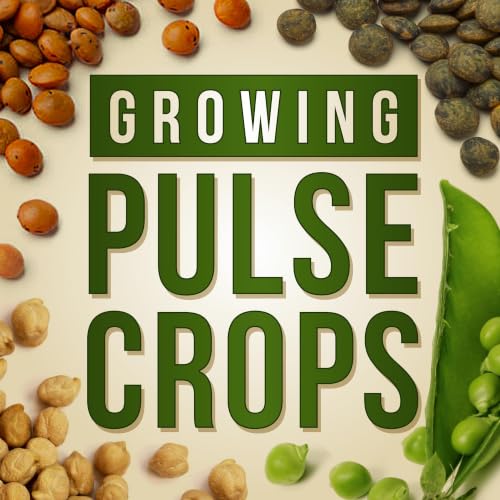
Growing Pulse Crops copertina

Growing Pulse Crops

Growing Pulse Crops

Di: Pulse Crops Working Group
Ascolta gratuitamente

This show features the latest in research, agronomy, and economics of pulse crops (peas, chickpeas, lentils, etc.). Demand for these nutrient-dense, high-protein foods continues to grow. There is also interest from farmers to include more pulses into diverse rotations for benefits like nitrogen fixation and soil health. But the industry continues to face challenges, and we are eager to address these head on. So if you’re a pulse grower or in any way interested in these important crops, hit subscribe and stay tuned for future episodes. We’ll be back with plenty of information about challenges pulse farmers are facing throughout the U.S. and what solutions are working. Brought to you by the Pulse Crops Working Group with support from the Northern Pulse Growers AssociationCopyright 2026 Pulse Crops Working Group Scienza Scienze biologiche
  • Risks and Rewards with Adjuvant Selection
    Jun 22 2026

    Codee Lee is a technical specialist for CHS. Half of his job is research of their proprietary products like fertility products, biologicals, crop protection and adjuvants. The other half of his job is communicating about that research with customers and growers in general. Lee shares the purpose of adjuvants and the advantage they provide producers especially when facing adverse environmental factors. Dr. Audrey Kalil joins this episode as co-host. A plant pathologist by training and background, Kalil is currently an Agronomist and Outreach Coordinator at Horizon Resources and producer of this podcast.

    “ I've been doing small plot research for 15 years already, and how these products perform and how much benefit these adjuvants will give you is very, very dependent on our environment. The more adversity in the environment, the more benefit you get out of these adjuvants. I'm not going to sit here and say that they're a silver bullet, but for us, specifically up here in adverse environments, they can be really a handy tool in the toolbox to help kind of plateau that performance across our different spraying conditions.” - Codee Lee

    This Week on Growing Pulse Crops:

    • Meet Codee Lee, a technical specialist for CHS
    • Discover the purpose, method and impact in adding adjuvants to in-puts
    • Explore how factors including crop variety, risk of crop injury, environmental factors and type of herbicide available can help determine what best steps a producer can take to optimize their weed management

    Growing Pulse Crops is produced by Dr. Audrey Kalil and hosted by Tim Hammerich of the Future of Agriculture Podcast.

    Mostra di più Mostra meno
    41 min
  • Selecting Pulse Genetics to Build New Markets
    Jun 15 2026

    Kurt Braunwart is the managing owner of Progene Plant Research, a genetic research-based company bringing new innovations and old uses to current varieties in the market. The company is known for their spring and winter pea program, as well as their work in oats and triticale. Braunwart discusses his career in this industry, how he started and built Progene, how he identifies oddball traits that can have mainstream applications, some of the differences and similarities between spring and winter peas, and his hopes for the future as he transitions the company over to new ownership. He began his career as a fieldman for Rogers Seed Company in 1974 in Twin Falls, Idaho. In 1980, he moved to Colfax, Washington, as Plant Manager and later to Othello, Washington, as Operations Manager. In 1995, he purchased and carried forward a dry pea breeding program from Rogers Seed Company. This business became ProGene Plant Research in 1996.

    “ What we were finding through the whole team was that we've got ways to improve the roots of those peas, to contribute back to soil health. And that yes, we can do that with spring peas, but we can do it way better with winter peas because their ratio of roots to top growth is more roots than in spring peas.” - Kurt Braunwart

    This Week on Growing Pulse Crops:

    • Meet Kurt Braunwart, the managing owner of Progene Plant Research
    • Discover the creation and mission of Progene
    • Explore the differences and similarities between spring and winter peas
    • Learn where he sees the future of crop development

    Growing Pulse Crops is produced by Dr. Audrey Kalil and hosted by Tim Hammerich of the Future of Agriculture Podcast.

    Mostra di più Mostra meno
    27 min
  • From Lentils to Lupins: Protecting Australia's Pulse Crops
    May 22 2026

    Dr. Lars Kamphuis is an associate professor at Curtin University and the deputy director of the Center for Crop Disease Management where he focuses on crop diseases that impact Australian farmers. The center collaborates extensively with state departments and universities around the country to research diseases relevant to growers throughout Australia. Kamphuis was born and raised in The Netherlands and studied plant breeding and crop protection at Wageningen University. He then had the opportunity to do research in Australia and says he just never left. In this episode, he shares about his experiences with lupins and why the crop is fitting in well in some Australian rotations. He also discusses his work with Sclerotiania stem rot, fungicide resistance and the ascochyta issues Australian farmers have had to deal with.

    “ A lupin is kind of what we would call an orphan crop. It's not very well known around the globe, but it has a tremendous value. So it does really well in sandy and acidic soils, which is particularly a problem here in Western Australia. So for some of our Australian grain growers, where they have to give breaks to their cereal and canola crops, they need a viable pulse crop in these sandy acidic soils and lupins are a perfect fit.” - Dr. Lars Kamphuis

    This Week on Growing Pulse Crops:

    • Meet Dr. Lars Kamphuis, an associate professor at Curtin University and the deputy director of the Center for Crop Disease Management
    • Explore the introduction and benefits to adding Lupins in pulse crop rotations in Australia
    • Understand the challenges of Sclerotiania stem rot, fungicide resistance and ascochyta issues faced by Australian farmers
    • Learn more about the ongoing ascochyta research from our episode in season two with Dr. Kampuis’s colleague, Dr. Jenny Davidson

    Growing Pulse Crops is produced by Dr. Audrey Kalil and hosted by Tim Hammerich of the Future of Agriculture Podcast.

    Mostra di più Mostra meno
    35 min
adbl_web_anon_alc_button_suppression_t1
Ancora nessuna recensione