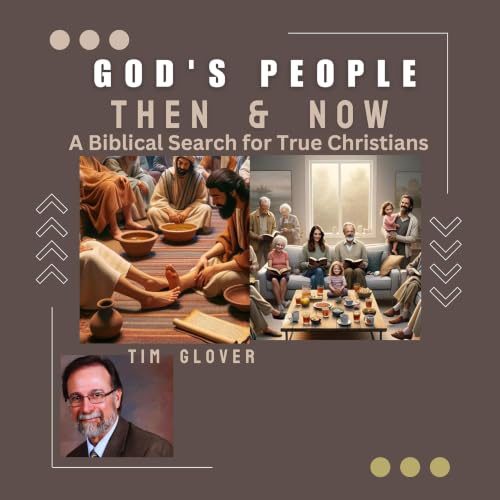
God's People - Then & Now copertina

God's People - Then & Now

God's People - Then & Now

Di: Tim Glover
Ascolta gratuitamente

Christianity is an old religion with multiple changes and divisions throughout the centuries. It is an organized religion that views change from the primitive church as a necessary improvement. But, are these changes improvements that glorify God or human beings? From the end of the first century until the third century AD, the “church” went from simple, home-based groups with a message of God’s love through His Son to an elaborate dictatorship that ruled a person’s life through fear of punishment - sometimes even death. The protestant movement may have dialed it back a bit, but did it go far enough? Today, organized religion has all the characteristics of a man-made business, each with its own manifest and expectations, one of which is never to question the church's creed and doctrine. This podcast encourages independent study in search of God's will without the aid of human organizations and welcomes your feedback. Join Tim Glover, who is not a church member and questions whether God would consider the changes in Christianity to be "progress." This podcast helps us peel back the layers of human innovation to reach the core teaching of Jesus and His apostles at a time referenced as "the last days."Copyright 2026 Tim Glover Mondiale Spiritualità
  • Love Is Not Arrogant: The Heart of Marital Harmony
    Aug 19 2026

    Exploring the depths of love as articulated in First Corinthians 13, we delve into the nuanced nature of love within marriage, focusing on the responsibilities of husbands. This discussion challenges us to go beyond the platitudes often recited at weddings and scrutinizes how love manifests in everyday actions and attitudes. The speaker emphasizes that love is not merely a feeling but an active choice, one that is characterized by humility and service rather than arrogance or irritability. We dissect the idea that love should reflect the selfless nature of Christ, who exemplified true leadership through servitude. The conversation critically examines common pitfalls of pride in marriage, such as the tendency to dismiss a partner’s needs or to resist admitting fault. This examination is not just theoretical; it probes into the heart of what it means to truly love and serve one’s spouse, suggesting that these principles are vital for fostering a healthy and harmonious relationship. The key takeaway resonates: love that mirrors Christ's love is marked by selflessness, humility, and an unwavering commitment to the well-being of the other. As we navigate the complexities of marital love, the discussion also addresses the corrosive effects of irritability. The speaker posits that irritability can be a significant barrier to love, turning relationships into battlegrounds where partners feel more like adversaries than allies. By illustrating how small irritations can accumulate and create a toxic environment, we are urged to cultivate patience and understanding. The speaker calls for a transformational approach to conflict, advocating for a mindset that prioritizes listening and empathy over defensiveness and pride. The episode ultimately serves as a heartfelt reminder that love requires conscious effort and a willingness to confront our shortcomings, viewing humility not as a weakness but as a strength that fosters deeper connections with our spouses. In a fascinating twist, the episode draws parallels between biblical narratives, such as the story of Naaman and the parable of the Pharisee and the publican, to illuminate the timeless struggle against pride. These stories serve as cautionary tales, reminding us that true healing in relationships often requires the humility to acknowledge our flaws. We are reminded that love is not merely about being right or maintaining appearances, but about nurturing a spirit of grace and reconciliation. The discussion invites listeners to reflect on their own relationships, challenging us to embody the love that is patient, kind, and rooted in a desire to uplift and support our partners, ultimately fostering a marital relationship that mirrors divine love.

    Mostra di più Mostra meno
    29 min
  • The Elder Brother's Dilemma: When Fairness Trumps Forgiveness
    Aug 12 2026

    The central theme of today's discussion revolves around the dangers of keeping a mental ledger in relationships, particularly in the context of marriage. We dive deep into the parable of the prodigal son, contrasting the joyous acceptance of the father with the resentful accounting of the elder brother, who struggles to embrace grace. This episode highlights how the act of keeping score can poison our relationships, leading to bitterness and emotional distance, like a spouse more focused on past grievances than on the joy of reconciliation. We explore the transformative power of grace, reminding ourselves that true love, as exemplified by the father, keeps no record of wrongs and seeks to restore relationships rather than tally up offenses. Ultimately, we challenge ourselves to choose between holding onto our ledgers or embracing the grace that invites us into celebration and healing.

    Takeaways:

    • In relationships, maintaining a ledger of wrongs can hinder joy and forgiveness, preventing true reconciliation.
    • The father's response to the elder son highlights the importance of relationship over record-keeping in familial love.
    • A husband who keeps a record of grievances may struggle to see his wife as a partner, instead viewing her through the lens of past disappointments.
    • Grace calls us to let go of our accounting of wrongs, inviting us to embrace joy and restoration in relationships.

    Mostra di più Mostra meno
    30 min
  • When Forgiveness Meets Redemption: Lessons from the Prodigal Son
    Aug 5 2026

    The discussion navigates the profound concept of forgiveness, particularly focusing on how it operates within the context of intimate relationships, such as marriage. As we explore the dynamics of forgiveness, we find ourselves diving into the depths of what covenant forgiveness truly entails. It’s not merely about forgetting past grievances but rather the commitment to never wield those grievances against one another again. This idea allows love and redemption to flourish in the future, steering clear of the pitfalls of accusation and blame. We draw on the poignant parable of the unforgiving servant to illustrate this point, where a servant, forgiven a monumental debt by his king, fails to extend the same grace to a fellow servant. This stark contrast serves as a reminder that maintaining a ledger of wrongs in relationships not only undermines forgiveness but also reveals a troubling forgetfulness of one’s own need for grace. We challenge ourselves to rethink the question of how often we should forgive and instead ask ourselves why we are counting at all. By shifting our perspective, we can begin to grasp the depth of compassion that should govern our interactions with loved ones, fostering an environment where love reigns over bitterness and resentment. In this episode, we delve into the heart of forgiveness through the lens of biblical teachings, particularly highlighting the story of Joseph as a model of grace and redemption. Joseph, despite facing unimaginable betrayals from those closest to him, chooses to interpret his life through the lens of God’s sovereignty rather than the pain inflicted by his brothers. This choice not only protects him from bitterness but also allows him to emerge as a figure of compassion and forgiveness. We reflect on how Joseph’s journey exemplifies the principle that true forgiveness transcends mere human logic. His ability to forgive stems from a profound understanding of God’s hand at work in his life, reminding us that every injustice can be reframed within the narrative of divine providence. Furthermore, we transition to the New Testament, where the parable of the Prodigal Son serves as a rich illustration of the contrasting attitudes toward forgiveness, showcasing how the characters embody different responses to grace and redemption. By examining these biblical narratives, we uncover a transformative approach to forgiveness, urging listeners to release their own ledgers and embrace the liberating power of grace.

    Takeaways:

    • Forgiveness in relationships isn't merely about forgetting; it's about not holding past mistakes against one another, creating a future governed by love.
    • The parable of the unmerciful servant illustrates that true forgiveness transcends human calculations; it calls us to release our ledgers of wrongs.
    • Joseph exemplifies a profound approach to forgiveness by interpreting wrongs through God's providence rather than focusing on human betrayal.
    • The story of the Prodigal Son highlights the contrasting attitudes of restoration versus resentment, emphasizing the importance of compassion in our relationships.

    Mostra di più Mostra meno
    30 min
adbl_web_anon_alc_button_suppression_t1
Ancora nessuna recensione