Geology Bites copertina

Geology Bites

Geology Bites

Di: Oliver Strimpel
Ascolta gratuitamente

3 mesi a soli 0,99 €/mese

Dopo 3 mesi, 9,99 €/mese. Si applicano termini e condizioni.

A proposito di questo titolo

What moves the continents, creates mountains, swallows up the sea floor, makes volcanoes erupt, triggers earthquakes, and imprints ancient climates into the rocks? Oliver Strimpel, a former astrophysicist and museum director asks leading Earth science researchers to divulge what they have discovered and how they did it. To learn more about the series, and see images that support the podcasts, go to geologybites.com. Instagram: @GeologyBites Bluesky: GeologyBites X: @geology_bites Email: geologybitespodcast@gmail.comOliver Strimpel Scienza
  • Michael Manga on Wet Eruptions
    Jan 20 2026

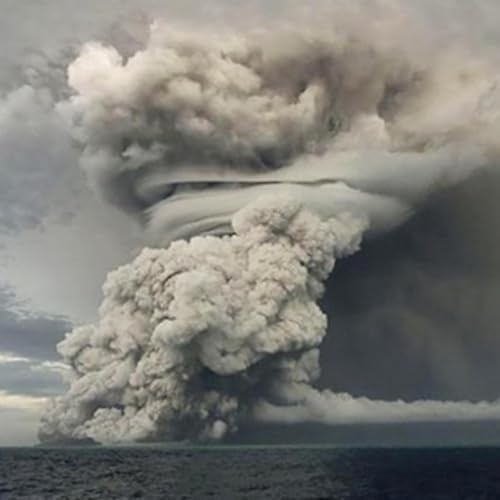
    Water can have a dramatic effect on the style of an eruption. In the podcast, Michael Manga explains how the most powerful eruptions, such as the 2022 Hunga Tonga eruption, occur when hot magma comes into contact with water and suddenly generates vast quantities of steam. Water dissolved in magma as it rises to the surface and depressurizes can also drive destructive volcanic eruptions. Manga also talks about water-driven volcanism on Mars and on the icy moons of Jupiter and Saturn.

    Manga is a Professor in the Earth and Planetary Science department of the University of California, Berkeley.

    Mostra di più Mostra meno
    40 min
  • Carina Hoorn on the Evolution of the Amazon Basin
    Dec 24 2025

    The Amazon Basin is the most biodiverse region on Earth, being the home of one in five of all bird species, one in five of all fish species, and over 40,000 plant species. In the podcast Carina Hoorn explains how the rise of the Andes and marine incursions drove an increase in biodiversity in the Early Miocene. This involved the arrival of fresh river-borne sediments from the eroding mountains and the diversification of aqueous environments caused by influxes of salt water during the marine incursions.

    Hoorn is an Associate Professor in the Institute for Biodiversity and Ecosystem Dynamics at the University of Amsterdam and Research Associate at the Negaunee Integrative Research Center, Earth Science Section, Field Museum of Natural History, Chicago.

    Mostra di più Mostra meno
    23 min
  • Anat Shahar on What Makes a Planet Habitable
    Dec 2 2025

    Over 6,000 exoplanets have now been found, and the number is constantly rising. This has galvanized research into whether one of them might host life. Since all forms of life on Earth require liquid water, at least at some stage in their life cycle, it is natural to suppose that in order to be habitable, an exoplanet should also have liquid water. While much of the public discussion has focussed on constraining the so-called Goldilocks zone, i.e., not too hot nor too cold for liquid water to exist, an equally key issue is how a planet would get its water in the first place. In the podcast, Anat Shahar explains how her modeling and experiments predict that plenty of water would form as a result of chemical reactions between the hydrogen atmospheres observed on many exoplanets and the magma ocean with which planets initially form..

    Shahar is a Staff Scientist and Deputy for Research Advancement at the Earth and Planets Laboratory at the Carnegie Institution for Science in Washington, DC.

    Mostra di più Mostra meno
    26 min
Ancora nessuna recensione