

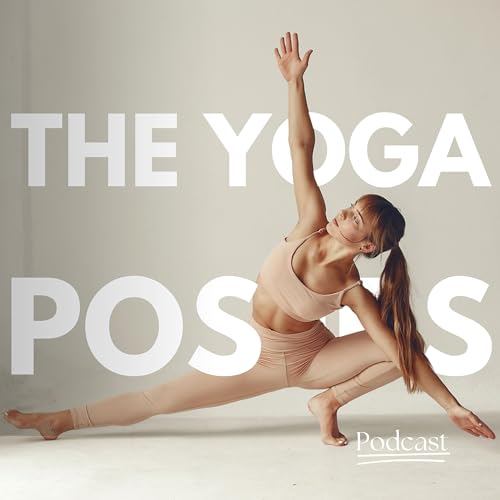
Gate Pose Part 1: It's a Peak Pose
Impossibile aggiungere al carrello
Rimozione dalla Lista desideri non riuscita.
Non è stato possibile aggiungere il titolo alla Libreria
Non è stato possibile seguire il Podcast
Esecuzione del comando Non seguire più non riuscita

Gate Pose Part 1: It's a Peak Pose
-
Letto da:
-
Di:
A proposito di questo titolo
We walked into the studio thinking Gate Pose would be a simple 20-minute episode. Two hours later, we'd discovered why this "basic" side bend is actually a peak pose.
In this episode, Jane and Sarah completely reframe Parighasana, revealing the biomechanical goldmine hiding in this kneeling position. If you've been treating Gate Pose as a throwaway warm-up, prepare to have your mind changed.
What you'll learn:
- Why the kneeling position gives you better feedback than standing poses (less wiggle room = better learning)
- How to stop kneeling knee pain by shifting pressure from patella to shin belly
- The lateral pelvic tilt training that directly translates to Triangle and Side Angle
- Why flexible students need Gate Pose for stability work more than anyone
- The "corn cobbing" hip action that drives femur into socket for safe opening
- How Gate Pose connects to Tree Pose through glute medius activation
Progressions explored:
- Captain Morgan prep stance for hip mobility
- Block work for lateral pelvic tilt training
- Extended tabletop variation with pelvic tilts
- Kneeling Half Moon with leg lifts
- One-legged Camel (Ustraparighasana)—yes, we invented a new pose!
Jane shares why she regrets 30 years of not using blankets for kneeling, Sarah breaks down the glute medius vs TFL debate, and together they prove that whatever practice you attend, you can make any pose as challenging as you need it to be.
Key concepts: Healthy boundaries (Aparigraha), respiratory diaphragm support, lateral vs rotation in the pelvis, external rotation strategies, and why this pose is secretly a TFL stretch.
Perfect for teachers wanting to maximize "simple" poses and students dealing with knee discomfort in kneeling positions.
TIMESTAMP CHAPTERS
[00:00] Introduction & Happy New Year
[01:45] Gate Pose & Healthy Boundaries (Parighasana & Aparigraha)
[03:00] The Body Wants Stability Over Mobility
[03:45] Brain Hemispheres & Boundaries (Jill Bolte Taylor)
[04:30] Why Side Bending Matters: Creating Space Between Ribs & Pelvis
[05:45] Common Complaints: The Two Types of Knee Pain
[06:30] Getting Into Gate Pose: Setup & Entry Options
[08:00] The Blanket Fix: Leveling Your Pelvis
[09:00] Foot Placement & The Captain Morgan Prep Stance
[10:15] Gate Pose as Perfect Prep for Standing Poses
[11:00] Which Direction First: Kneeling Shin vs Extended Leg
[12:30] Maintaining Length: Don't Collapse the Side Body
[13:45] Lateral Pelvic Tilt (The Teapot) & Hip Flexion Control
[15:00] External Rotation Options for the Straight Leg
[16:15] Extended Tabletop Variation with Pelvic Tilts
[17:30] The Line: Sit Bone to Knee to Heel Alignment
[18:15] "Corn Cobbing" Hip Action Explained
[19:30] Energy Direction: Pulling Into Core vs Spilling Out
[20:15] Block Prep for Lateral Pelvic Tilt (Standing)
[21:00] The Tree Pose Connection
[21:45] Making Any Pose Work for You: Student Agency
[22:30] The TFL Stretch Hidden in Gate Pose
[23:00] Solving Kneeling Knee Pain: Shins Not Kneecaps
[24:00] Kneeling Half Moon Variation & Glute Medius Work
[25:30] Inventing Ustraparighasana: One-Legged Camel!
[26:45] Wrap-Up: Peak Pose Status Confirmed