Episodi

  • America Two-Fiddie | Understanding Reparatory Justice
    Aug 10 2026

    As America 250 continues, one question refuses to be drowned out by pageantry: What does this nation owe to the people it built itself upon?

    In this installment of America Two-Fiddie, we examine the realities of reparatory justice: what it is, what it demands, and why the discomfort it produces is itself a form of evidence. Reparatory justice is not simply a check in the mail. It is a reckoning encompassing material, symbolic, and structural action aimed at restoring dignity, addressing inequalities rooted in enslavement and colonialism, and ensuring the machinery of harm is dismantled rather than rebranded.

    No story makes that demand more vividly than what happened in Tulsa, Oklahoma, on May 31, 1921. In less than 24 hours, a White mob aided by official complicity killed as many as 300 Black Tulsans, displaced thousands, and destroyed hundreds of businesses, homes, churches, and schools.

    What really sparked the violence? An interracial relationship. The fragility of white social order, threatened by proximity across the color line, ignited one of the deadliest acts of racial terror in American history.

    We explore Redeem a Nation: The Century-Long Battle to Restore the Soul of America by attorney and activist Damario Solomon-Simmons, a book that chronicles the legal and moral struggle to address the injustices inflicted on Greenwood and its survivors. Solomon-Simmons represented three centenarian survivors of the massacre, navigating courtrooms from Tulsa to the nation's capital in a pursuit of reparations that are equal parts legal brief and moral indictment.

    Reparatory justice is not radical. It is what accountability looks like when the damage is this deep.

    Mostra di più Mostra meno
    21 min
  • America Two-Fiddie | Preserving Black Places & Spaces
    Aug 6 2026

    Some buildings are more than brick and mortar. They are testimonies of resistance. They are the physical evidence that we were here and that we built, gathered, worshipped, organized, and thrived.

    In this installment, we explore the preservation of Black places and spaces: what it means to protect them, what we lose when we don't, and who is doing the sacred, unglamorous work of making sure our built environment survives the bulldozer of so-called progress.

    Every time a Black historic site is saved, someone fought for it. Every time one falls, someone looked the other way. Memory has an agenda and so does erasure. The deliberate neglect of Black historic structures is itself a form of violence: slow, bureaucratic, and dressed up in the language of development. We examine how the fight to preserve Black places is inseparable from the fight for Black dignity and why the activism of memory is as urgent as any march, any ballot, any courtroom.

    We illuminate the preservation of the historic Manse Hotel in the heart of Walnut Hills, Cincinnati, a landmark of Black social life, community gathering, and cultural dignity in a neighborhood that has weathered decades of disinvestment and displacement. The Manse is not just a building with a past. It is a call to the present.

    Preservation is proclamation. Memory is mission. The places we protect tell the world who we believe deserves to be remembered and the places we abandon say the same thing, even louder.

    Do the work. Save the places. Tell the stories.

    Mostra di più Mostra meno
    17 min
  • America Two-Fiddie | Idealism We Have Never Seen
    Aug 4 2026

    What if the greatest challenge facing America isn't that we've fallen short of our ideals, but that we've convinced ourselves we've already achieved them?

    As the nation commemorates America 250, this installment turns to the enduring words of James Baldwin, whose piercing observation still echoes across generations: he had never seen the American idealism this country so often proclaims.

    This installment is not an argument against patriotism. It is an invitation to practice a more courageous one.

    Beginning with Baldwin's unforgettable reflections, we examine the distance between America's cherished promises and its lived realities. From Reconstruction to the Civil Rights Movement, from national mythmaking to contemporary debates over democracy, the conversation explores a recurring pattern: each time the nation approaches its highest ideals, a spirit of insecurity emerges to pull it back.

    Rather than celebrating America's 250th birthday through nostalgia alone, this episode asks listeners to embrace a deeper form of remembrance rooted in honesty, accountability, and hope. Because ideals are not measured by the stories, we tell ourselves, they are measured by the courage to close the distance between aspiration and action.

    If Baldwin's words still feel urgent today, perhaps it is because they were never meant for one generation alone. They are an unfinished invitation to become the nation we have long imagined but have yet to fully create.

    Mostra di più Mostra meno
    11 min
  • America Two-Fiddie | The Hidden Curriculum
    Jul 30 2026

    Ryan Clark's firing from ESPN isn't just a sports media story, it's a case study of the hidden curriculum, the unwritten rules Black professionals learn just to survive inside institutions never built for them. This installment unpacks Clark's own words on concession and double standards, connects them to 2026's widening Black unemployment gap, and traces a straight line from corporate "dictatorship" culture back to the historical practice of buck breaking. A provocative look at survival, consciousness, and why understanding the game was never the same as being free from it.

    Mostra di più Mostra meno
    16 min
  • America Two-Fiddie | Unearthing Truth from the Ashes
    Jul 6 2026

    This episode cuts through the fireworks and flag waving to ask a harder question: what have we actually learned from the American experiment?

    Tracing a line from the first single color sparks of 1777 to the modern reckoning over race, power, and historical memory, this conversation confronts the resurgence of White grievance politics and names it for what it is, while making the case that Black resilience isn't just survival, it's a superpower forged in the fire of oppression itself.

    Along the way, we sit with Justice Ketanji Brown Jackson's recent invocation of Frederick Douglass, not just as an abolitionist, but as a constitutional thinker whose insistence that "nations should have memories" feels more urgent than ever. Because the real danger isn't forgetting history. It's distorting it to serve an agenda.

    This is a call to stop softening hard truths into "difficult history" and start telling it straight as an act of collective good trouble.

    🎙️ A reflection on race, memory, and what it really means to build a more perfect union.

    #AmericaTwoFiddie #BlackHistory #FrederickDouglass#History #Constitution #Democracy #KetanjiBrownJackson #GoodTrouble #Juneteenth250 #IndependenceDay #RaceInAmerica #HistoricalTruth #BlackExcellence #PodcastEpisode

    Read Justice Jackson’s concurring opinion here: https://www.supremecourt.gov/opinions/25pdf/25-365_4hdj.pdf

    For those interested in reading the original Frederick Douglass speech Justice Jackson quoted, here’s the full text from the Frederick Douglass Papers Project:

    https://frederickdouglasspapersproject.com/s/digitaledition/item/18159

    Mostra di più Mostra meno
    9 min
  • America Two-Fiddie | From Colonization to Gentrification
    Jul 21 2026

    What happens when the fight for land, belonging, and community never truly ends, but simply changes its language?

    In this episode, Christopher John illuminates the remarkable story of Zipporah Potter Atkins, a Black woman who purchased a home in Boston in 1670, long before the founding of the United States. Her story challenges familiar narratives about Black history and reveals how Black people claimed space, built communities, and exercised agency even as laws increasingly sought to deny those rights.

    From the Age of Discovery and the rise of colonialism to Boston's historic North Slope, home to one of America's most influential free Black communities, this episode traces the enduring relationship between land, power, and displacement. By connecting the histories of colonization, enslavement, abolition, and urban development, CJ examines how today's gentrification echoes older systems of removal, replacing people while preserving only fragments of their stories.

    Rather than treating these histories as isolated events, this conversation asks listeners to recognize recurring patterns that continue to shape American cities and communities. Through the stories of the African Meeting House, the Abiel Smith School, and the transformation of Beacon Hill, we explore who gets to belong, who gets displaced, and who ultimately controls the narrative of place.

    This episode challenges us to move beyond patriotic mythology and engage in a more honest history that acknowledges both the resilience of Black communities and the systems that have repeatedly sought to erase them. It is a conversation about memory, historical preservation, public history, and the urgent responsibility to ask not only what we preserve, but who is still able to call a place home.

    #BlackHistory #America250 #PublicHistory #AfricanAmericanHistory #ZipporahPotterAtkins #BeaconHill #BostonHistory #MuseumEducation #HistoricalMemory #Gentrification #Colonization #UrbanHistory #CommunityHistory #HistoryMatters #BlackCommunities #AmericanHistory #HistoricPreservation #Storytelling #KnowYourHistory

    Mostra di più Mostra meno
    14 min
  • America Two-Fiddie | Lift EVERY Voice
    Jul 28 2026

    It's about time to account for every voice, especially the voices of the oppressed and disenfranchised who built the pathway to our present day. This episode digs into the origin story behind "Lift Every Voice and Sing," the song many Black schools opened their day with as early as 1910, two decades before "The Star-Spangled Banner" was even named the official national anthem.

    We trace the life of James Weldon Johnson: composer, diplomat, civil rights activist, and the son of Bahamian immigrants, who became one of Florida's first Black attorneys, founded the state's first Black newspaper, and transformed a Broadway songwriting career into an anthem that would outlast the moment it was written for.

    Along the way, this episode questions the nostalgic mythology built around Abraham Lincoln in early twentieth century Black memory, and holds it up against the more complicated, agitator driven truth of emancipation. It also traces a throughline from the Niagara Movement to the founding of the NAACP to the legacy of HBCUs, tracking a pattern of Black inclusion and coalition building that has defined resistance movements for generations, even as some of the institutions born from it now wrestle with how far they've drifted from that original vision.

    This is a conversation about memory, authorship, and who gets remembered as a contributor of the American story, and who gets written into a footnote.

    #LiftEveryVoiceAndSing #America250 #JamesWeldonJohnson #BlackNationalAnthem #BlackHistory #NiagaraMovement #NAACP #HBCU #GTWCJ #ReclaimTheNarrative

    Mostra di più Mostra meno
    14 min
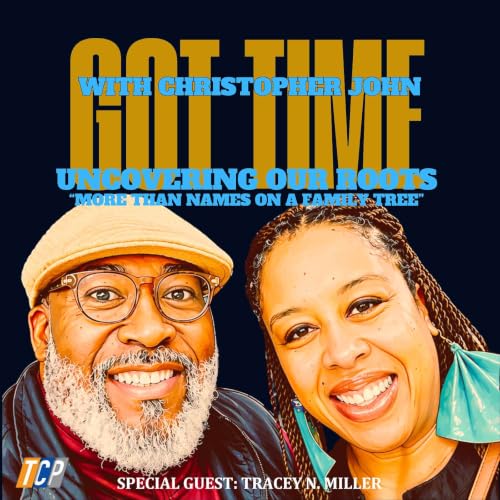
  • Uncovering Our Roots “More Than Names on a Family Tree” ft. Tracey N. Miller
    Jun 30 2026

    Genealogy is more than names on a family tree! Genealogist, Tracey N. Miller comes to the table for a powerful conversation exploring the intersection of family history, archival research, and the enduring legacy of the Creek Freedmen. Drawing from years of genealogical experience, Tracey shares how genealogy serves as a form of historical recovery; preserving stories that official records often overlooked or erased. Tracey is the founder of Nikki’s Roots & Records, a genealogy research company dedicated to uncovering, documenting, and preserving family stories.

    Together, we discuss the transformative outcomes of her genealogical work, the inspiration behind her works, and the personal journey that led her deeper into documenting her Creek heritage and Oklahoma roots. The episode also highlights essential genealogical resources from archives and libraries to school records, census documents, and yearbooks that help families reconnect with their histories.

    Our conversation further examines the historical significance of the Treaty of 1866 between the United States and the Creek Nation, the impact of the Dawes Rolls (1898–1914), and the ongoing struggles surrounding citizenship, identity, and recognition for Creek Freedmen descendants today.

    This episode is a compelling exploration of ancestry, resilience, and the power of reclaiming history through genealogical research. Rather than reducing history to simple binaries, this episode challenges listeners to wrestle with the layered realities of identity, survival, power, and memory in America’s past.

    Mostra di più Mostra meno
    45 min