Forking Off copertina

Forking Off

Forking Off

Di: Forking Off
Ascolta gratuitamente

3 mesi a soli 0,99 €/mese

Dopo 3 mesi, 9,99 €/mese. Si applicano termini e condizioni.

A proposito di questo titolo

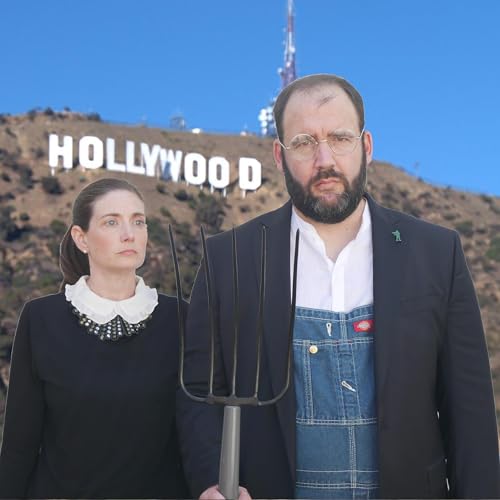
A podcast for former feds who got the fork out of government service. In 2025, hosts and former FBI intelligence analysts Jill and Philip Fields joined the exodus of public servants leaving federal service under the deferred resignation program. Conflicted over what to do next, they began encountering other recently departed feds fighting to find their voice. They started Forking Off as a platform to lift them up, preserve the public record, and document the destruction of American governance. Join us every Monday as we share their stories.Forking Off Politica e governo Scienze politiche
  • Wake the Fork Up
    Jan 20 2026
    What the fork!? It's only been a year? This feels more like a post-mortem on the American Experiment than a year-end review. Yes, we're celebrating the fact that we survived an entire year of the second Trump administration's assault on democracy, but we're also bracing for the next three. Last year, we watched as USAID was decimated; domestic terrorists were pardoned; and truth was flipped on its head. This year, we're getting civically fit while embracing the reality that nobody is coming to save us. It's time to wake up, shake off our bias, weigh the facts, challenge authority, resist conformity, and demand accountability. It's time to go forth and do great things.We're not just doing pep talks though. We're sharing tools that everyone can use to navigate this new information environment and build more resilient institutions. Let's start by putting a label on what's really been happening to American society for the last year. The term that came to define Germany in the 1930s, Gleichshaltung loosely translates to synchronization or coordination, but the English language does little to capture it's ambition. Nazi propagandist Joseph Goebbels' vision was synchronization "to the point where the whole nation will think in unison and there will be only one public opinion."It sounds alarmist to describe 2025 with such similarity to German Nazification, but the parallels are undeniable. The reservation comes from the first bias we must address, if we wish to remain a free society. Normalcy bias is often described as a cognitive bias that manifests as a tendency to underestimate the possibility of disaster, believing life will continue as normal, even in the face of overwhelming threats. Let's say it together. The threat is overwhelming. So, who's going to stop it?This leads us to our next bias. The Bystander Effect is a type of cognitive dissonance resulting from the diffusion of responsibility, wherein the more people who are present for an emergency the less likely any one is to intervene. We are seeing this play out across the globe. It's happening on the individual level when law enforcement officers ignore their duty to intervene in the presence of ICE's unchecked abuse of power. It's also happening at the global scale as governments struggle to address the rapid normative shift.Where do we start?The key to challenging the normalization of deviance is learning to spot deception. Even bad lies can greatly disrupt social norms. Identifying techniques to spot deception can make it easier to move forward with confidence. Let's look at a few.MOM: Does the individual have the Motive, Opportunity, and Means to deceive? POP: Is the deception consistent with Past Opposition Practices?MOSES: Is there a concern over the Manipulability of Sources? EVE: What can we learn from the Evaluation of Evidence? When we're told to believe a thing to be true while only being allowed a small subset of facts provided by an administration with a history of deceit, we must proceed with caution. If we can't rely on past sources of information, how can we build resilient institutions? We start by approaching the challenge from a different perspective called outside-in thinking. In addition to sharing the stories of those most closely affected by the administration's assault, we'll also be sharing more tips and practical examples of how we can all build resilience in the coming year. Learn more about this episode on our ⁠website⁠.If you enjoy Forking Off with us, consider supporting us on ⁠⁠⁠⁠⁠⁠Ko-fi⁠⁠⁠⁠⁠⁠, and ⁠⁠⁠⁠⁠⁠follow us⁠⁠⁠⁠⁠⁠⁠ on ⁠⁠⁠⁠⁠⁠⁠Instagram⁠⁠⁠⁠⁠⁠⁠, ⁠⁠⁠⁠⁠⁠⁠TikTok⁠⁠⁠⁠⁠⁠⁠, ⁠⁠⁠⁠⁠⁠⁠Bluesky⁠⁠⁠⁠⁠⁠⁠, ⁠⁠⁠⁠⁠⁠⁠LinkedIn⁠⁠⁠⁠⁠⁠⁠, ⁠⁠⁠⁠⁠⁠⁠YouTube⁠⁠⁠⁠⁠⁠⁠, or wherever you get your podcasts.----------The views expressed in this episode are solely those of the individuals providing them and do not necessarily represent the views of the FBI, the DOJ, the United States, or any past or current employers.
    Mostra di più Mostra meno
    46 min
  • Philip Fields Sifts Through the Wreckage
    Jan 19 2026
    The decay didn’t start with the election. The realization the Bureau was too fragile to survive started in the quiet, persistent failures of earlier years. By Election Day 2024, the writing was on the wall. FBI leadership had already surrendered.My initial reaction to "The Fork in the Road" email was visceral. When the email arrived, I hesitated. Twenty years of public service—thirteen as an FBI intelligence analyst—is no small thing to throw away.As my colleagues speculated over the legitimacy of the buyout and the institution crumbled around us, I recalled a friend's departing words from years earlier. They felt like they could do more for the FBI’s mission by not working there. I finally understood. Jill and I looked at our savings, and I weighed the moral cost of staying. Two weeks later and just hours before a federal judge brought the first deferred resignation period to a halt, I walked into a meeting with the head of the Los Angeles Field Office and told him I was leaving. I was hoping for a reason to stay but expecting nothing. I lacked faith in his ability to guide us through the darkness ahead.He sat there quiet and meaningless; a shape without form. Disinterested, unaware, and seemingly unbothered by the storm raging outside his door. He asked for more time; a gesture without motion. I left his office, returned to my desk, and replied ‘resign.’Four months later, I watched the news in horror as FBI Police placed United States Senator Alex Padilla in handcuffs just down the hall from where we’d met. Senator Padilla was detained for having the audacity to ask a question during a press conference in the FBI Los Angeles Field Office's Luis Flores Conference Room. At the head of the room, the same hollow man who had failed me months earlier stood by silent, a paralyzed force, headpiece filled with straw, leaning together among the rest of the hollow men. His silence was deafening; the irony suffocating. Luis Flores was a Salvadoran immigrant who grew up in a tough Chicago neighborhood, earned a law degree, and became an FBI agent at 26. The room was named to honor his memory. Yet, in that very room, the memory of Luis Flores was desecrated.For the first time in years, I have my voice. I, too, can do more for the FBI's mission from the outside.In a year when over 300,000 employees left federal service, hosting this podcast can feel a bit like The Star Thrower—tossing one sea star at a time amidst the wreckage and debris of life. Yet, there's solace in knowing we’re taking an active role in our strained democracy rather than idly watching its destruction. Maybe we’ll even inspire a few more throwers to join us at the foot of the receding rainbow.We’re also building Ravenwood Intelligence Cooperative where intelligence services are democratized, owned by the members, and driven by ethics and civic virtue rather than shareholders or political agendas.Two distinct paths diverged at the "Fork in the Road." One—a sunlit path crowded with hollow men—laid out clearly what would be expected, and the reward granted the compliant traveler. The other, vacant, bent into the undergrowth of uncertainty. I knew there would be no turning back. That was fine by me. I took the one less traveled.I’m tired of merely watching the destruction. It’s time to build something new.You can connect with Philip on LinkedIn.Learn more about this episode on our website.If you enjoy Forking Off with us, consider supporting us on ⁠⁠⁠⁠⁠Ko-fi⁠⁠⁠⁠⁠, and ⁠⁠⁠⁠⁠follow us⁠⁠⁠⁠⁠⁠ on ⁠⁠⁠⁠⁠⁠Instagram⁠⁠⁠⁠⁠⁠, ⁠⁠⁠⁠⁠⁠TikTok⁠⁠⁠⁠⁠⁠, ⁠⁠⁠⁠⁠⁠Bluesky⁠⁠⁠⁠⁠⁠, ⁠⁠⁠⁠⁠⁠LinkedIn⁠⁠⁠⁠⁠⁠, ⁠⁠⁠⁠⁠⁠YouTube⁠⁠⁠⁠⁠⁠, or wherever you get your podcasts.----------The views expressed in this episode are solely those of the individuals providing them and do not necessarily represent the views of the FBI, the DOJ, the United States, or any past or current employers.
    Mostra di più Mostra meno
    33 min
  • Jill Fields Follows Her Moral Compass
    Jan 19 2026
    Growing up, I never considered working for the FBI. To me, the FBI was just special agents kicking in doors, arresting violent criminals, and putting themselves in harm's way. I wanted to help people, but let's face it: guns are scary, and I don't like running. As one of my high school best friends reminded me recently, I drove a pink car and wore bows in my hair. I was not what you think of when you think of FBI employees. In 2012, Philip joined the FBI. His first week on the job, he came home and told me about the Intelligence Analyst job. It was research, analysis, writing, briefing, and no guns or running. It was all the skills I learned as an attorney, but instead of applying those skills to divorces, contract disputes, and real estate deals, I could do something even bigger: protect our nation from terrorists, spies, and violent criminals. After four years of sequestration and hiring freezes, I joined the FBI in May 2016. The first six years, I worked counterterrorism matters, including a joint duty assignment as an FBI Liaison Officer at CIA's Counterterrorism Mission Center. In January of 2022, I became a Supervisory Intelligence Analyst in FBI's Los Angeles field office. I served as the intelligence coordinator for the Violent Crimes program and the Transnational Organized Crimes programs. The Violent Crimes program was not extremely intel-friendly, but I worked hard with my team to find ways to bring value to these programs and to the Intelligence Community. In January 2025, I was selected for a leadership position at our Headquarters in DC. With so much uncertainty and the rapid changes in the FBI's mission and priorities, I chose not to put my family through a cross-country move for a job that might not exist in DC in the near-future. The first half of 2025 was difficult. Going to work every day brought internal turmoil. I was put in charge of projects that I did not believe were morally and ethically sound. My moral compass was spinning. The projects were not what was being presented to the American people. We were not going after the "worst of the worst" or the most heinous criminals. At one point, I was asked to cross the red line.I refused. I was told I could get fired today or fired in four years—meaning I could get fired today for refusing to violate my oath, or I could get fired in four years when another administration is in office and looking at who participated in these violations. I said "Fire me today."They didn't.Instead, my squad was taken away from me. I was moved to a different position within my office and told that this was not a "personnel action." I received the lightly veiled threat that the "7th floor" (FBI executives in DC) knew about me. I was instructed to keep my head down and do as I was told. In May 2025, I took the deferred resignation. The decision came as a shock to most people, myself included.I wrote this in my LinkedIn post last spring announcing my departure from the FBI, and it is still true today:"If I learned anything in the FBI, it is that yes, you can say no. If something is wrong, unjust, or unethical, you speak up, and sometimes speaking up means saying 'no.' But with a no, there also comes a 'yes.' Yes, I will always uphold my oath. Yes, I will always do the right thing. Yes, I will always ask the important questions."You can connect with Jill on LinkedIn.Learn more about this episode on our ⁠⁠website⁠⁠. If you enjoy Forking Off with us, consider supporting us on ⁠⁠⁠⁠⁠Ko-fi⁠⁠⁠⁠⁠, and ⁠⁠⁠⁠⁠follow us⁠⁠⁠⁠⁠⁠ on ⁠⁠⁠⁠⁠⁠Instagram⁠⁠⁠⁠⁠⁠, ⁠⁠⁠⁠⁠⁠TikTok⁠⁠⁠⁠⁠⁠, ⁠⁠⁠⁠⁠⁠Bluesky⁠⁠⁠⁠⁠⁠, ⁠⁠⁠⁠⁠⁠LinkedIn⁠⁠⁠⁠⁠⁠, ⁠⁠⁠⁠⁠⁠YouTube⁠⁠⁠⁠⁠⁠, or wherever you get your podcasts.----------The views expressed in this episode are solely those of the individuals providing them and do not necessarily represent the views of the FBI, the DOJ, the United States, or any past or current employers.
    Mostra di più Mostra meno
    32 min
Ancora nessuna recensione