• 5 Signs You’re Talking Yourself Out of Your Own Decisions
    Oct 19 2026

    Send us Fan Mail

    Have you ever made a decision that felt completely clear, only to find yourself negotiating with it a few minutes later?

    You decide you’re going to exercise, but suddenly there are three perfectly good reasons to start tomorrow. You decide to say no, but the moment someone sounds disappointed, you start reconsidering. You promise yourself you won’t message that person again, but then your mind says, “Maybe one last conversation will give me the closure I need.”

    And the interesting thing is, your mind rarely says, “Let’s break the promise we just made to ourselves.”

    It sounds far more reasonable than that.

    “Today is unusually busy.”

    “This situation is different.”

    “Maybe I was being too rigid.”

    “One more time won’t really matter.”

    Before you realise it, a decision you had already made has turned into an internal debate — and somehow, your mind has negotiated its way back to what feels easiest or most familiar.

    Hello beautiful soul,

    Welcome back to another episode of the Flight to Fulfillment Podcast, where we explore emotional awareness, self-worth, relationships, identity and the patterns that quietly shape the way we experience our lives.

    I’m your host, Ratika Seth, Life Enhancement Coach and founder of the Freedom Divas Hub, a community where women reconnect with themselves, rebuild self-trust and create lives rooted in freedom, self-respect and conscious choice.

    Now, there is absolutely nothing wrong with changing your mind. New information comes in, circumstances change, and sometimes reconsidering a decision is the wisest thing we can do.

    But there is a difference between consciously changing your mind and repeatedly negotiating with yourself the moment a decision becomes uncomfortable.

    You decide to have the difficult conversation, then convince yourself this isn’t the right time. You set a boundary, but soften it as soon as somebody reacts badly. You commit to something important for yourself, but when the moment comes to follow through, there is always a convincing reason why today should be the exception.

    And when this happens repeatedly, the real cost isn’t only the missed workout, postponed conversation or broken boundary. You slowly stop trusting your own word.

    Because if every promise you make to yourself remains open for negotiation, eventually a part of you learns that your decisions aren’t really decisions at all.

    So today, we’re exploring 5 signs you may be constantly negotiating with yourself, why your mind becomes so persuasive when discomfort appears, and how to recognise the difference between healthy flexibility and talking yourself out of the very things you know are good for you.

    More Power To All!

    Follow me on
    Instagram
    Facebook
    Youtube
    LinkedIn
    For any information, write to me on connect@gratitudeconcepts.com
    To know more, visit my website www.ratikaseth.com

    Much Gratitude!
    Ratika Seth


    Mostra di più Mostra meno
    9 min
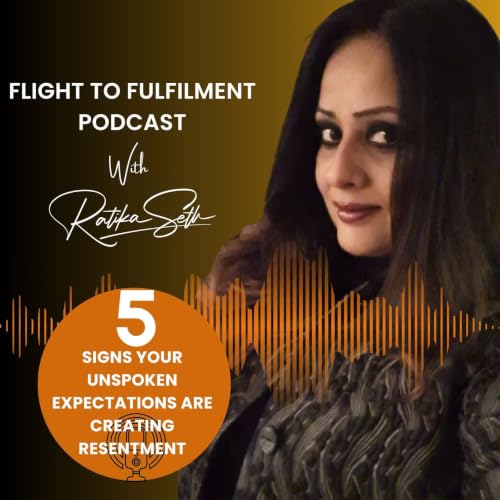
  • 5 Signs Your Unspoken Expectations Are Creating Resentment
    Oct 16 2026

    Send us Fan Mail

    Have you ever felt deeply disappointed by someone for something they didn’t do, even though you never actually told them you wanted them to do it?

    You expected your partner to notice you were overwhelmed. You thought your friend would check in because she knew you were having a difficult week. You hoped your family would realise you needed support without you having to ask.

    And when they didn’t, the hurt became bigger than the moment itself.

    You didn’t just think, “They didn’t notice.” You thought, “If I really mattered to them, they would have known.”

    This is where unspoken expectations can quietly turn into resentment. We create an expectation in our mind, assume the other person should understand it, and then feel hurt when they fail to meet something they may not even know we needed.

    Hello beautiful soul,

    Welcome back to another episode of the Flight to Fulfillment Podcast, where we explore emotional awareness, self-worth, relationships and the patterns that quietly shape the way we experience our lives.

    I’m your host, Ratika Seth, Life Enhancement Coach and founder of the Freedom Divas Hub, a community where women reconnect with themselves, rebuild self-trust and create lives rooted in freedom, self-respect and conscious choice.

    Now, having expectations in relationships is not unhealthy. We should expect honesty, respect, effort and reciprocity from the people closest to us.

    But problems begin when our needs remain unspoken because we believe, “If they really know me, I shouldn’t have to tell them.”

    This becomes especially painful when you are naturally someone who anticipates other people’s needs. You remember the little things. You notice when somebody’s mood changes. You check in without being asked. You step in when someone is struggling.

    So when people don’t instinctively do the same for you, it can easily feel like they don’t care as much as you do.

    But there is an important difference between someone not caring and someone not knowing what you need.

    People don’t always notice, communicate or express love in the same way. And expecting someone to read your needs can unintentionally turn a relationship into a test they don’t even know they are taking.

    So today, we’re exploring 5 signs your unspoken expectations may be creating resentment in your relationships — and how clearer communication can help you understand whether someone genuinely isn’t showing up for you, or simply doesn’t know what you’ve been waiting for.

    More Power To All!

    Follow me on
    Instagram
    Facebook
    Youtube
    LinkedIn
    For any information, write to me on connect@gratitudeconcepts.com
    To know more, visit my website www.ratikaseth.com

    Much Gratitude!
    Ratika Seth


    Mostra di più Mostra meno
    11 min
  • 5 Signs You Have the Kind of Confidence No One Can Take Away
    Oct 14 2026

    Send us Fan Mail

    Have you ever noticed that the most confident woman in the room is not always the one speaking the loudest?

    She may not talk about everything she has achieved. She doesn’t immediately defend herself when somebody disagrees with her. She can hear another opinion without questioning everything she knows about herself, and she doesn’t seem to need constant reassurance that she belongs.

    There is a certain calmness about her.

    Because perhaps real confidence isn’t walking into a room believing everyone will like you. It is walking into the room knowing you will still be okay if they don’t.

    We often associate confidence with achievement, appearance, success, recognition or being admired. And of course, all of these can make us feel good about ourselves.

    But there is another kind of confidence that doesn’t come from applause, promotions, followers, compliments or even the people who love you.

    It comes from being able to quietly say, “I know who I am, even when nobody is confirming it for me.”

    Hello beautiful soul,

    Welcome back to another honest and deeply reflective episode of the Flight to Fulfillment Podcast, where we explore emotional awareness, self-worth, relationships, identity, and the hidden patterns that quietly shape the way we experience our lives.

    I’m your host, Ratika Seth, Life Enhancement Coach and founder of the Freedom Divas Hub, a community where women reconnect with themselves, rebuild self-trust and create lives rooted in freedom, self-respect and conscious choice.

    Today, I want to talk about a different kind of confidence. Not the confidence that makes you the loudest voice in the room, but the confidence that makes you comfortable even when you aren’t.

    Quiet confidence can look surprisingly ordinary.

    It is making a decision without immediately calling three people to ask whether you made the right one. It is being able to say, “I don’t know,” without feeling less intelligent. It is receiving criticism without allowing one person’s opinion to erase everything you know about yourself.

    It is walking into a room with women who are more successful, beautiful or accomplished than you and being able to admire them without using their strengths as evidence of your inadequacy.

    And perhaps one of its greatest signs is being able to say, “This is what feels right for me,” without needing everybody around you to agree.

    This doesn’t mean a confident woman never doubts herself or needs reassurance. She still asks for advice. She still gets nervous. She still has moments when criticism hurts.

    The difference is that other people’s opinions become information, not instructions about who she should be.

    And that kind of confidence isn’t created by one achievement or one breakthrough. It is built slowly, through the small moments when you choose to trust yourself, keep your word to yourself, tolerate somebody’s disagreement and stop abandoning your own judgement simply to feel accepted.

    So today, we’re exploring 5 signs you’re developing the kind of quiet confidence nobody can give you — and, once it becomes yours, nobody can easily take away either.

    More Power To All!

    Follow me on
    Instagram
    Facebook
    Youtube
    LinkedIn
    For any information, write to me on connect@gratitudeconcepts.com
    To know more, visit my website www.ratikaseth.com

    Much Gratitude!
    Ratika Seth


    Mostra di più Mostra meno
    17 min
  • 5 Signs You Feel Guilty for Being Happy
    Oct 12 2026

    Send us Fan Mail

    Have you ever noticed that the moment life starts feeling good, a part of you becomes uncomfortable with it?

    You finally take that holiday, but instead of relaxing, your mind keeps returning to everything waiting for you at home. You spend money on something purely for yourself and immediately wonder whether you should have. Someone takes care of you for a change, and instead of simply enjoying it, you start thinking about how you can repay them. Or perhaps your life is going well while someone you love is struggling, and suddenly your happiness feels almost selfish.

    Nothing is actually wrong. But somehow, being completely okay doesn’t feel completely okay either.

    And perhaps that is because some of us have spent so many years being responsible, useful, productive and emotionally available to everyone else that struggle has become more familiar than ease.

    We tell ourselves, “Once this problem is over, I’ll relax.” But when the problem finally passes, instead of relaxing, the mind quietly searches for the next thing to worry about.

    “Shouldn’t I be doing something?”

    “Do I really need to spend this on myself?”

    “How can I enjoy myself when someone I love is having such a difficult time?”

    “What if something goes wrong after this?”

    And underneath all those questions may be an even deeper one:

    “Am I really allowed to feel this good?”

    Hello beautiful soul,

    Welcome back to another honest and deeply reflective episode of the Flight to Fulfillment Podcast, where we explore emotional awareness, self-worth, relationships, identity, and the hidden patterns that quietly shape the way we experience our lives.

    I’m your host, Ratika Seth, Life Enhancement Coach and founder of the Freedom Divas Hub, a community where women reconnect with themselves, rebuild self-trust, and create lives rooted in freedom, self-respect and conscious choice.

    Today, we’re talking about something we don’t usually associate with happiness: guilt.

    Guilt has an important purpose when we have genuinely hurt someone or acted against our values. But sometimes guilt appears even when we haven’t done anything wrong. We feel it because we rested instead of working, received instead of giving, chose ourselves instead of automatically choosing everyone else, or simply experienced joy while somebody else was going through a difficult time.

    For many women, this can come from years of quietly absorbing the idea that being a “good woman” means putting yourself last. You take care of everyone before yourself. You finish your responsibilities before you rest. You make sure everybody else is comfortable before asking what would make you comfortable.

    Over time, those ideas can become internal rules: rest must be earned, pleasure must be justified, receiving must be repaid and happiness must never come at the risk of appearing selfish.

    So when life finally becomes lighter, you may not know how to simply let it be light.

    You might even create worry in a peaceful moment because worry feels more familiar than having nothing to solve.

    And perhaps that is something worth looking at.

    Because emotional healing isn’t only about learning how to cope with difficult moments. It is also about increasing your capacity to stay present when life is good without guilt, fear or the need to spoil the moment.

    So today, we’re exploring 5 signs you may feel guilty for being happy, where that guilt may be coming from, and how to stop treating joy as something you have to earn before you are allowed to experience it.

    More Power To All!

    Follow me on
    Instagram
    Facebook
    Youtube
    LinkedIn
    For any information, write to me on connect@gratitudeconcepts.com
    To know more, visit my website www.ratikaseth.com

    Much Gratitude!
    Ratika Seth


    Mostra di più Mostra meno
    16 min
  • 5 Signs You’re Finally Meeting the Real You
    Oct 9 2026
    Send us Fan MailHave you ever started becoming more yourself, only to wonder why this new version of you feels so unfamiliar?You finally say what you actually think instead of automatically agreeing. You stop being available every time somebody needs you. You choose something because you like it, without first wondering what everyone else will think. You say no to something you would once have tolerated, or admit that the life, relationship or role you have been comfortable with for years no longer feels right.You expected these changes to feel freeing.Instead, sometimes they feel strangely uncomfortable.You hear yourself setting a boundary and think, “This isn’t like me.” You stop fixing someone else’s problem and feel guilty. You become more expressive and wonder whether you’re becoming difficult. You prioritise yourself for once and immediately question whether you’ve become selfish.And perhaps the strangest part is that sometimes you actually miss the old version of yourself, even though you remember how exhausted she was.But what if the discomfort doesn’t mean you’re becoming someone you’re not?What if you’ve simply practised being who everyone needed for so long that being yourself is the part that now feels unfamiliar?Today, we’re talking about why becoming more authentic can initially feel uncomfortable, why familiar doesn’t always mean true, and what happens when you finally begin discovering who you are underneath years of roles, expectations and adaptation.Hello beautiful soul,Welcome back to another honest and deeply reflective episode of the Flight to Fulfillment Podcast, where we explore emotional awareness, self-worth, relationships, identity, and the hidden patterns that quietly influence the women we become.I’m your host, Ratika Seth, Life Enhancement Coach and founder of the Freedom Divas Hub, a community where women reconnect with themselves, rebuild self-trust, and create lives rooted in freedom, self-respect and conscious choice.Today, I want to talk about a part of personal growth that we rarely hear about: sometimes becoming more authentic can make you feel less like yourself before it begins to feel natural.We often hear phrases like “just be yourself,” as though there is one perfectly formed authentic woman underneath everything else, waiting for us to finally uncover her.But after decades of living, loving, working, adjusting and taking responsibility, separating who you genuinely are from who you learned to be isn’t always that simple.Perhaps you’ve spent years being the responsible one. The woman who adjusts. The woman who keeps the peace. The woman everybody calls when something goes wrong. The woman who thinks about everybody else before making a decision. The woman who can handle almost anything without asking for much in return.After twenty or thirty years of practising those behaviours, they don’t feel like behaviours anymore.They feel like your personality.So naturally, when you begin behaving differently, something inside you says, “This isn’t me.”But perhaps that sentence deserves another question:“Is this really not me, or is this simply not the version of me I’m used to?”Because familiar and authentic are not always the same thing.Perhaps being agreeable feels natural because you’ve practised it thousands of times.Perhaps saying yes feels more like you because saying no still produces guilt.Perhaps being needed feels comfortable because you have spent years measuring your importance through how useful you are to other people.Perhaps staying quiet during conflict feels like your personality when, in reality, you simply became very skilled at protecting relationships from discomfort.None of this means the woman you have been was fake.That distinction matters.You may genuinely be caring, generous, responsible, compassionate and strong. Authenticity doesn’t require you to reject those beautiful qualities simply because they were also appreciated by other people.The question is whether somewhere along the way, those qualities became exaggerated into roles you no longer felt free to leave.Being caring became over-giving.Being responsible became carrying everyone.Being understanding became tolerating too much.Being strong became never allowing yourself to need support.Being peaceful became avoiding every difficult conversation.And perhaps personal growth is not about becoming the opposite woman.It is about discovering where the genuine quality ends and the survival, approval or adaptation pattern begins.That process can feel confusing.Because when you stop automatically playing a familiar role, there can be an empty space before you know what belongs there instead.You know you no longer want to say yes to everything, but you’re still learning when you genuinely want to say yes.You know you don’t want everyone else deciding what success should look like, but you haven’t completely discovered your own definition ...
    Mostra di più Mostra meno
    17 min
  • 5 Signs You’re Making Yourself Too Easy to Love
    Oct 7 2026
    Send us Fan MailHave you ever said, “It’s okay,” when a part of you was quietly hoping someone would notice that it really wasn’t?Someone cancels on you again, and you immediately tell them not to worry. Your partner says or does something that hurts you, but instead of expressing it, you convince yourself that bringing it up will only create unnecessary tension. You need reassurance, but you stop yourself from asking because you don’t want to appear needy. You’re already exhausted, yet when somebody asks for another favour, you hear yourself saying yes.And slowly, something interesting begins to happen. You become understanding before the other person has taken responsibility. You forgive before you have processed what hurt. You adjust before anyone has even considered meeting you halfway.From the outside, this can look like emotional maturity. You’re easy-going. Independent. Accommodating. You don’t create drama. You don’t ask for much.But underneath it may be a much more vulnerable belief: “If I don’t become too difficult, too emotional or too demanding, perhaps people will find it easier to keep loving me.”And that raises an important question: What happens when being easy to love requires you to hide the parts of yourself that most need to be loved?Today, we’re talking about why some women learn to make themselves emotionally convenient in relationships, how being “low-maintenance” can sometimes hide a fear of rejection, and why healthy love should have room for your needs, boundaries and difficult emotions too.Hello beautiful soul,Welcome back to another honest and deeply reflective episode of the Flight to Fulfillment Podcast, where we explore emotional awareness, self-worth, relationships, identity, and the hidden patterns that quietly influence the way we experience our lives.I’m your host, Ratika Seth, Life Enhancement Coach and founder of the Freedom Divas Hub, a community where women reconnect with themselves, rebuild self-trust, and create lives rooted in freedom, self-respect and conscious choice.Today, I want to talk about a pattern that can be difficult to recognise because, on the surface, many of the behaviours associated with it look like wonderful qualities.You’re understanding. You’re considerate. You give people space. You don’t make everything about yourself. You know how to compromise. You’re independent enough to handle most things on your own.There is nothing wrong with any of that.But there is a difference between being an understanding woman and believing you must always be understanding in order to remain lovable.There is a difference between being independent and feeling uncomfortable whenever you need somebody.There is a difference between choosing your battles and repeatedly swallowing your feelings because you’re afraid that expressing them will make somebody pull away.And there is a difference between being easy-going and slowly disappearing inside your relationships.Sometimes we become so proud of being “low-maintenance” that we never stop to ask what maintaining that identity is costing us.Perhaps somewhere along the way, you learned that certain versions of you were easier for people to love.The happy version of you.The helpful version.The successful version.The woman who doesn’t complain.The woman who forgives quickly.The woman who understands everybody’s circumstances.The woman who says, “Don’t worry about me. I’ll manage.”And maybe you became so good at being that woman that people genuinely began believing you didn’t need much.But what about the woman underneath her?The woman who sometimes wants somebody to notice that she’s tired without having to announce it.The woman who wants to say, “Actually, that hurt me,” without worrying that she’ll be called dramatic.The woman who wants reassurance occasionally.The woman who wants someone else to adjust for her.The woman who doesn’t always want to be the mature one.Does that version of you feel equally deserving of love?Because sometimes the real fear isn’t, “What if I become difficult?”The deeper fear is, “What if I become difficult and they stop choosing me?”And once that fear enters a relationship, you can begin editing yourself without even realising it.You soften the boundary before saying it. You rehearse how to express a need so carefully that the need almost disappears from the conversation. You add, “But it’s completely okay if you can’t,” before the other person has even responded. You apologise for being upset. You ask for reassurance and then immediately feel embarrassed for needing it.Eventually, you can become incredibly easy to be around while feeling increasingly unseen.And perhaps that is one of the loneliest relationship patterns of all.Because the other person may genuinely believe they know you.But they know the version of you that you have made safest for them to experience.They know what you give.They know what...
    Mostra di più Mostra meno
    20 min
  • 5 Signs You’re Afraid of Being Misunderstood
    Oct 5 2026
    Send us Fan MailHave you ever made a decision that felt completely right for you, only to start questioning it the moment somebody else didn’t understand it?You finally say no to something you have tolerated for years, and someone calls you selfish. You step away from a relationship that was emotionally exhausting, but because everyone else only saw the good parts, they wonder why you couldn’t simply make it work. You become less available, more protective of your time or more selective about where you give your energy, and suddenly people start saying, “You’ve changed.”And maybe you have changed.But instead of allowing that change to belong to you, you find yourself desperately trying to make everybody understand why it happened.You explain the history. You give more context. You justify your decision. You tell them things you hadn’t even planned to share because somewhere inside, you believe that if they knew the whole story, surely they would understand.But sometimes they still don’t.And that can be incredibly uncomfortable, because perhaps what you were really looking for wasn’t understanding. You were looking for permission to feel okay about a choice you had already made.Today, we’re talking about something that becomes increasingly important as we develop stronger boundaries, greater self-worth and a clearer sense of who we are: learning to let somebody misunderstand you without immediately questioning yourself.Hello beautiful soul,Welcome back to another honest and deeply reflective episode of the Flight to Fulfillment Podcast, where we explore emotional awareness, self-worth, relationships, identity, and the hidden patterns that quietly influence the way we experience our lives.I’m your host, Ratika Seth, Life Enhancement Coach and founder of the Freedom Divas Hub, a community where women reconnect with themselves, rebuild self-trust, and create lives rooted in freedom, self-respect and conscious choice.Today, I want to talk about something that I think becomes particularly difficult when you have spent years being known as the understanding one, the responsible one, the dependable one or simply the “good” person in other people’s lives.What happens when somebody suddenly sees you differently?What happens when someone thinks your boundary is selfish?When your family doesn’t understand the career choice you are making?When a friend interprets your distance as arrogance when you know you are simply protecting your peace?Or when somebody tells a version of a situation that makes you look like the difficult one, while you know there is an entire side of the story they haven’t experienced?For many women, the instinct is immediate: “I need to explain.”And there is nothing wrong with explaining yourself. Healthy relationships require communication. Sometimes people genuinely don’t have enough information. Sometimes we have communicated poorly. Sometimes we need to clarify something, apologise or take responsibility for the way our behaviour affected another person.But there comes a point where explaining stops being communication and starts becoming a search for approval.You’re no longer saying, “I want you to understand where I’m coming from.”You’re saying, “I need you to agree that I had the right to make this choice.”And those are two very different things.Perhaps that is why being misunderstood can feel so emotionally unsettling. It isn’t always the misunderstanding itself that hurts. Sometimes it is what we believe the misunderstanding now says about us.“What if they think I’m selfish?”“What if they think I’m difficult?”“What if they think I’m a bad person?”“What if they tell somebody else?”And before you realise it, you are no longer simply living your life. You are trying to manage the version of you that exists inside everybody else’s mind.That is an exhausting job because it is also an impossible one.People will understand you through their own experiences, expectations, beliefs and relationship with you. Two people can witness the same decision and interpret it completely differently.You can communicate with kindness. You can clarify important facts. You can listen when someone gives you genuine feedback. You can apologise when you have caused harm.But after all of that, another person may still not understand you the way you want to be understood.And perhaps emotional maturity is not reaching a point where you stop caring what anybody thinks.Perhaps it is reaching a point where you can care what somebody thinks without automatically allowing their opinion to decide what you think about yourself.Because being misunderstood and being wrong are not the same thing.Someone can disagree with your boundary without making the boundary unhealthy.Someone can dislike your decision without making the decision selfish.Someone can be disappointed in you without you having done something wrong.And sometimes somebody can have an ...
    Mostra di più Mostra meno
    18 min
  • 5 Signs You’ve Become Who Everyone Expected You to Be
    Oct 2 2026
    Send us Fan MailHave you ever looked at the life you’ve built and quietly wondered, “How much of this did I actually choose?”You may have the career you were encouraged to pursue, the responsibilities you were taught to carry, the relationships you worked hard to maintain and perhaps even the lifestyle everyone around you considers successful. You became the dependable daughter, the understanding wife, the responsible mother, the accomplished professional, the woman who adjusts, manages and rarely lets anyone down.And from the outside, there may be absolutely nothing wrong with your life.But somewhere inside, something doesn’t quite feel like yours.Maybe you can’t even explain what is missing because you don’t necessarily want to walk away from everything you’ve created. You simply find yourself wondering who you would have been if you hadn’t spent so much of your life becoming the woman other people needed, admired or approved of.And perhaps that is one of the hardest identity questions to ask: “Is this really who I am, or is this who I became because this version of me was loved, accepted and appreciated?”Today, we’re talking about the identity we sometimes build around other people’s expectations, how easily approval can become confused with authenticity, and what happens when the woman everybody knows no longer completely feels like the woman you know yourself to be.Hello beautiful soul,Welcome back to another honest and deeply reflective episode of the Flight to Fulfillment Podcast, where we explore emotional awareness, self-worth, relationships, identity, and the hidden patterns that quietly influence the women we become.I’m your host, Ratika Seth, Life Enhancement Coach and founder of the Freedom Divas Hub, a community where women reconnect with themselves, rebuild self-trust, and create lives rooted in freedom, self-respect and conscious choice.Today, I want to talk about something that can be surprisingly difficult to recognise because it often begins before we are old enough to consciously choose who we want to become.Long before we develop a clear identity, we begin receiving messages about the kind of person we are supposed to be.Be a good girl. Be responsible. Don’t answer back. Make us proud. Think about what people will say. Don’t be difficult. Learn to adjust. Choose something sensible. Be strong. Keep everybody together.And often, nobody is deliberately trying to take our identity away from us. Families pass down values. Cultures give us a sense of belonging. Parents guide us according to what they believe will protect us or help us build a good life. Many of those values may become beautiful and meaningful parts of who we eventually choose to be.But there is another part of this process that we don’t talk about enough.As children and young adults, we also begin noticing which versions of us receive approval.Perhaps you were praised for being mature, so you learned not to need too much. Maybe you were appreciated for being agreeable, so disagreement began to feel uncomfortable. Perhaps academic or professional success brought recognition, so achievement slowly became part of how you measured your worth.Or maybe everyone admired how strong you were, and eventually you became so identified with being “the strong one” that you forgot strength was supposed to be something you had, not something you had to perform every day.And slowly, without consciously deciding to, you begin building an identity around what works.You become responsible because responsible women are appreciated. You become accommodating because accommodating women create less conflict. You become successful because achievement makes people proud. You become the person everybody can rely on because being needed makes you feel valuable.And none of those qualities is inherently unhealthy.The question is whether they are still choices or whether they have become requirements for feeling worthy.There is a difference between being responsible because responsibility reflects your values and believing you must carry everybody because that is who you are.There is a difference between being kind because kindness matters to you and constantly agreeing because somebody’s disappointment makes you anxious.And there is a difference between wanting success and spending your entire life chasing a definition of success that you inherited from somebody else.Sometimes we live with these identities for so long that we stop questioning them.“I’m just the person who takes care of everyone.”“I’ve always been the strong one.”“I’m not someone who needs help.”“I’ve always wanted this life.”But have you?Or did you learn to want certain things because wanting them made sense in the world you grew up in?That can be an uncomfortable question, especially when the life you’re questioning is one you have worked incredibly hard to build.And perhaps this is why identity questions often become ...
    Mostra di più Mostra meno
    22 min