

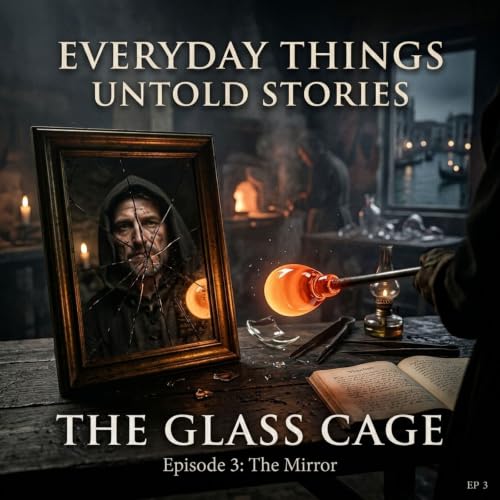
EPISODE 3: THE GLASS CAGE
Impossibile aggiungere al carrello
Rimozione dalla Lista desideri non riuscita.
Non è stato possibile aggiungere il titolo alla Libreria
Non è stato possibile seguire il Podcast
Esecuzione del comando Non seguire più non riuscita

EPISODE 3: THE GLASS CAGE
-
Letto da:
-
Di:
Long before phone screens captured our gaze, a small island in Venice guarded the world’s most dangerous luxury—a secret so valuable that revealing it meant execution by royal assassins. Discover how the glass mirror went from a toxic, murderous Venetian monopoly to a tool that transformed human psychology and modern self-identity.
We look into them every single day to brush our teeth, fix our hair, or check our reflection, but for centuries, owning a clear glass mirror was a privilege reserved exclusively for kings, popes, and the ultra-wealthy. In the third episode of Everyday Things Untold Stories, host Jonathan takes you into dark Venetian lagoons, toxic artisan workshops, and royal palaces to uncover the high-stakes history behind the mirror.
What You’ll Discover in Episode 3:
- The Murano Lockdown: How Venice forced its master glassmakers onto a isolated island, turning mirror-making into a state secret enforced by threat of execution.
- Industrial Espionage & Royal Assassins: The covert plot by French spies to smuggle Venetian craftsmen out of Italy to build the legendary Hall of Mirrors at Versailles—and the lethal consequences that followed.
- The Silver Revolution of 1835: How German chemist Justus von Liebig developed a liquid silver process that shattered the royal monopoly and brought affordable mirrors into every home.
- The Mind in the Glass: How the sudden ability to see one's own clear reflection shifted human self-awareness, art, and modern vanity forever.
Subscribe to Everyday Things Untold Stories on Riverside, Apple Podcasts, or Spotify to listen now.
Mirror history, History of the mirror, Murano glassmakers, Hall of Mirrors Versailles, Everyday Things Untold Stories, History Podcast, Invention of glass mirrors, History Daily style, Narrative History, Everyday Objects, Jonathan podcast.