

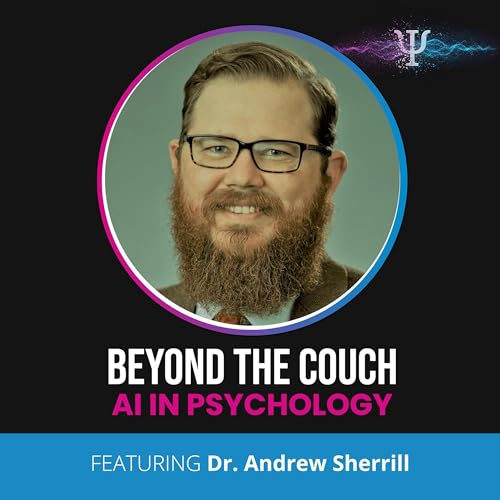
Dirty, Dull, and Dangerous: AI, Exposure Therapy, and the Future of Clinical Practice with Dr. Andrew Sherrill
Impossibile aggiungere al carrello
Rimozione dalla Lista desideri non riuscita.
Non è stato possibile aggiungere il titolo alla Libreria
Non è stato possibile seguire il Podcast
Esecuzione del comando Non seguire più non riuscita

Dirty, Dull, and Dangerous: AI, Exposure Therapy, and the Future of Clinical Practice with Dr. Andrew Sherrill
-
Letto da:
-
Di:
A proposito di questo titolo
In this episode, Dr. Ernest Wayde speaks with Dr. Andrew Sherrill, an Emory psychologist specializing in anxiety, PTSD, and OCD, to explore how AI can support—not replace—clinicians. Dr. Sherrill explains how automation can take on the dirty, dull, and dangerous tasks that bog down therapists, freeing them to focus on empathy and evidence-based care.
Drawing from exposure therapy, he offers a powerful parallel for psychologists learning to face their own “AI anxiety.” By approaching new technology the same way we help clients face fears—gradually, with curiosity and compassion—clinicians can engage with AI ethically, creatively, and confidently.
Takeaways:
- AI should replace tasks, not therapists.
- Exposure therapy principles can reduce technophobia and build comfort with AI.
- Stay in the loop: always validate and supervise AI outputs.
- Use AI creatively for safe exposure stimuli (VR, AR, LLMs), but maintain clinical oversight.
- Avoidance fuels anxiety—curiosity builds competence.
Guest Links:
Dr. Andrew M. Sherrill | evidencefirstsolutions.com
AI studies with clinicians registry: http://bit.ly/TEAMMAIT_Study