• Jelmer Vos, *Coffee and Colonialism in Angola 1820-1960*. Suffolk, UK: James Currey, 2025.
    Oct 13 2026

    This book delivers a compelling reexamination of Angola's colonial past and labor systems, focusing on how coffee cultivation—the nation's premier export—shaped one of Africa's most enduring commercial zones south of the Sahara. In the post-World War II era, Angola ascended to become a global coffee powerhouse, supplying robusta varieties that proved indispensable to mainstream coffee blends and instant coffee products consumed by millions worldwide. Yet beneath every cup of Angolan robusta coffee lies an uncomfortable reality: a legacy of territorial seizure and coerced labor.

    This scholarly work probes the systematic subjugation of African workers laboring on European-owned coffee estates throughout Angola, where employment conditions frequently mirrored slavery's brutality. The study traces Angola's coffee industry origins to the early 1800s, demonstrating how the cessation of the transatlantic slave trade catalyzed the rise of an export-driven commercial framework.

    As international coffee demand surged, Portuguese colonial authorities dismantled a thriving indigenous agricultural economy, replacing it with a European settler-dominated structure that, despite generating substantial output, remained fundamentally exploitative and inefficient. Drawing on exhaustive primary source documentation, this investigation illuminates the intricate relationships binding colonialism, employment practices, land ownership, and international commerce, exposing the structural forces perpetuating one of the continent's most resilient commodity markets.

    Mostra di più Mostra meno
    1 ora e 43 min
  • Lu Ann Homza, *The Cambridge Companion to the Spanish Inquisition*. New York: Cambridge University Press, 2026.
    Sep 16 2026

    Spanning from its establishment in 1478 to its final dissolution in 1834, the Spanish Inquisition stands as one of history's most infamous institutions, widely recognized for fueling religious and racial persecution. Yet the Spaniards themselves did not create its legal structure or its core mission—the reconciliation of heretics with the Catholic Church. This authoritative scholarly work brings together leading international researchers who critically examine the institution's origins, legal mechanisms, victims, reach, and limitations across different time periods and geographic areas. Grounded in cutting-edge scholarship and extensive archival research, the chapters trace the medieval foundations that preceded the Inquisition, chronicle its turbulent establishment and ultimate decline, and explore how inquisitors shifted their focus throughout the centuries. The book also investigates the role of physical spaces in shaping investigative and prosecutorial practices, while uncovering the inquisitors' deep preoccupation with social rank and legal entitlements. Additionally, the contributors expose the controversies that threatened to compromise both inquisitors and their networks. Ultimately, this volume delivers a nuanced, historically grounded perspective on the Spanish Inquisition as a pivotal force in European history.

    Mostra di più Mostra meno
    1 ora e 7 min
  • Ellinor Morack, *The Dowry of the State?: The Politics of Abandoned Property and the Population Exchange in Turkey, 1921-1945*. Bamberg, Germany: University of Bamberg Press, 2017.
    Sep 1 2026

    In 1922, the Greeks and the remaining Armenians in what is now Turkey were forced to leave their homeland, and the properties they left behind were termed "abandoned property" (emval-i metruke). This legal designation implied that the absent owners still held their property rights and were represented by the state. However, in practice, their homes, lands, and belongings were confiscated. These assets were repurposed to satisfy the immediate housing needs of the remaining population, distributed among the wealthy and powerful, and sold at public auctions. Initially, only a small portion of the abandoned property was under the control of the new Ankara government, which was eager to use it as a source of revenue for its strained finances. Before this could be fully realized, the government encountered various forms of both active and passive resistance: homeless individuals and refugees took over the "abandoned" properties, while members of parliament were initially hesitant to pass laws that would legitimize government control over these assets. Beginning in 1924, the compensation for incoming migrants from Greece (the so-called exchangees) threatened the state's financial stability and created friction between the newcomers and the existing residents. By exploring these aspects of the "abandoned property" situation, this book offers important insights into the socio-economic and political history of early republican Turkey.


    Mostra di più Mostra meno
    1 ora e 27 min
  • Abboud Zeitoune and Abdul Mesih Bar-Abraham, *Senharib Balley and the Assyrian National Movement: Complete Translated and Edited Writings (1909-1969)*. Self-Published by the Editors. Weisbaden and Augsburg, Germany: Lulu Self-Publishing Platform, 2025.
    Aug 31 2026

    The revival and unity movement led by Naum Faiq gave rise to numerous influential individuals who greatly shaped the young Assyrian national movement through their literary works. Among Naum Faiq's long-time collaborators was Senharib Balley (1878-1971), who became a notable champion for the national cause, actively promoting it through his writings.

    In his early years, Balley's family endured tragedy during the 1895 massacres in Amid (Diyarbakir), resulting in the deaths of his father and one brother, while he himself suffered serious injuries. In his hometown, he quickly rose to prominence as a key figure in the Intibah movement at the turn of the 20th century, playing an essential role in its growth across Upper Mesopotamia.

    In the United States, Senharib Balley's name has become closely associated with the founding of various organizations, including the Assyrian American National Federation, which he co-founded in 1913. Even a few years before his death, he continued to share his insights on current Assyrian issues through different magazines.

    Balley's extensive writings and correspondence provide readers with a window into the intellectual discussions that took place during a difficult fifty-year span for our people. Yet, in many respects, these works inspire a sense of bravery and assurance regarding national identity and the necessity of safeguarding it.

    Mostra di più Mostra meno
    1 ora e 29 min
  • Katerina Sergatskova, *Goodbye, ISIS: What Remains is Future*. Kate Tsurkan, trans. Boston: Cherry Orchard Books, 2026.
    Aug 30 2026

    What drove over 15,000 people from the former Soviet bloc to enlist in ISIS, making up nearly a third of the group's foreign fighters?

    In this insightful study, renowned journalist Katerina Sergatskova explores one of the most overlooked facets of global terrorism. Drawing on years of investigative journalism from Georgia, Turkey, Iraq, and Ukraine, she reveals the personal stories of ISIS recruits, their families, and even those falsely accused of ties to the organization.

    Through engaging interviews and groundbreaking reporting, Sergatskova highlights how post-Soviet fighters shaped ISIS, the group's growth into the Caucasus, and the unexpected role Ukraine has played as a sanctuary for some of its veterans.

    Alongside this narrative, she connects modern extremist networks to historical figures like Dzhokhar Dudayev and Shamil Basayev, illustrating how past conflicts have laid the groundwork for ISIS's reach.

    This examination is not only deeply human but also carries significant geopolitical weight, challenging common perceptions about terrorism, migration, and security in the post-Soviet context — underscoring the necessity of grasping these dynamics for global stability.

    Mostra di più Mostra meno
    1 ora e 10 min
  • Khatchig Mouradian and Hans-Lukas Kieser, *The I.B. Tauris Handbook of the Late Ottoman Empire: History and Legacy*. London: Bloomsbury, 2025.
    Aug 25 2026

    Bringing together insights from fifty distinguished and emerging scholars, *The I.B. Tauris Handbook of the Late Ottoman Empire* delves into the academic discourse that has developed in recent decades regarding the Late Ottoman period and its enduring impacts. The handbook is structured into seven chronological sections, comprising thirty-four chapters and eight additional essays, guiding readers from the late eighteenth century through to the early twenty-first century. The initial two sections concentrate on the Ottoman Empire before the Young Turk Revolution of 1908. Section III examines diachronic themes such as Arab and Kurdish nationalism, missionaries, and Zionism. Sections IV and V focus on the post-1908 era, characterized by the emergence of the Young Turks (notably the Committee of Union and Progress), the Great War, and considerable violence. Section VI addresses the treaty system established after the Great War and its long-lasting effects, while Section VII explores the post-Ottoman realities that are closely linked to the late Ottoman legacy. This volume also features two bibliographies, a timeline of political events, and a reflective afterword on the current state of the field. By analyzing the scholarship and its interdisciplinary aspects, and highlighting mass violence as a crucial element in the region's history, this handbook serves as an invaluable resource for researchers, diplomats, students, and general readers.


    Mostra di più Mostra meno
    1 ora e 39 min
  • Steven Kaplan, *The Ethiopians: Lost Civilizations*. London: Reaktion Books, 2025.
    Aug 21 2026

    Ethiopia has captivated observers since ancient times. This book provides a novel perspective on Ethiopian history up to the year 1500, beginning with the Aksumite civilization at the dawn of the Common Era. It revisits well-known stories such as the narrative of the Queen of Sheba, scrutinizes the ascent and decline of Aksum, investigates the role of Muslims and Islam in Ethiopian society, and underscores the architectural wonders of Lalibela’s rock-hewn churches. By concentrating on the Golden Age of the early Solomonic rulers, the book integrates the latest research to deliver a clearer and more nuanced understanding of this rich history than ever before.


    Mostra di più Mostra meno
    2 ore e 12 min
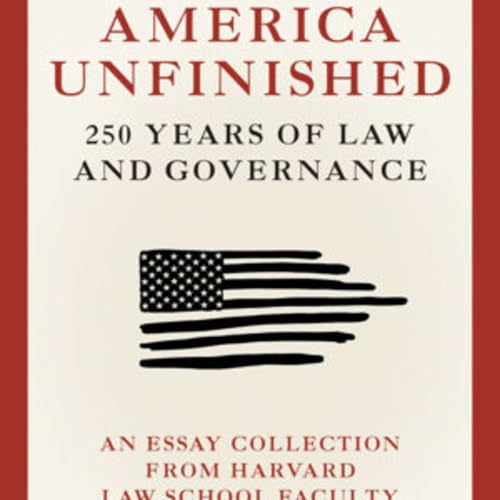
  • Alexandra Natapoff and Guy-Uriel Charles, *America Unfinished: 250 Years of Law and Governance: An Essay Collection from Harvard Law School Faculty*. Cambridge, MA: MIT (Massachusetts Institute of Technology) Press, 2026.
    Aug 19 2026

    This year commemorates the 250th anniversary of the Declaration of Independence, a time when the United States is grappling with profound challenges to its legal structure, governance systems, and civic values. The foundational principles of pluralism are being questioned. The nation is witnessing deep political divides, worries that the economic framework is failing to provide equal opportunities, and a technological upheaval that could transform our understanding of what it means to be human. This anthology brings together more than 50 legal scholars from the Harvard Law School faculty to explore this crucial moment in American law and governance. Edited by Alexandra Natapoff and Guy-Uriel Charles, this collection focuses on the audacious experiment in American legal governance that began in 1776, a topic that remains hotly contested after 250 years. Some essays examine the recent surge in executive power, particularly its alarming willingness to resort to violence, both domestically and internationally. Other essays probe the persistent divides among workers, consumers, and markets, posing difficult questions about democratic accountability in our market-driven economy. Furthermore, some contributors reflect on the future of our knowledge and governance institutions as they navigate the challenges posed by technological and informational disruptions. Engaging and thought-provoking, this collection not only enriches essential discussions crucial for a thriving democracy at this pivotal moment but also for the future.

    Mostra di più Mostra meno
    56 min