Episodi

  • What If Tamara Weren't Here? | The Reality of Growing Older Abroad
    Nov 15 2026

    I've been thinking about something recently. Something that, to be perfectly frank, I haven't really wanted to think about too deeply.

    What if Tamara wasn't here?

    Don't worry, she's absolutely fine. But as I prepare to undergo an operation to remove my right kidney here in Banja Luka, Bosnia and Herzegovina, I've found myself reflecting on just how much I depend on her.

    I've lived in Bosnia since 1998. It's my home. I know the people, the culture, the village and the way of life. But when it comes to navigating a healthcare system in a language that isn't my own, things become rather different.

    And that's made me wonder how I would have managed these past few weeks without Tamara beside me.

    In this rather personal episode of An Englishman in the Balkans, I talk about the realities of growing older in a country other than the one you were born in.

    Not just healthcare, hospital appointments, language barriers and paperwork, but something perhaps much more important: having someone you trust beside you when life becomes a little more complicated.

    I also reflect on something we don't always acknowledge enough. The enormous responsibility carried by the person supporting someone through a serious medical situation.

    This isn't a criticism of healthcare in Bosnia. Quite the opposite. My experience has been positive, and I have every confidence in the medical care I'm receiving.

    It's simply a reflection on independence, companionship and what really makes somewhere feel like home.

    And I'd love to hear your thoughts.

    If you're living abroad, have you ever had to navigate a serious medical situation? Did you have someone to help, or did you find your own way through it?

    Because perhaps one of the most important things about growing older isn't where we choose to live, but who we have around us when we need a little help.

    Thanks, as always, for listening from my little corner of Bosnia and Herzegovina.

    Vidimo se opet.

    An Englishman in the Balkans is a weekly podcast about the people, places and everyday life of Bosnia and Herzegovina, told by David Bailey, who has lived here for more than 25 years. New episodes arrive every Tuesday.

    Thanks for listening.

    If you've enjoyed this episode, the best thing you can do is share it with someone you think might enjoy it too.

    I'd also love to hear from you.

    If you've got a question about life in Bosnia and Herzegovina, a comment about something you've heard on the podcast, or simply want to say hello, you can contact me directly on WhatsApp.

    And because this is an audio podcast, I'd particularly love to receive your voice notes. It's always nice to hear the voices of the people listening.

    WhatsApp: +387 66 657916

    You can find every episode of An Englishman in the Balkans, along with more about my life here, at:

    https://anenglishmaninthebalkans.com

    I also write a free weekly newsletter called The Sunday Edition, sharing stories, observations and a little recap of my week here in Bosnia.

    If you're not already receiving it, you're very welcome to join me:

    https://anenglishmaninthebalkanspodcast.substack.com

    Already a subscriber?

    If you're finding that you're receiving too many emails from me, there's no need to unsubscribe completely.

    You can use the unsubscribe or preferences link at the bottom of any newsletter email to choose which sections you'd like to receive.

    For example, you can keep The Sunday Edition while switching off emails from other sections that interest you less.

    I'd much rather you received the things you genuinely enjoy than felt I was filling up your inbox.

    Thanks again for being here, and I hope to hear from you soon.

    Mostra di più Mostra meno
    12 min
  • Growing Up in Bosnia: A 13-Year-Old's Honest View of His Country
    Nov 7 2026

    What is it really like to grow up in Bosnia and Herzegovina today? And when you're just 13 years old, how do you imagine your country's future, and your own?

    In this episode of An Englishman in the Balkans, I introduce you to Anes, a thoughtful and outspoken 13-year-old from near Zenica in central Bosnia.

    I've spent more than 25 years living in Bosnia and Herzegovina, listening to people's stories and trying to understand this fascinating country. But this conversation offered something different: a view of Bosnia through the eyes of someone who has only ever known the country as it is today.

    Anes loves football, history, his village and the freedom of growing up in the Bosnian countryside.

    He's also passionate about his country's traditions. We talk about folklore, sevdalinka music and why he was so disappointed to hear a traditional Bosnian song reworked using artificial intelligence.

    And although he's growing up in a world of AI and online gaming, he has some surprisingly thoughtful things to say about technology, particularly why he doesn't automatically trust the answers it gives him.

    But our conversation also takes a more serious turn.

    Despite his affection for Bosnia, Anes already imagines that he might eventually leave to find better opportunities abroad. He talks openly about wages, the cost of living and his concerns about the country's future.

    There's something particularly striking about hearing those thoughts from someone so young.

    In this episode, you'll hear about:

    • What Anes enjoys most about growing up in Bosnia and Herzegovina
    • Football, friends and the freedom of village life
    • Why traditional Bosnian music and folklore still matter
    • His reaction to AI-generated versions of sevdalinka
    • How he uses ChatGPT — and why he questions its answers
    • The Bosnia he'd love to show a young visitor from Britain
    • Why he might consider living and working in Germany
    • How online gaming helped him develop his remarkable English

    One of the things that stayed with me from our conversation was the contrast between Anes's love for his country and his uncertainty about whether he'll build his adult life here.

    As he puts it:

    "We've got the culture. We've got the land, the nature. We've got the water. We got everything, but we just don't have the politics."

    This isn't an expert discussion about Bosnia's economy or political system. It's one young person's personal perspective, expressed in his own words.

    And perhaps that's why it's worth hearing.

    My thanks to Anes and his family for making this conversation possible.

    I'd love to hear what you think.

    If you're from Bosnia and Herzegovina, do you recognise some of Anes's hopes and concerns? And if you grew up here but now live abroad, how different was your experience?

    You can find more stories, conversations and reflections on everyday life in Bosnia and Herzegovina at:

    https://anenglishmaninthebalkans.com

    An Englishman in the Balkans — stories of people, places and everyday life from a British resident of Bosnia and Herzegovina.

    An Englishman in the Balkans is a weekly podcast about the people, places and everyday life of Bosnia and Herzegovina, told by David Bailey, who has lived here for more than 25 years. New episodes arrive every Tuesday.

    Thanks for listening. If this episode was worth your time, the best thing you can do is pass it on to someone who'd enjoy it.

    Every episode, and more about my life here, is at anenglishmaninthebalkans.com.

    I also write a short, free weekly newsletter, The Sunday Edition, a recap of my week in Bosnia. If you're not already receiving it, you can join here:

    https://anenglishmaninthebalkanspodcast.substack.com

    Already a subscriber?

    If you don’t want to receive everything I publish, you don’t have to unsubscribe completely.

    Use the unsubscribe or preferences link at the bottom of any email and you can choose which of my newsletters and sections you’d like to receive.

    That way, you can keep the Sunday Edition, for example, while switching off emails from sections you’re less interested in.

    I’d much rather you received only the things you enjoy than felt I was filling up your inbox.

    Mostra di più Mostra meno
    14 min
  • The 1969 Banja Luka Earthquake: A Survivor Remembers
    Nov 1 2026
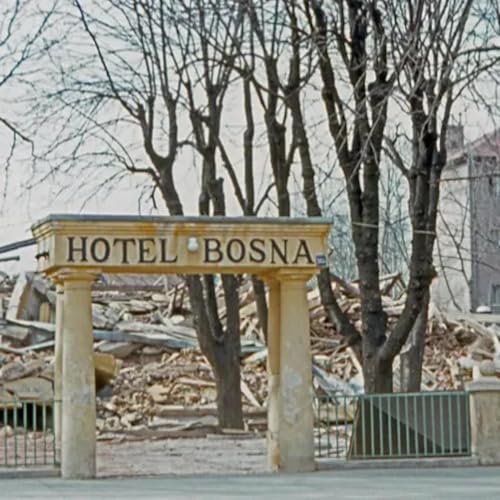
    On 27 October 1969, a devastating earthquake struck Banja Luka, in what was then Yugoslavia and is now Bosnia and Herzegovina. Buildings collapsed, families fled their homes, and the city was changed forever.But what was it actually like to be there?In this deeply personal episode of An Englishman in the Balkans, I share an extraordinary eyewitness account from my mother-in-law, Hasna, who was just 18 years old when the earthquake struck.She remembers the strange, almost unnatural silence before the shaking began. The terrifying moment when the street seemed to move beneath her feet. The dust, the screams, the confusion, and the desperate search for family and friends.She also remembers what happened afterwards.Families sleeping outdoors, the arrival of humanitarian aid, makeshift accommodation, and the enormous task of rebuilding a shattered city.But perhaps the most moving part of Hasna's story isn't about the earthquake at all.It's about the Banja Luka she remembers before 1969.A city of small neighbourhoods, houses with gardens, and neighbours who always had time to invite you in for coffee. A warmth and sense of community that she feels has gradually disappeared as the city has grown and changed.This is more than the story of an earthquake. It's a personal record of a city, its people, and a way of life that is slowly passing from living memory.Why I'm sharing this story againI originally recorded this conversation two years ago, but I've returned to it for the 57th anniversary of the earthquake.As the people who experienced that day grow older, preserving their memories becomes increasingly important.Hasna's story deserves to be heard, not simply as a piece of local history, but as a reminder that behind every historical event are ordinary people with extraordinary experiences.A note about the English voiceoverHasna originally shared her memories in her own language.For this edition, I've used Descript and AI-assisted technology to make her account accessible to English-speaking listeners, including an AI-generated female voiceover.The English narration is not Hasna's natural voice. It is a translation and voiced presentation of her eyewitness testimony.As an independent podcaster, these tools allow me to preserve and share important personal stories without the resources of a professional production team.The technology may be new, but the memories are real.In this episodeThe terrifying moments of the October 1969 Banja Luka earthquake.Hasna's firsthand memories of the ground shaking beneath her feet.How families survived in the days and weeks after the disaster.The role of radio operators, the Red Cross and community solidarity.How reconstruction transformed Banja Luka.The neighbourhoods, gardens and everyday friendships Hasna remembers.Why preserving eyewitness accounts matters more than ever.A question for youDo you remember the 1969 Banja Luka earthquake? Perhaps your parents or grandparents told you stories about it.Or maybe there's another important moment in history that someone in your family remembers firsthand.I'd love to hear those stories.Because sometimes the most valuable history isn't found in books or archives.It's sitting across the table from us, waiting to be asked.An Englishman in the Balkans is a personal storytelling podcast about Bosnia and Herzegovina, its people, its history, and everyday life through the eyes of a British broadcaster who has made this country his home.An Englishman in the Balkans is a weekly podcast about the people, places and everyday life of Bosnia and Herzegovina, told by David Bailey, who has lived here for more than 25 years. New episodes arrive every Tuesday.Thanks for listening. If this episode was worth your time, the best thing you can do is pass it on to someone who'd enjoy it.Every episode, and more about my life here, is at anenglishmaninthebalkans.com.I also write a short, free weekly newsletter, The Sunday Edition, a recap of my week in Bosnia. If you're not already receiving it, you can join here:https://anenglishmaninthebalkanspodcast.substack.comAlready a subscriber?If you don’t want to receive everything I publish, you don’t have to unsubscribe completely.Use the unsubscribe or preferences link at the bottom of any email and you can choose which of my newsletters and sections you’d like to receive.That way, you can keep the Sunday Edition, for example, while switching off emails from sections you’re less interested in.I’d much rather you received only the things you enjoy than felt I was filling up your inbox.
    Mostra di più Mostra meno
    25 min
  • Growing Old Abroad: What Nobody Tells You | Life in Bosnia at 73
    Oct 25 2026

    What is it really like growing old in a foreign country? At 73, after more than 25 years living in Bosnia and Herzegovina, I'm beginning to discover the answers.

    In this unusually personal episode of An Englishman in the Balkans, I take you on a walk around my garden in rural Bosnia and reflect on the realities of ageing abroad, the things nobody really prepares you for.

    I talk openly about changing health, losing some of my physical confidence, navigating healthcare in Bosnia, maintaining independence, and the growing importance of family and community.

    There's also the more difficult question of what happens when I can no longer look after myself. It's something Tamara and I have already discussed, and I'm not afraid to share those thoughts.

    But growing older isn't simply about what we lose. It's also about freedom, curiosity, knowing what matters, and no longer worrying quite so much about what other people think.

    Would I still choose to live in Bosnia rather than return to Britain? Absolutely. But that doesn't mean there aren't challenges.

    This is an honest, unscripted, 28-minute walk-and-talk about retirement abroad, life after 70, belonging, ageing, and finding home in a country that wasn't the one I was born in.

    Because growing older abroad is about much more than pensions, cheaper living, and beautiful scenery. It's about what happens when the life you've chosen meets the realities of getting older.

    An Englishman in the Balkans is a weekly podcast about the people, places and everyday life of Bosnia and Herzegovina, told by David Bailey, who has lived here for more than 25 years. New episodes arrive every Tuesday.

    Thanks for listening. If this episode was worth your time, the best thing you can do is pass it on to someone who'd enjoy it.

    Every episode, and more about my life here, is at anenglishmaninthebalkans.com.

    I also write a short, free weekly newsletter, The Sunday Edition, a recap of my week in Bosnia. If you're not already receiving it, you can join here:

    https://anenglishmaninthebalkanspodcast.substack.com

    Already a subscriber?

    If you don’t want to receive everything I publish, you don’t have to unsubscribe completely.

    Use the unsubscribe or preferences link at the bottom of any email and you can choose which of my newsletters and sections you’d like to receive.

    That way, you can keep the Sunday Edition, for example, while switching off emails from sections you’re less interested in.

    I’d much rather you received only the things you enjoy than felt I was filling up your inbox.

    Mostra di più Mostra meno
    30 min
  • Why Do Foreigners Think They’re Locals? | Life in Bosnia
    Oct 18 2026

    Can you ever truly live like a local when you move to another country? And after nearly three decades in Bosnia and Herzegovina, am I still a foreigner?

    I've been living in Bosnia since 1998. What began as a NATO posting gradually became something I never expected, a marriage, a family life, friendships, and a place I now call home.

    But something I recently read about foreigners claiming to live like locals got me thinking.

    Does belonging mean speaking the language perfectly, sharing the same financial circumstances as your neighbours, or abandoning the culture you came from? Or is it something much simpler?

    In this rather personal episode, recorded outside in my village garden near Laktaši, I reflect on what almost three decades of living in Bosnia have taught me about identity, integration, community, and belonging.

    I talk about the differences between living on a British pension and earning a local wage, my continuing struggles with the language, the friendships that have shaped my life here, and the Bosnian idea of ćejf, taking pleasure in life's simple moments.

    And there's another question I've been considering: when you've made your life somewhere else, what does it actually mean to go back home?

    I'm still British. I'm not trying to become Bosnian. But Bosnia and Herzegovina is home.

    Perhaps belonging isn't about becoming a local at all. Perhaps it's simply about becoming part of a place.

    I'd love to hear what you think. If you've moved abroad, do you still consider yourself a foreigner? And what makes someone a local in your eyes?

    Thanks for listening, and vidimo se opet!

    An Englishman in the Balkans is a weekly podcast about the people, places and everyday life of Bosnia and Herzegovina, told by David Bailey, who has lived here for more than 25 years. New episodes arrive every Tuesday.

    Thanks for listening.

    If you've enjoyed this episode, the best thing you can do is share it with someone you think might enjoy it too.

    I'd also love to hear from you.

    If you've got a question about life in Bosnia and Herzegovina, a comment about something you've heard on the podcast, or simply want to say hello, you can contact me directly on WhatsApp.

    And because this is an audio podcast, I'd particularly love to receive your voice notes. It's always nice to hear the voices of the people listening.

    WhatsApp: +387 66 657916

    You can find every episode of An Englishman in the Balkans, along with more about my life here, at:

    https://anenglishmaninthebalkans.com

    I also write a free weekly newsletter called The Sunday Edition, sharing stories, observations and a little recap of my week here in Bosnia.

    If you're not already receiving it, you're very welcome to join me:

    https://anenglishmaninthebalkanspodcast.substack.com

    Already a subscriber?

    If you're finding that you're receiving too many emails from me, there's no need to unsubscribe completely.

    You can use the unsubscribe or preferences link at the bottom of any newsletter email to choose which sections you'd like to receive.

    For example, you can keep The Sunday Edition while switching off emails from other sections that interest you less.

    I'd much rather you received the things you genuinely enjoy than felt I was filling up your inbox.

    Thanks again for being here, and I hope to hear from you soon.

    Mostra di più Mostra meno
    16 min
  • Why Are Elections in Bosnia So Complicated? | Bosnia and Herzegovina Explained
    Oct 11 2026

    Bosnia and Herzegovina has just been to the polls.

    Simple enough, you might think. People vote, somebody wins, and a government gets formed.

    Except, as I’ve discovered during more than 25 years of living here, very little about Bosnia and Herzegovina is quite that straightforward.

    This isn't an episode about who won, who lost, or which political party I think people should support. I deliberately stay away from party politics here.

    Instead, I wanted to try something much simpler: to explain how elections in Bosnia and Herzegovina actually work.

    There are two entities, the Brčko District, ten cantons within the Federation, different parliaments and assemblies, and a country which, rather unusually, has three members of its Presidency rather than one president.

    And depending on where you live, you don't necessarily vote for the same things as somebody living elsewhere in the country.

    Much of this goes back to the Dayton Peace Agreement and the political system created at the end of the war in the 1990s.

    So in this episode, I'm putting my own political opinions to one side and trying to make sense of it all from the perspective of an Englishman who has called Bosnia and Herzegovina home for more than a quarter of a century.

    Because when somebody tells you that “Bosnia has just had an election”…

    there's rather more to it than you might think.

    An Englishman in the Balkans is a weekly podcast about the people, places and everyday life of Bosnia and Herzegovina, told by David Bailey, who has lived here for more than 25 years. New episodes arrive every Tuesday.

    Thanks for listening. If this episode was worth your time, the best thing you can do is pass it on to someone who'd enjoy it.

    Every episode, and more about my life here, is at anenglishmaninthebalkans.com.

    I also write a short, free weekly newsletter, The Sunday Edition, a recap of my week in Bosnia. If you're not already receiving it, you can join here:

    https://anenglishmaninthebalkanspodcast.substack.com

    Already a subscriber?

    If you don’t want to receive everything I publish, you don’t have to unsubscribe completely.

    Use the unsubscribe or preferences link at the bottom of any email and you can choose which of my newsletters and sections you’d like to receive.

    That way, you can keep the Sunday Edition, for example, while switching off emails from sections you’re less interested in.

    I’d much rather you received only the things you enjoy than felt I was filling up your inbox.

    Mostra di più Mostra meno
    10 min
  • The Holiday That Changed Everything | Remembering Martin Gannon
    Oct 2 2026

    An Englishman in the Balkans is a weekly podcast about the people, places and everyday life of Bosnia and Herzegovina, told by David Bailey, who has lived here for more than 25 years. New episodes arrive every Tuesday.

    Some podcast conversations become more meaningful with the passing of time.

    When I originally recorded this interview with Martin Gannon, it was simply a thoroughly enjoyable conversation with another Englishman who had fallen deeply in love with this part of the world.

    Martin first arrived in Yugoslavia in 1980 after the holiday he had planned to Mallorca was fully booked. A travel agent suggested Yugoslavia instead, and that seemingly small change of destination altered the course of his life.

    A chance encounter during the holiday led to a job with Saga. From there, Martin built a remarkable career in tourism, working in Poreč, Rovinj, Hvar, Zagreb, Belgrade, Mostar and many other places across the former Yugoslavia.

    He led coach tours, worked with JAT Yugoslav Airlines and helped bring thousands of British visitors to the region, including pilgrims travelling through Mostar Airport to Međugorje.

    Martin later became more than a podcast guest. He became my friend.

    After recording this conversation, we eventually met for a long lunch in Zagreb. There was laughter, good food and an apparently endless supply of stories from Martin’s life and travels.

    After Martin died, I found it difficult to listen to the recording again. When I eventually returned to it, I realised that his warmth, humour and memories deserved to be heard once more.

    In this episode, we talk about:

    • How a cancelled holiday to Mallorca led Martin to Yugoslavia
    • British tourism on the Adriatic during the 1980s
    • Working with Saga and JAT Yugoslav Airlines
    • Bringing British pilgrims to Međugorje
    • Life on Hvar and his family’s connection to the island
    • The food, people and places Martin never stopped loving
    • Bosnia and Herzegovina’s largely untapped tourism potential
    • Why the Balkans can become part of you forever

    This is more than an interview from the archive. It is my tribute to Martin Gannon: traveller, tourism professional, storyteller and friend.

    Thanks for listening. If this episode was worth your time, the best thing you can do is pass it on to someone who'd enjoy it.

    Every episode, and more about my life here, is at anenglishmaninthebalkans.com.

    I also write a short, free weekly newsletter, The Sunday Edition, a recap of my week in Bosnia. If you're not already receiving it, you can join here:

    https://anenglishmaninthebalkanspodcast.substack.com

    Already a subscriber?

    If you don’t want to receive everything I publish, you don’t have to unsubscribe completely.

    Use the unsubscribe or preferences link at the bottom of any email and you can choose which of my newsletters and sections you’d like to receive.

    That way, you can keep the Sunday Edition, for example, while switching off emails from sections you’re less interested in.

    I’d much rather you received only the things you enjoy than felt I was filling up your inbox.

    Mostra di più Mostra meno
    36 min
  • Why I Still Believe in Podcasting | International Podcast Day 2026
    Sep 30 2026

    Today is International Podcast Day, so I’ve switched on the microphone for a slightly different episode.

    The doors are open, the sun is coming in, and if the dogs bark — or Tamara reminds me about the dishwasher — you may well hear that too.

    After more than half a century around microphones, I still don’t really think of myself as a podcaster. I think of myself as someone who makes radio.

    And perhaps that’s why podcasting appeals to me so much.

    In this short reflection, I talk about the magic I first found in radio as a child, listening to a transistor beneath the pillow, and why I’ve found myself moving away from screens, algorithms and chasing numbers and back towards something much simpler: a microphone, a story and somebody listening somewhere else.

    I also talk about the kind of stories I now enjoy sharing from Bosnia and Herzegovina — walks through the village, conversations in cafés, journeys into the mountains, bits of history, and sometimes simply the sounds of everyday life.

    Because perhaps podcasting doesn’t need to shout.

    Perhaps it can simply be one person speaking, another person listening, and somewhere between the two, a connection.

    A question for you:

    What podcast genuinely means something to you?

    Not necessarily the biggest or most famous one. Just the one you really look forward to hearing.

    Happy International Podcast Day 2026 — and thank you, as always, for listening.

    An Englishman in the Balkans

    Stories of the people, places and everyday life of Bosnia and Herzegovina.

    Send a message to the podcast

    Got a question, thought or story? Send me a WhatsApp voice note or message on +38766219417.

    Voice messages may be included in a future episode.

    An Englishman in the Balkans is a personal podcast about life, travel, culture, and storytelling in Bosnia and Herzegovina, told from the perspective of a British-born creator who has made this country home.

    Expect gentle reflections, real places, local voices, field recordings, and stories that go beyond the usual headlines.

    Before I go, I'd love to hear from you.

    If this episode brought back a memory, made you curious about Bosnia and Herzegovina, or simply gave you something to think about, why not send me an Email or WhatsApp voice note?

    Got a question, thought or story? Send me a WhatsApp voice note or message on +38766219417.

    Voice messages may be included in a future episode.

    The Email address is: david@anenglishmaninthebalkans.com

    Mostra di più Mostra meno
    7 min