

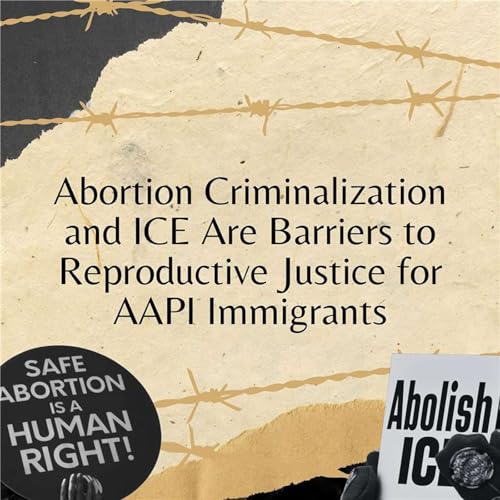
Abortion Criminalization and ICE Are Barriers to Reproductive Justice for AAPI Immigrants
Impossibile aggiungere al carrello
Rimozione dalla Lista desideri non riuscita.
Non è stato possibile aggiungere il titolo alla Libreria
Non è stato possibile seguire il Podcast
Esecuzione del comando Non seguire più non riuscita

Abortion Criminalization and ICE Are Barriers to Reproductive Justice for AAPI Immigrants
-
Letto da:
-
Di:
A proposito di questo titolo
The Asian American and Pacific Islander (AAPI) community is made up of various ethnicities, languages, and translation needs, requiring different and individualized advocacy and policy discussions-- particularly when that policy relates to sexual and reproductive health, rights, and justice. Christina Baal-Owens, Executive Director of the National Asian Pacific American Women’s Forum (NAPAWF) sits down to talk with us about recent research performed by NAPAWF showing the most pervasive barriers to abortion access for the AAPI community and AAPI immigrants in the U.S.
Stigma, cultural differences, language and translation, and healthcare deserts prevent AAPI immigrants from accessing necessary services, such as abortion. Additional clinics and health centers, improved language accessibility, and expanded access to health insurance (regardless of immigration status) are all options for lowering barriers to this care. It is important to remember that ICE activity impacts AAPI communities, too. ICE’s presence negatively affects the realization of reproductive justice; many might be fearful to access services outside their homes, many might worry about their naturalization process, or others may be stymied by criminalization and stigma.
For more information, check out Future Hindsight: https://www.futurehindsight.com/
Support the show
Follow Us on Social:
Twitter: @rePROsFightBack
Instagram: @reprosfb
Facebook: rePROs Fight Back
Bluesky: @reprosfightback.bsky.social
Buy rePROs Merch: Bonfire store
Email us: jennie@reprosfightback.com
Rate and Review on Apple Podcast
Thanks for listening & keep fighting back!