

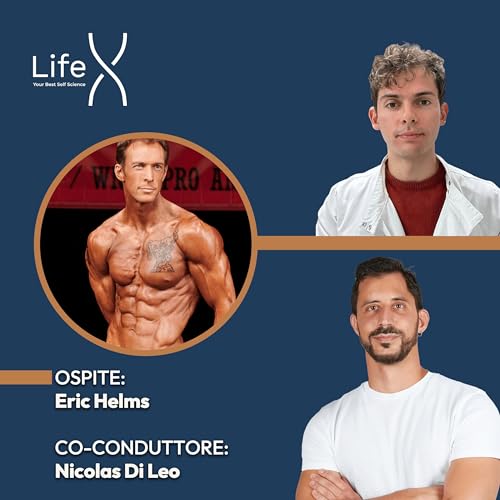
222. You're using science the wrong way: mechanisms ≠ advice, the science of getting muscles for the Elderly and why Protein Cycling is nonsensical - with Nicolas di Leo and Eric Helms
Impossibile aggiungere al carrello
Rimozione dalla Lista desideri non riuscita.
Non è stato possibile aggiungere il titolo alla Libreria
Non è stato possibile seguire il Podcast
Esecuzione del comando Non seguire più non riuscita

222. You're using science the wrong way: mechanisms ≠ advice, the science of getting muscles for the Elderly and why Protein Cycling is nonsensical - with Nicolas di Leo and Eric Helms
-
Letto da:
-
Di:
A proposito di questo titolo
Do high-protein diets “overactivate mTOR” and shorten lifespan?
Does protein cycling actually make sense if you care about longevity?
And why do so many nutrition rules online come from mechanisms in a petri dish rather than real-world outcome data?
In this episode, I’m joined by Eric Helms (3D Muscle Journey) to cut through the noise and rebuild the conversation from first principles: what the evidence actually says when you stop worshipping single pathways and start looking at RCTs, epidemiology, and meaningful endpoints.
We cover:
Protein & longevity: why many online “certainties” collapse when you focus on outcomes, not just mechanisms
The truth about protein cycling and whether “taking breaks” from protein is useful (or just a trend)
Aging, anabolic resistance & master athletes: what really changes with age — and how much training can offset it
A perspective shift most people miss: how low the minimum effective dose can be to regain muscle and strength after detraining
The most underrated part of all: behavior change. How autonomy-supported coaching, identity, and goal hierarchy outperform “finger wagging” and guilt-based advice
If you care about performance, metabolic health, and longevity — without turning nutrition into a religion — this episode will recalibrate how you think. Less dogma, more data. And a better strategy: not convincing people, but building the conditions for sustainable change.