

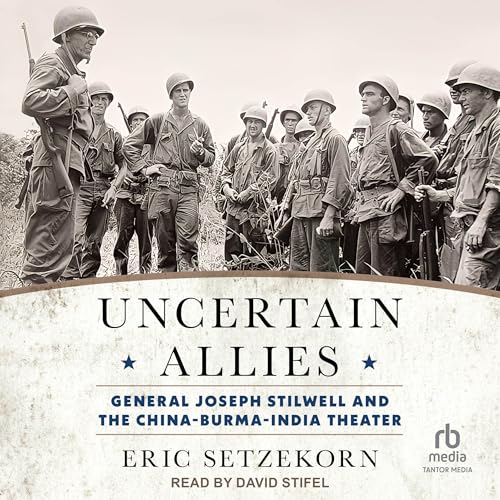
Uncertain Allies
General Joseph Stilwell and the China-Burma-India Theater
Impossibile aggiungere al carrello
Rimozione dalla Lista desideri non riuscita.
Non è stato possibile aggiungere il titolo alla Libreria
Non è stato possibile seguire il Podcast
Esecuzione del comando Non seguire più non riuscita

Uncertain Allies
Acquista ora a 14,13 €
-
Letto da:
-
David Stifel
-
Di:
-
Eric Setzekorn
Uncertain Allies looks at the United States military's experience in the China-Burma-India (CBI) theater during World War II through the eyes of Joseph Stilwell, the commanding general of American forces in those three countries. Historian Eric Setzekorn focuses on two themes: uncertain allies and ambiguous missions.
Despite being allies, relationships between the Americans and Chinese, as well as Americans and the British, were marked by a lack of trust in the CBI theater. This was problematic because most combat personnel under Stilwell's command were Chinese. The lack of trust impacted tactical and operational planning. The second reoccurring theme, ambiguous missions, refers to the poorly defined goals for the theater. The CBI's mission was vague, and Stilwell lacked clear objectives.
Underlying both themes is the key flaw in Stilwell's conduct: a failure to understand the American political context. Stilwell advocated for a transactional military and political relationship despite indications that President Roosevelt, other leaders, and the American public desired a long-term cooperative relationship. Stilwell's proposals to make military aid and American support on a quid pro quo basis inevitably ran into staunch opposition. The result was a dangerous disconnect between American military operations and national policy.
PLEASE NOTE: When you purchase this title, the accompanying PDF will be available in your Audible Library along with the audio.
©2024 U.S. Naval Institute (P)2025 Tantor Media