

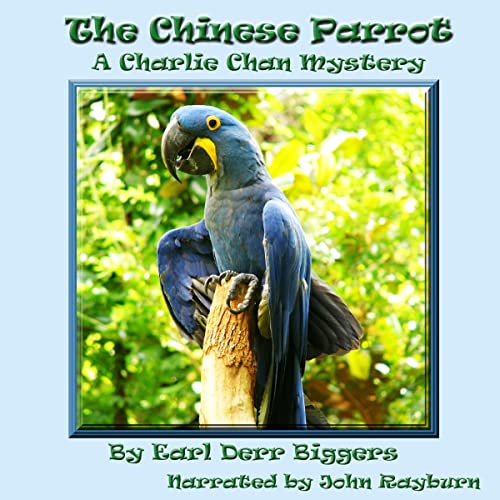
The Chinese Parrot
The Charlie Chan Mysteries, Book 2
Impossibile aggiungere al carrello
Rimozione dalla Lista desideri non riuscita.
Non è stato possibile aggiungere il titolo alla Libreria
Non è stato possibile seguire il Podcast
Esecuzione del comando Non seguire più non riuscita

The Chinese Parrot
Acquista ora a 14,08 €
-
Letto da:
-
John Rayburn
Back around 1920, Earl Derr Biggers went to Hawaii on vacation and got an idea for a new kind of fictional hero. About four years later, he put the notion to work as he developed the character of Charlie Chan, a Chinese detective who was eventually featured in five different films over a thirty-year period. He first emerged in the Saturday Evening Post Magazine as the minor character’s role grew to being the leading player in the ensuing installments.
The story you’re about to hear is the second Charlie Chan novel, and it features a parrot named Tony who is witness to a crime. The unusual bird spoke Chinese and had a less-than-perfect use of English grammar, but was killed by the criminals as a precaution.
Chan himself was a friend of a family selling jewels and agreed to deliver them on his first trip to mainland California. While there, he masquerades as a pidgin-speaking cook during his undercover investigation. His profound and original intelligence offers genial humor and witty dialogue.
Although the series originated nearly a century ago, it still has a fresh and modern feel. One review described it as, “Dated—yes! Outdated—never!” Listen as an investigative light begins to dawn.
Public Domain (P)2022 John D. Rayburn