

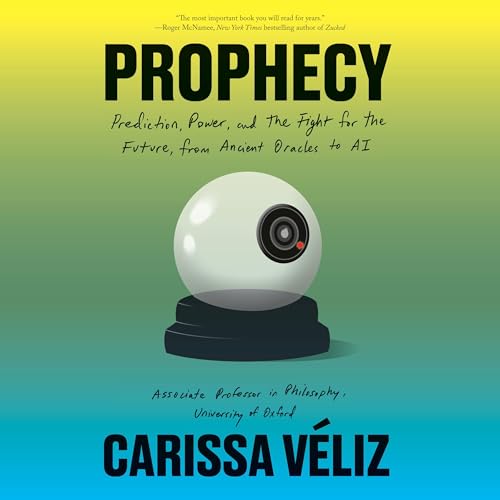
Prophecy
Prediction, Power, and the Fight for the Future, from Ancient Oracles to AI
Impossibile aggiungere al carrello
Puoi avere soltanto 50 titoli nel carrello per il checkout.
Riprova più tardi
Riprova più tardi
Rimozione dalla Lista desideri non riuscita.
Riprova più tardi
Non è stato possibile aggiungere il titolo alla Libreria
Per favore riprova
Non è stato possibile seguire il Podcast
Per favore riprova
Esecuzione del comando Non seguire più non riuscita
Attiva il tuo abbonamento Audible con un periodo di prova gratuito per ottenere questo titolo a un prezzo esclusivo per i membri
Dopo 30 giorni (60 per i membri Prime), 9,99 €/mese. Puoi cancellare ogni mese
Dopo esserti registrato per un abbonamento, puoi acquistare questo e tutti gli altri audiolibri nel nostro catalogo esteso, ad un prezzo scontato del 30%
Ottieni accesso illimitato a una raccolta di oltre migliaia di audiolibri e podcast originali.
Nessun impegno. Cancella in qualsiasi momento e conserva tutti i titoli acquistati.

Prophecy
Letto da:
Robertson Dean
Acquista ora a 16,80 €
-
Letto da:
-
Robertson Dean
-
Di:
-
Carissa Véliz
Tech empires are the prophets of the modern day, and like the ancient oracles and medieval astrologers that preceded them, they're not in it for the common good—they're in it for power. Award-winning University of Oxford professor Carissa Véliz brilliantly argues why we must reclaim that power, and shows us how.
“A masterpiece. . . . The most important book you will read for years.” —Roger McNamee, New York Times bestselling author of Zucked
Longlisted for the Financial Times Business Book of the Year
For thousands of years, oracles, seers, and astrologers advised leaders and commoners alike about the future. But predictions are often power plays in disguise, obfuscating accountability and stripping individuals of their agency. Today we face the same threat of powerful prophets but under a new facade: tech.
Not only do modern predictions made by tech companies advise on war, industry, and marriages, but artificial intelligence also now determines whether we can get a loan, a job, an apartment, or an organ transplant. And when we cede ground to these predictions, we lose control of our own lives.
Drawing on history’s cautionary tales and modern-day tech companies’ malfeasance—from surveillance and biased algorithms to a startling lack of accountability—Carissa Véliz demonstrates that big tech’s prophecies are just as shallow, dangerous, and unjust as their ancient counterparts’. What she uncovers in the process is chilling. Artificial intelligence is increasing risk in business and society while creating a false sense of security. In this incisive, witty, and bracingly original book, Véliz contends that the main promise of prediction is not knowledge of the future but domination over others. Powerful people use predictions to determine our future. Prophecy is an invitation to defy those orders and live life on our own terms.
adbl_web_anon_alc_button_suppression_t1
Ancora nessuna recensione