

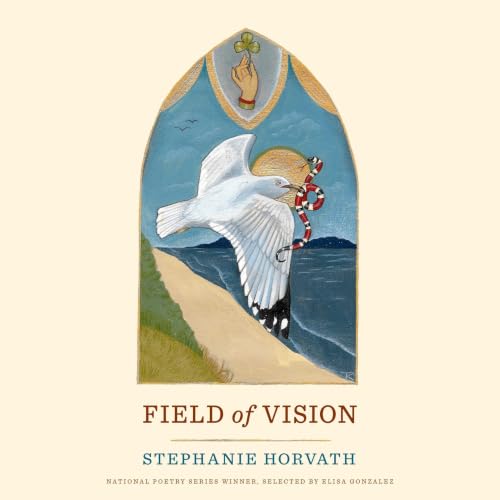
Field of Vision
Impossibile aggiungere al carrello
Puoi avere soltanto 50 titoli nel carrello per il checkout.
Riprova più tardi
Riprova più tardi
Rimozione dalla Lista desideri non riuscita.
Riprova più tardi
Non è stato possibile aggiungere il titolo alla Libreria
Per favore riprova
Non è stato possibile seguire il Podcast
Per favore riprova
Esecuzione del comando Non seguire più non riuscita
5,75 € per i primi 30 giorni
Offerte di stagione
0,99 €/mese per i primi 3 mesi
L'offerta termina il 28 dicembre 2026.
Dopo 30 giorni (60 per i membri Prime), 9,99 €/mese. Puoi cancellare ogni mese
Risparmia più del 90% nei primi 3 mesi.
Ascolta quanto vuoi, scegliendo tra migliaia di audiolibri e serie originali inclusi.
Scarica il tuo audiolibro e ascolta offline, senza interruzioni
Rinnovo automatico a 9,99 €/mese dopo 3 mesi. Disdici mensilmente. L'offerta termina il 28 dicembre 2026.
Dopo esserti registrato per un abbonamento, puoi acquistare questo e tutti gli altri audiolibri nel nostro catalogo esteso, ad un prezzo scontato del 30%
Ottieni accesso illimitato a una raccolta di oltre migliaia di audiolibri e podcast originali.
Nessun impegno. Cancella in qualsiasi momento e conserva tutti i titoli acquistati.

Field of Vision
Letto da:
Stephanie Horvath
Acquista ora a 8,22 €
-
Letto da:
-
Stephanie Horvath
In Field of Vision, we traverse the thresholds of past and future, reality and dream, as we accompany the speaker through deserts, forests, rivers, and coasts. These poems capture, viscerally and intimately, a sense of deep time in the rural landscape—dark, damp dirt on one’s hands, a desert over which vultures circle, the decay of wet leaves on a forest floor. A meditation on the horror and resplendence of nature, Field of Vision invokes the ancient history that weaves into each of our individual histories—the earth, the animals, the fossils, the primordial echoes that shape us all.
adbl_web_anon_alc_button_suppression_t1
Recensioni della critica
“The poet is a master of the line break. She understands how an ending is where the emotions squat. They rest there, or they are jostled. It’s where they sigh or exclaim. In the hands of a master conductor like Horvath, they command the wind section to stop, so the violins can lament alone. But then the wand lifts again, the writer’s wrist flicks, and the timpani crashes into the scene. The reader is powerless before such lyricism in action.”
—The Compulsive Reader
“Field of Vision is an exquisite, strange contemplation of contrasts that feel both universal and deeply American: the California desert, drenched Maine shores; tenderness and violence; dreams and the dreamlike twists of real life. These poems twist perceptions, drawing us in, lulling us in order to surprise us. They remind me that poetry can be an act of rescue, reviving not only language but also the reader.”
—Elisa Gonzalez, author of Grand Tour
“These poems with patient precision intimately describe a world, flower by flower, field by field, sky by sky. They describe not in the way a circle is described, sweeping the circumference, but in the way life is “described,” sweeping, as the eye of a raptor might, across the terrain of this place we live in, called lives, called human, called suffering, called nature, called Earth. And they do that magic thing reserved for poems in all their potency: while they name, they prod at, they palpate, they make room for, they bring into possibility the vibrating shapes of the unnamable.”
—Eleni Sikelianos, author of Your Kingdom
“'I was an abstract memory of an animal,' writes Stephanie Horvath in Field of Vision, a collection that shape-shifts between the feral and the domestic. In the rural-industrial landscape that Horvath conjures, encounters between proximal, intimate and unknown others brim with anxiety and desire. What is dreamed, traded, recollected or conjured are preoccupations that move this accomplished, closely observed and wondrous debut through the space that surrounds it, unabated yet receding. As Horvath tells us: 'Something ruptures the earth and its mark endures.”'
—Bhanu Kapil
“It has been said so often that the environmental crisis of our moment is too large to see. And yet poets keep begging to differ. Stephanie Horvath takes lyric's intimate quietness and expands it with dream logic, so something far too large for a single voice can be held inside one, briefly, without either breaking.”
—Juliana Spahr, Pulitzer Prize-winning author of Ars Poetica
—The Compulsive Reader
“Field of Vision is an exquisite, strange contemplation of contrasts that feel both universal and deeply American: the California desert, drenched Maine shores; tenderness and violence; dreams and the dreamlike twists of real life. These poems twist perceptions, drawing us in, lulling us in order to surprise us. They remind me that poetry can be an act of rescue, reviving not only language but also the reader.”
—Elisa Gonzalez, author of Grand Tour
“These poems with patient precision intimately describe a world, flower by flower, field by field, sky by sky. They describe not in the way a circle is described, sweeping the circumference, but in the way life is “described,” sweeping, as the eye of a raptor might, across the terrain of this place we live in, called lives, called human, called suffering, called nature, called Earth. And they do that magic thing reserved for poems in all their potency: while they name, they prod at, they palpate, they make room for, they bring into possibility the vibrating shapes of the unnamable.”
—Eleni Sikelianos, author of Your Kingdom
“'I was an abstract memory of an animal,' writes Stephanie Horvath in Field of Vision, a collection that shape-shifts between the feral and the domestic. In the rural-industrial landscape that Horvath conjures, encounters between proximal, intimate and unknown others brim with anxiety and desire. What is dreamed, traded, recollected or conjured are preoccupations that move this accomplished, closely observed and wondrous debut through the space that surrounds it, unabated yet receding. As Horvath tells us: 'Something ruptures the earth and its mark endures.”'
—Bhanu Kapil
“It has been said so often that the environmental crisis of our moment is too large to see. And yet poets keep begging to differ. Stephanie Horvath takes lyric's intimate quietness and expands it with dream logic, so something far too large for a single voice can be held inside one, briefly, without either breaking.”
—Juliana Spahr, Pulitzer Prize-winning author of Ars Poetica
Ancora nessuna recensione