13 - Social Order and National Unity. copertina

13 - Social Order and National Unity.

13 - Social Order and National Unity.

Ascolta gratuitamente

Vedi i dettagli del titolo

A proposito di questo titolo

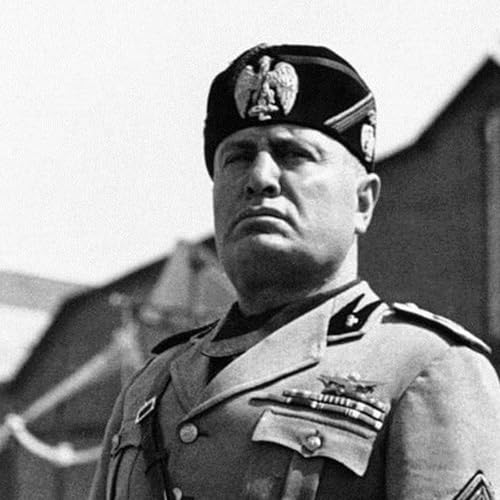
Social Order and National Unity. The fascist regime in Italy under Benito Mussolini inherited a society plagued by post-World War I instability, including the "red biennium" of 1919–1920 marked by over 2,000 strikes involving nearly 2 million workers and widespread factory occupations. Following the March on Rome in October 1922 and the establishment of dictatorial powers via the Acerbo Law of 1923 and subsequent suppression of opposition, the regime dismantled independent trade unions and socialist organizations through violence and legal bans, resulting in a near-total elimination of strikes by 1926. This corporatist restructuring subordinated labor to state-controlled syndicates, enforcing industrial peace and averting the revolutionary upheavals seen in other European nations, thereby stabilizing production and reducing class-based disruptions. Official crime statistics reflected a marked decline during the 1920s and 1930s, attributed to rigorous policing, penal reforms emphasizing prevention over punishment, and the centralization of authority under the Ministry of the Interior. Prison populations decreased substantially, from approximately 50,000 inmates in 1922 to around 30,000 by the early 1930s, alongside reductions in reported violent crimes. In regions like Sicily, Mussolini's appointment of Cesare Mori as prefect in 1925 initiated a campaign that dismantled Mafia networks through mass arrests and trials, leading to a sharp drop in homicides and organized crime activity. These measures, while involving extralegal coercion, empirically curtailed the diffuse violence of the pre-fascist era, including squadristi clashes and leftist insurrections, establishing state monopoly over force. On national unity, the regime pursued integration of Italy's fragmented social fabric—divided by regional dialects, class antagonisms, and ideological rifts—through aggressive nationalism and mass mobilization. Propaganda portrayed Mussolini as the embodiment of the nation's will, while institutions like the Opera Nazionale Balilla (founded 1926) and the Gioventù Italiana del Littorio (1937) indoctrinated over 3 million youth annually in fascist values, promoting physical fitness, militarism, and loyalty to the state over local identities. Corporatism theoretically harmonized interests between labor and capital under national goals, and imperial ventures, such as the conquest of Ethiopia in 1935–1936, generated temporary enthusiasm across classes, with public celebrations and volunteer enlistments exceeding 100,000. This engineered cohesion suppressed overt divisions, enabling coordinated efforts like the "Battle for Grain" autarky campaign, though underlying tensions persisted beneath enforced consensus. Infrastructure and Technological Advances. The Fascist regime in Italy prioritized large-scale public works to modernize infrastructure, create employment, and symbolize national renewal through projects like land reclamation and transportation networks. The bonifica integrale (integral reclamation) of the Pontine Marshes south of Rome, initiated in the 1920s and intensified after 1928, drained approximately 80,000 hectares of malarial swampland via dikes, canals, and pumping stations, converting it into fertile farmland. By December 1932, the initial phase had reclaimed 25,250 acres, establishing over 2,000 farmsteads and four new towns—Littoria (renamed Latina in 1947), Sabaudia, Pontinia, and Aprilia—housing thousands of settler families and integrating modern roads and utilities. This effort reduced malaria cases by over 80 percent in the region by the late 1930s and increased agricultural productivity, with population and livestock numbers rising 64 percent and 134 percent respectively in reclaimed zones. Transportation infrastructure advanced through the construction of autostrade, Italy's pioneering motorway system, begun in 1924 with the Milan-Prealpine Lakes route. By 1935, nearly 480 kilometers had been built, including 378.8 km in the north, 81.2 km in central Italy, and 20.9 km in the south, featuring divided lanes, overpasses, and service areas to accommodate rising automobile use. These highways enhanced connectivity between industrial centers and rural areas, reducing travel times and supporting economic mobilization, though construction relied heavily on state subsidies amid limited private investment. Railway electrification formed another cornerstone, with a program launched in the early 1930s transforming key lines from steam to electric power for greater efficiency and speed. By October 1939, approximately 3,200 miles (5,150 km) of track were electrified, covering major corridors like Milan to Reggio Calabria and enabling electric multiple units such as the ETR 200 to achieve world-record average speeds of 165 km/h over 316 km in July 1939. This expansion, which included new locomotives like the E.626 series (448 units built between 1927 and 1939), boosted ...
Ancora nessuna recensione