15 - Placement on the Political Spectrum. copertina

15 - Placement on the Political Spectrum.

15 - Placement on the Political Spectrum.

Ascolta gratuitamente

Vedi i dettagli del titolo

A proposito di questo titolo

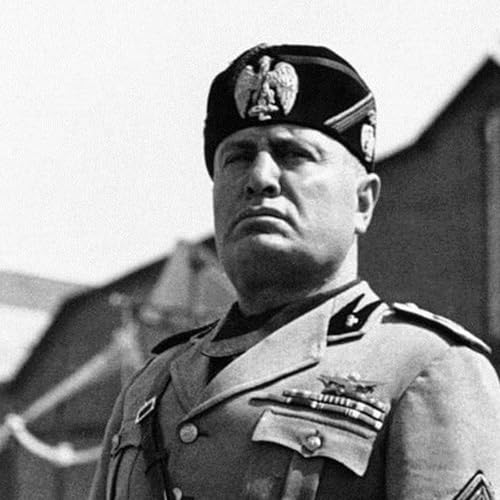
Placement on the Political Spectrum. Arguments for Left-Wing Roots and Collectivism. Benito Mussolini, founder of fascism, spent over a decade as a leading figure in the Italian Socialist Party, editing its official newspaper Avanti! from 1912 to 1914 and promoting revolutionary socialism prior to his expulsion in 1914 for supporting Italy's intervention in World War I. Despite the break, Mussolini retained socialist influences, crediting thinkers like French Marxist Georges Sorel, whose revolutionary syndicalism—emphasizing worker militancy, myth-making for mobilization, and rejection of parliamentary reform—inspired fascism's early tactics and anti-capitalist rhetoric. Sorel's ideas bridged Marxism and nationalism, providing a framework for Mussolini's shift from international class struggle to national worker solidarity, as seen in the 1919 founding of the Fasci Italiani di Combattimento. This synthesis found early expression in France through the Cercle Proudhon, founded around 1911, which integrated Proudhonian mutualism and federalism with Sorelian syndicalism and integral nationalism, contributing to national syndicalist doctrines that influenced the ideological formation of fascism. Fascism adapted left-wing syndicalism into "national syndicalism," subordinating labor organizations to the state while opposing both liberal individualism and Marxist internationalism. Giovanni Gentile, fascism's chief philosopher and co-author of The Doctrine of Fascism (1932), explicitly framed it as "a form of socialism, in fact, its most viable form," arguing for the ethical state as the embodiment of collective will over private interests. This collectivist ethos echoed socialist prioritization of the group—Mussolini's nation-state replacing the proletariat—while rejecting free-market liberalism, which fascists derided as atomizing society. Fascist economics reinforced this left-wing collectivism through corporatism, a system of state-directed syndicates that controlled production quotas, wages, prices, and resource allocation, effectively merging private ownership with public planning. By 1939, Italy's government nationalized over four-fifths of shipping and shipbuilding, dominated 80% of credit, imposed mandatory cartels, and subsidized 75% of economic output by 1934, aiming for autarky and war readiness under centralized authority. Mussolini described this as "state capitalism," paralleling Lenin's New Economic Policy, and pursued further "socialization" in the 1943 Italian Social Republic, collaborating with former communists like Nicola Bombacci to anti-capitalist ends. Proponents of fascism's left-wing classification, including historian A. James Gregor, contend it derives from radical syndicalist Marxism, sharing totalitarian collectivism with Bolshevism as "heresies of socialism" that demand individual sacrifice for state-directed unity. Richard Pipes similarly notes both ideologies' roots in socialist rejection of markets and emphasis on coercive harmony, distinguishing them from right-wing traditions of limited government. Mussolini himself affirmed in 1945, "We are the working class in struggle… against capitalism," underscoring fascism's self-perceived continuity with proletarian aims, albeit nationalized. Historical evidence further shows that portions of the working class voted for fascist parties. In Germany, the Nazis gained support from working-class voters, particularly Protestant workers in rural and small-town areas, amid economic hardship and disillusionment with socialist and communist parties. Similar patterns occurred in Italy under Mussolini, where some former socialist supporters shifted to fascism. Mainstream Views as Far-Right Nationalism. In mainstream historiography and political science, fascism is classified as a far-right ideology, distinguished by its ultranationalist fervor, authoritarian centralization of power, and rejection of both liberal individualism and socialist internationalism. This positioning emphasizes fascism's prioritization of the nation as an organic, hierarchical entity requiring rebirth (palingenesis) through dictatorial leadership and mass mobilization, as opposed to the class-based egalitarianism of leftist movements. Political scientist Cas Mudde, in delineating subtypes of the far right, categorizes fascism within the "extreme right," marked by its overt anti-democratic and nativist orientations that exceed the more electoral constraints of radical right populism. Historians such as Roger Griffin further solidify this far-right attribution by defining fascism as a "revolutionary form of ultra-nationalism" that mythologizes national renewal while scorning parliamentary democracy and Marxist materialism, traits aligning it with right-wing extremism rather than progressive or collectivist leftism. Griffin's framework, influential since the 1990s, highlights fascism's nominalist core—obsessive focus on ethnic or cultural ...
Ancora nessuna recensione