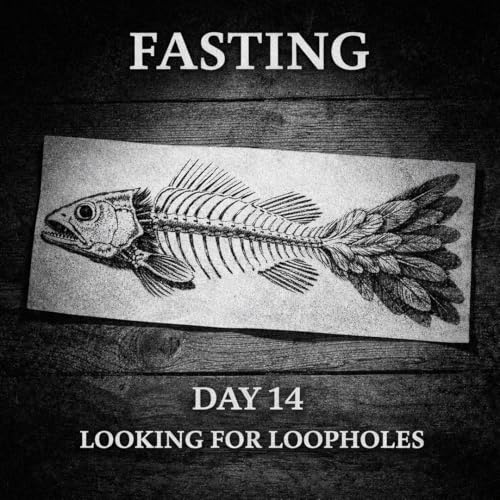
FASTING DAY 14 - Looking For A Loophole copertina

FASTING DAY 14 - Looking For A Loophole

FASTING DAY 14 - Looking For A Loophole

Ascolta gratuitamente

Vedi i dettagli del titolo

A proposito di questo titolo

FASTING DAY 14: Beaver Tails & Barnacle Geese – The Medieval Art of Loopholes Description: By the Middle Ages, the Catholic Church mandated fasting for over 100 days a year. Meat was forbidden during these times, but fish was allowed. This led to some of the most creative (and ridiculous) biology in history as people tried to find loopholes in the rules [Source 8: 44, 343-345]. In Day 14 of our history series, we take a humorous look at how desperation for food led theologians to classify beavers, geese, and giant rodents as "fish." We explore the medieval belief that "Barnacle Geese" hatched from driftwood barnacles (making them seafood) and the 17th-century ruling by the Sorbonne that allowed beaver tails to be eaten during Lent because they were scaly and aquatic [Source 8: 45-46, 346-349]. We also look at how the Vatican classified the South American Capybara as a fish for fasting purposes [Source 8: 46, 350-351]. This episode connects these historical oddities to Jesus's warning against nullifying God's word for the sake of human tradition [Source 8: 47, 353]. This history forces modern Christians to ask a serious question: Are we doing the same thing today? If you are fasting from food but drinking high-calorie milkshakes because "technically it's a liquid," you might be eating a spiritual beaver tail [Source 8: 355-357]. Join us to learn why God cares more about the spirit of your sacrifice than the technicalities of your rules. Keywords: Medieval fasting, Lenten loopholes, Barnacle Geese, eating beaver during Lent, Capybara fish, Catholic history, religious loopholes, hypocrisy, history of fasting, fasting rules.
Ancora nessuna recensione