

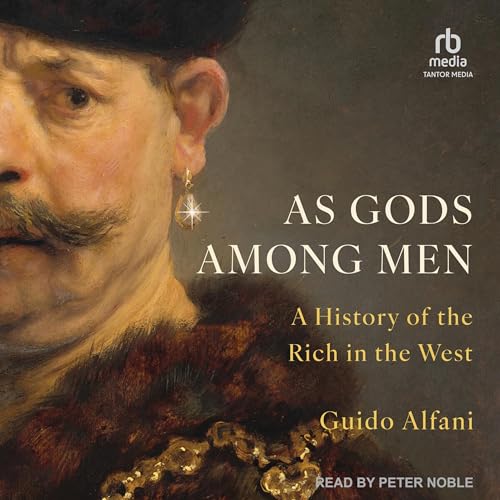
As Gods Among Men
A History of the Rich in the West
Impossibile aggiungere al carrello
Rimozione dalla Lista desideri non riuscita.
Non è stato possibile aggiungere il titolo alla Libreria
Non è stato possibile seguire il Podcast
Esecuzione del comando Non seguire più non riuscita
Ascolta ora gratuitamente con il tuo abbonamento Audible

As Gods Among Men
Acquista ora a 16,80 €
-
Letto da:
-
Peter Noble
-
Di:
-
Guido Alfani
The rich have always fascinated, sometimes in problematic ways. Medieval thinkers feared that the super-rich would act "as gods among men"; much more recently Thomas Piketty made wealth central to discussions of inequality. In this book, Guido Alfani offers a history of the rich and super-rich in the West, examining who they were, how they accumulated their wealth, and what role they played in society. Covering the last thousand years, with frequent incursions into antiquity, and integrating recent research on economic inequality, Alfani finds fundamental continuities in the behavior of the rich and public attitudes towards wealth across Western history.
Alfani argues that the position of the rich and super-rich in Western society has always been intrinsically fragile; their very presence has inspired social unease. In the Middle Ages, an excessive accumulation of wealth was considered sinful; the rich were expected not to appear to be wealthy. Eventually, the rich were deemed useful when they used their wealth to help their communities in times of crisis. Yet in the twenty-first century, the rich and the super-rich have been exceptionally reluctant to contribute to the common good in times of crisis, rejecting even such stopgap measures as temporary tax increases. History suggests that this is a troubling development-for the rich, and for everyone else.
©2023 Princeton University Press (P)2024 Tantor